


Will My Car Ever Be the Same After an Accident? What Repairs Can Restore
Will my car ever be the same after an accident, or will I always notice something different? It’s a fair question, especially because visible damage may be only part of the story. You may be concerned about hidden structural or sensor damage, a paint mismatch, or a car that no longer drives the way it used to.
Collision repair can restore a vehicle’s appearance and function, but the result depends on the damage and the repairs needed. Some concerns become clear only after damaged areas are taken apart, so an initial estimate may change as the full picture emerges. Even after careful repairs, a vehicle’s accident history may still affect its resale value.
This guide explains what collision repairs can address, how damage severity shapes the outcome, and what to look for when assessing your car. You’ll also find practical questions to help you understand the repair plan and feel more confident about your vehicle’s safety, appearance, and performance.
Table of Contents
What Does It Mean for a Car to Be the Same After an Accident?
It’s understandable to wonder whether your car will look and feel the same after a collision. The answer depends on the damage, the vehicle’s condition, and how well the repairs address what was affected. A repaired car can be restored in important ways, but “the same” can mean different things. Separating your concerns makes it easier to discuss the repair plan and assess the result.
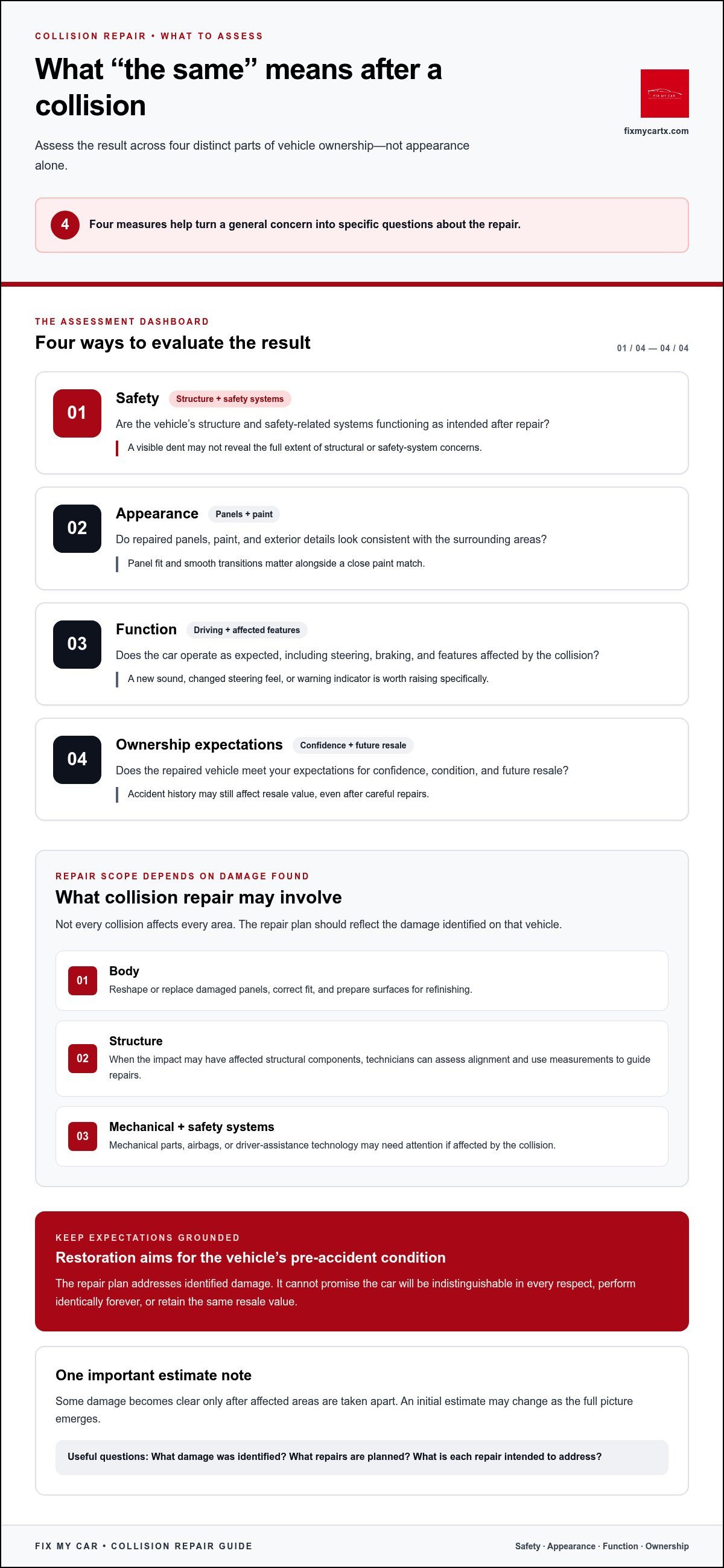
Consider these four measures:
Safety: Are the vehicle’s structure and safety-related systems functioning as intended after repair?
Appearance: Do the repaired panels, paint, and exterior details look consistent with the surrounding areas?
Function: Does the car operate as expected, including its steering, braking, and affected features?
Ownership expectations: Does the repaired vehicle meet your expectations for confidence, condition, and future resale?
Restoration aims to return a vehicle to its pre-accident condition. It doesn’t mean the car is literally unchanged or that its accident history disappears.
Why ‘the same’ can mean different things to different drivers
One owner may first want reassurance that the car is safe to drive. Another may focus on whether the paint matches or the panels sit evenly. Both concerns matter, but they call for different explanations and checks.
Normalcy is personal, too. A new sound, a change in steering feel, or uncertainty about a feature affected by the collision can make a familiar car feel unfamiliar. Naming what seems different turns a general worry into a specific question about the repair.
What a repair can and cannot promise
The repair scope depends on the damage found and the vehicle’s existing condition. A visible dent may be only one part of the assessment, and damage that becomes apparent during repair can change the work needed. The plan should explain the issues identified and the repairs intended to address them.
Professional restoration aims to repair accident-related damage and return the vehicle to its prior condition as closely as the damage and repair allow. It can’t promise that the car will be indistinguishable in every respect, perform identically forever, or retain the same resale value. Those outcomes can depend on factors beyond the repair itself.
Make the repair conversation more useful by describing what matters most to you. If you’re concerned about a particular sound, steering feel, warning indicator, panel fit, or paint appearance, point it out. Ask what damage was identified, what repairs are planned, and what each repair is intended to address. Separating safety, appearance, function, and ownership expectations helps clarify what “the same” can realistically mean for your car.
How Collision Repairs Restore Safety, Appearance, and Function
A careful collision assessment looks beyond a dent or scraped paint. Depending on where and how the impact occurred, the repair plan may also need to address structural components, mechanical parts, or safety systems. Not every collision affects every system, so the work should reflect the damage found on that vehicle.
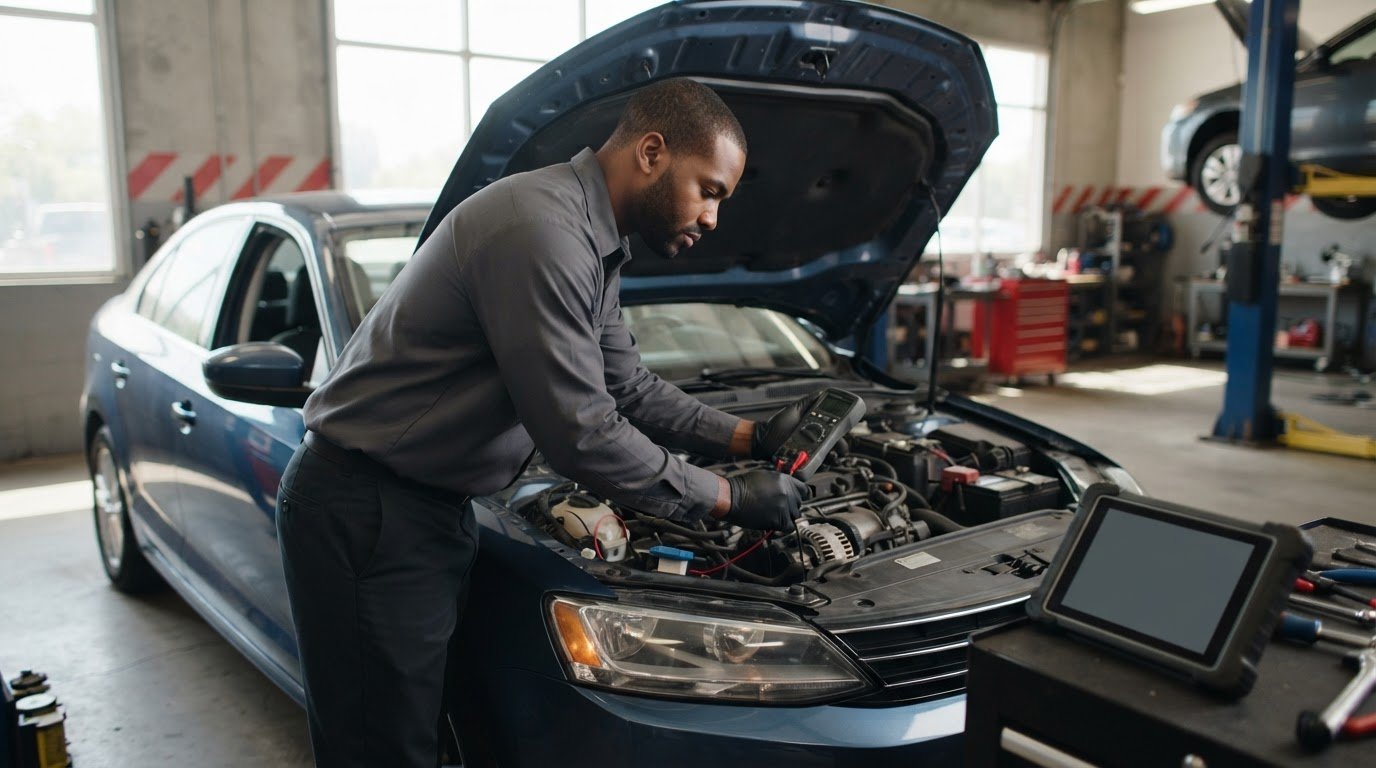
Collision repair may involve body, structural, and mechanical work, depending on the vehicle’s damage. Addressing related concerns together can help restore how the vehicle looks and operates, rather than treating visible damage as the whole problem.
Structural and body repairs: more than what the eye can see
A dented exterior panel may be a cosmetic issue, while damage to structural components can affect how parts of the vehicle fit and function. If an impact may have affected the structure, technicians can assess alignment and use measurements to guide repairs. This helps determine whether components are positioned as intended, rather than relying on appearance alone. Fix My Car’s North Houston collision repair guide explains more about restoring safety and value after a crash.
Body repair can involve reshaping or replacing damaged panels, correcting fit, and preparing surfaces for refinishing. The goal is to align repaired areas properly with adjacent panels and the rest of the vehicle. For example, a door that closes unevenly may need attention to its fit, not just its exterior finish.
Paint, parts, and safety systems
Refinishing involves preparing the surface and matching the paint as closely as practical to the surrounding areas. The vehicle’s existing paint condition, lighting, and the size or location of the repair can affect how consistent the finished color appears. Panel gaps and smooth transitions matter, too. A close color match won’t make a panel look right if it sits unevenly.
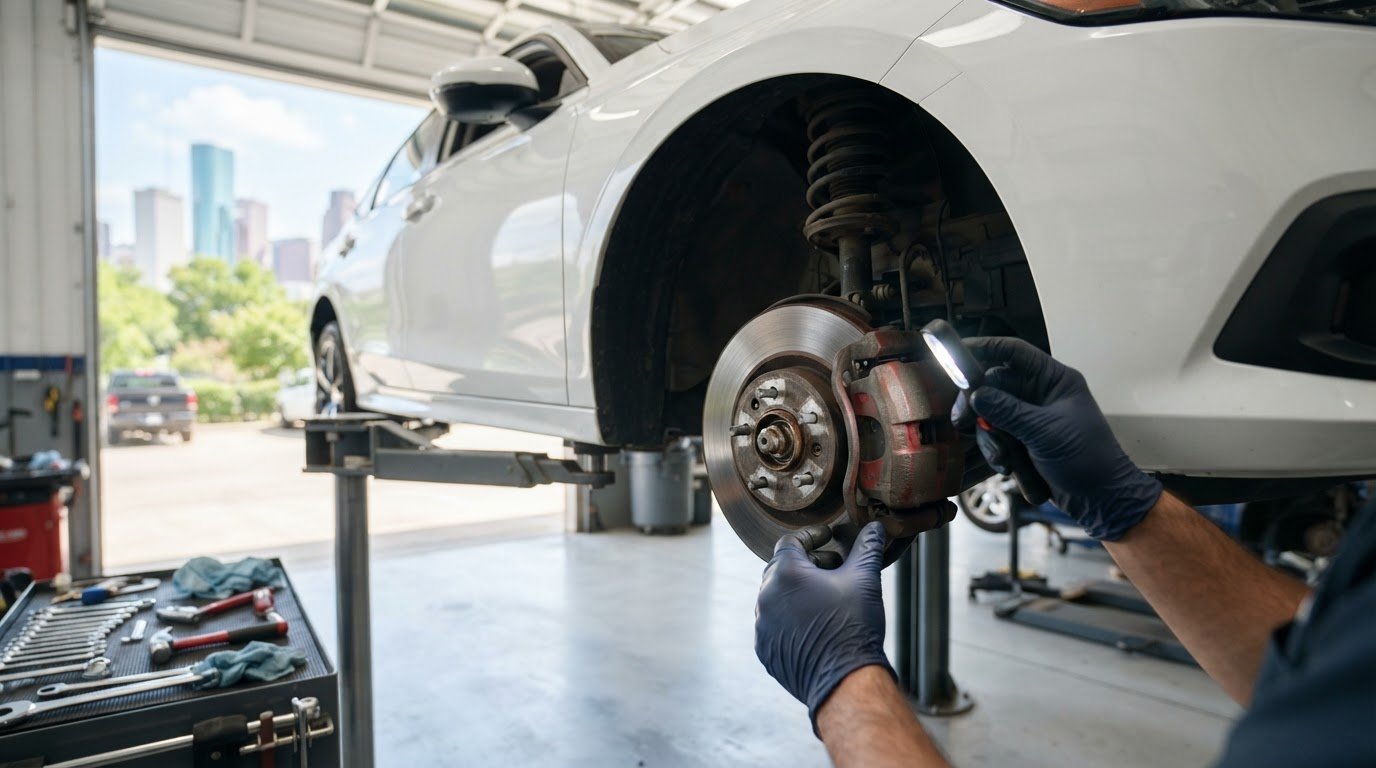
Parts selection is another part of the repair plan. The appropriate choice depends on the vehicle and the damage, so ask for a clear explanation of the parts included and how they relate to the repair. If a collision affected airbags or driver-assistance technology, those systems may need service or attention as part of the work. That doesn’t mean every crash affects them. The National Highway Traffic Safety Administration (NHTSA) provides vehicle safety information that can help owners understand why proper repairs matter.
If you’re asking, “will my car ever be the same after an accident,” remember that the repair process addresses identified damage. It can’t erase the event or promise an identical vehicle in every respect. For North Houston drivers, Fix My Car provides collision and mechanical repair, along with free collision repair estimates. A collision repair estimate can outline the damage and planned work without promising a particular result.
Why Some Repaired Cars Still Look or Feel Different
A repair can address accident damage without making every difference disappear from your awareness. Small cosmetic variations may stand out because you know your car well. A new warning light or a change in how it drives calls for a different kind of attention. Sorting what you notice into appearance, function, and safety concerns helps you decide what to document and discuss.
When a visual difference may be a finish concern
Paint can appear to change shade between direct sun, shade, and indoor lighting. Existing paint may also have aged, so refinished paint and an older adjacent panel might not look identical from every angle. The repair’s size and complexity, including whether adjacent panels were blended, can influence how the color transition appears. A visible difference isn’t automatically proof of a defect, but it’s reasonable to ask about a variation that remains noticeable.
Look at the vehicle in even, natural light if possible. Check the repaired area from more than one angle, and note panel gaps, trim alignment, or surface texture that seems inconsistent. Take photos and describe exactly where and under what lighting you see the concern. Specific observations make it easier for the repair team to understand what you’re noticing.
When a change in driving or safety needs attention
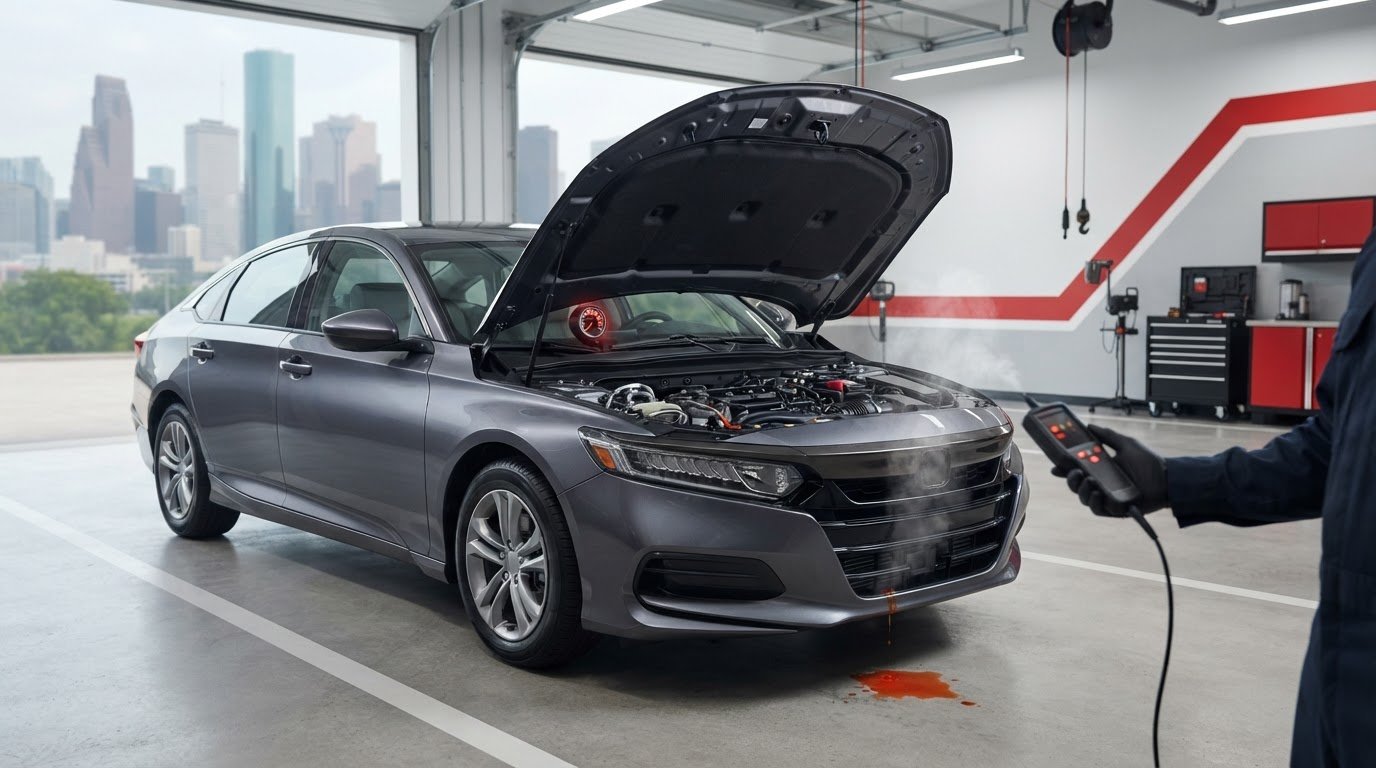
New warning lights, vibration, steering pull, unusual noises, or a change in braking feel shouldn’t be judged by appearance alone. These symptoms can have more than one possible cause, so they don’t identify a specific problem by themselves. Note when the symptom occurs and whether it began after the repair, then have the affected area assessed. If the vehicle feels unsafe to operate, avoid driving it until you’ve arranged appropriate help.
It can also help to separate repair quality from resale expectations. A vehicle may be repaired carefully and still have an accident history that influences how a future buyer views it. That concern is different from whether the repairs were completed properly, and appearance alone can’t provide a reliable value estimate. The Insurance Institute for Highway Safety (IIHS) offers broader vehicle safety information, but it can’t assess an individual car’s repair condition.
If you’re still asking, “will my car ever be the same after an accident,” focus first on the specific difference you can observe. The collision repair estimate guide explains how an estimate outlines repair scope. For a North Houston collision or mechanical concern, a collision repair estimate can help clarify identified damage and planned work.
How to Check Your Car After Collision Repairs
A walkaround at pickup can help you spot questions while the repair details are fresh. Use the agreed repair scope as your reference: focus on areas and features that were repaired, and note anything that looks or works differently. Repeat the checks after returning to normal driving, when you’ve had a chance to notice how the vehicle feels in familiar situations.
A practical visual and functional walkaround
Take your time, but keep the inspection non-technical. You don’t need to remove trim or inspect components under the vehicle. Compare what you see with the repair plan, and note questions rather than trying to diagnose their cause.
Look over the repaired areas. Check the paint and surface in good light. Look at panel gaps and trim fit, and check whether doors, the trunk, and the hood open and close as expected.
Check lights and glass. Confirm the exterior lights work and look for visible concerns around repaired or replaced glass. Ask about anything that seems loose, cracked, or out of alignment.
Review the dashboard. Start the vehicle and look for new warning indicators, especially those related to an area or feature included in the repair.
Try affected features. Operate relevant items such as doors, windows, mirrors, climate controls, or other features connected to the repaired area. Compare their operation with what you remember before the collision.
Pay attention during normal driving. If the vehicle feels different, note what happens, such as a vibration at a particular speed or a change in steering or braking feel. Don’t try to identify the cause yourself.
What to do if something does not seem right
Be specific. Write down what you noticed, where it occurs, when it happens, and whether it began after the repair. Photos can help document a visual concern, while a clear description can help explain a sound or change in operation. Compare your notes with the agreed repair scope, then share them with the repair team promptly so the concern can be assessed.
A visual inspection is useful, but it can’t establish whether a suspected safety issue is resolved. If you notice a new warning light, unusual noise, steering or braking change, or another concern that could affect safe operation, don’t rely on a walkaround alone. Avoid driving if the vehicle feels unsafe. For repairs involving structural concerns, the Houston frame repair guide provides more context about structural safety.
If you’re wondering, “will my car ever be the same after an accident,” a careful review can turn uncertainty into clear questions. For collision or related mechanical concerns in North Houston, request a collision repair estimate from Fix My Car.
Getting Collision Repair Help in North Houston
Once you’ve identified what concerns you, the next step is understanding the damage and the work proposed to address it. An estimate gives you a starting point: it outlines visible damage and anticipated repairs, helping you see how the plan relates to your car’s appearance, operation, and condition. It isn’t a promise that every issue is already known. Damage that becomes apparent as repairs progress may affect the scope, so clear communication matters throughout.
What to expect from a repair estimate
A collision repair estimate puts the initial findings in writing. It can describe the affected areas and the repairs expected based on what’s visible during assessment. As the vehicle is examined more closely, additional damage may be discovered. If that changes the scope, the repair plan may need to be updated. Ask for explanations in plain language so you understand what was identified, what work is proposed, and what questions remain.
Fix My Car’s North Houston team provides free collision repair estimates and insurance-friendly handling. The shop also provides collision and mechanical repair, which can address visible damage alongside related functional concerns. Its ASE-certified technicians and manufacturer certifications support its repair work, but do not make a particular outcome automatic. For a broader overview of local collision repair, the North Houston collision repair guide discusses restoring safety and value after an accident.
A practical next step for Houston drivers
Before discussing an estimate, gather details that can make the conversation more productive. Note which areas were hit, what looks or feels different, and which features concern you most. If you have photos from after the collision or a list of symptoms, bring them along. That context helps connect your questions to the visible damage and proposed repair work.
For Houston-area drivers, Fix My Car is an independent repair shop in North Houston. Complimentary ride-share transportation is available while vehicles are being serviced, which can help you get around during repairs. An estimate and repair discussion can clarify the anticipated work without promising that the car will be exactly as it was before.
If you’re still asking, “will my car ever be the same after an accident,” focus on getting a clear picture of the damage and repair scope. Arrange a free collision repair estimate with Fix My Car to discuss your vehicle and the concerns you want addressed.
Take the Next Step Toward Feeling Confident Behind the Wheel
It’s natural to keep wondering, “will my car ever be the same after an accident?” Instead of expecting every trace of the collision to disappear, focus on what you need from the vehicle now: confidence in its operation, answers to specific concerns, and a clear understanding of the work ahead. Those priorities can guide a more useful conversation about your car.
Fix My Car in North Houston can help with a repair discussion centered on your vehicle’s condition and your concerns. Its ASE-certified technicians and manufacturer certifications support its collision and mechanical repair work. The shop also provides insurance-friendly handling, and complimentary ride-share transportation is available while your vehicle is being serviced.
A clear estimate can turn uncertainty into a plan, without promising that a repaired car will be literally unchanged. Share what you’ve noticed and what matters most to you, then review the proposed scope before moving forward.
Request a free collision repair estimate and take a practical step toward feeling more at ease with your car.
Frequently Asked Questions
Can a car be as safe as before after an accident?
A car may be restored to safe operating condition, but appearance alone can’t confirm that. The answer depends on the impact and whether affected structural parts and safety systems were properly addressed. If an airbag warning remains on, or steering and braking feel unusual, don’t assume the vehicle is ready for regular driving. A repair assessment can help clarify what needs attention, though it can’t guarantee that every future issue is prevented.
Will a repaired car look exactly the same as it did before?
It may look very close, but an exact match isn’t something every repair can promise. Existing paint may have faded, and a refinished area can appear different as lighting changes. For example, a panel may look consistent in the shop but show a slight shade variation outdoors. If appearance matters to you, review the area in different light and describe the specific difference you notice, rather than relying on memory alone.
Can a car still have problems months after an accident repair?
A problem can appear later, though timing alone doesn’t prove it was caused by the collision or repair. A new rattle over bumps, for example, could relate to a repaired area, another vehicle system, or ordinary wear. Note when it happens, how often, and whether it changes with speed or road conditions. Compare the symptom with your repair records and arrange an assessment if it continues or affects safe operation.
Does an accident repair show up on a vehicle history report?
It might, but a vehicle history report doesn’t necessarily include every collision or repair. These reports rely on records supplied by participating sources, and the information available can vary. A minor repair paid for directly, for instance, may not appear in the same way as a claim recorded by a reporting source. Keep your estimates, invoices, and repair documents so you have a useful record even if a report doesn’t show the work.
How long does collision repair usually take?
There isn’t one standard timeline for every collision repair. The time depends on the damage, the work needed, parts, and whether additional issues are found as the vehicle is examined. A repair involving several affected areas may require a different schedule from one limited to a single panel. Ask for the current expected schedule and how you’ll receive updates. Fix My Car provides collision repair in North Houston for Houston-area drivers.
Can I drive my car if it looks repaired but feels different?
Don’t use a smooth-looking exterior as proof that a change in driving is harmless. If the car pulls, vibrates, makes a new noise, or brakes differently, arrange an assessment and explain when the symptom occurs. If steering or braking feels unsafe, avoid driving it until the concern is evaluated. “Will my car ever be the same after an accident” is best answered by checking the specific change, not by appearance alone.
Comentarios