


Car electrical troubleshooting in Houston for common faults
A no-start doesn’t always mean a dead battery. Car electrical troubleshooting in Houston can identify whether symptoms point to the battery, starter, alternator, wiring, sensors, or control modules. Difficulty starting, flickering lights, warning lamps, and power features that stop working can all signal an electrical fault.
It’s understandable to suspect the battery when a vehicle won’t start, but several electrical components can cause similar symptoms. This guide explains what to watch for, how technicians narrow down the cause, and what service may involve across different makes and models. You’ll also learn when a fault needs professional diagnosis and how to approach the next repair step.
Table of Contents
Common signs of automotive electrical problems
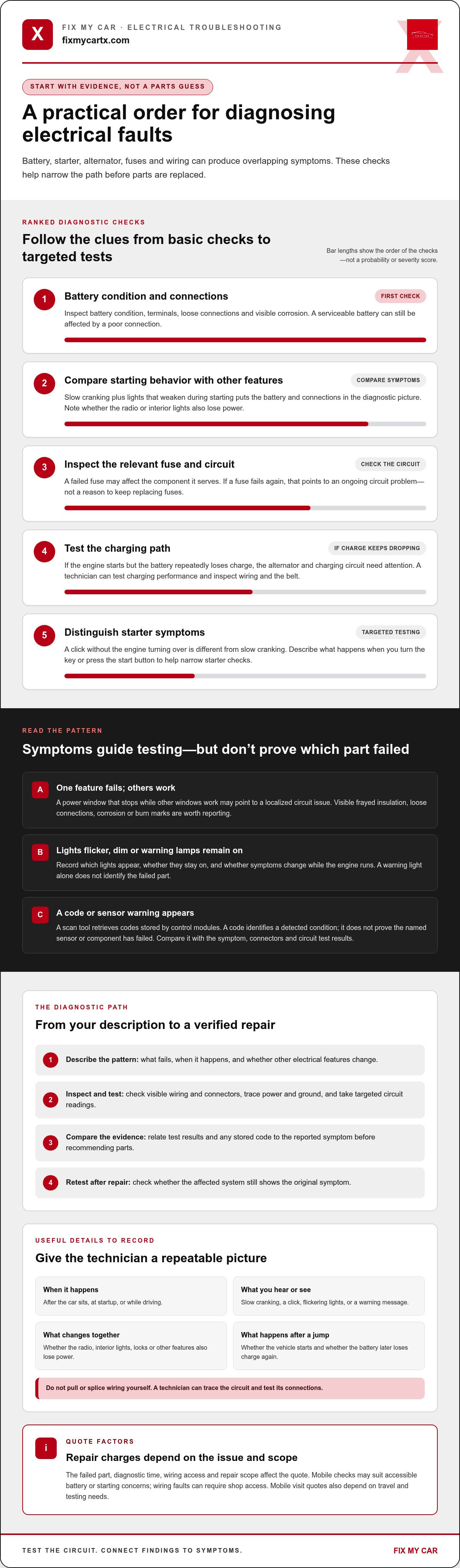
For car electrical troubleshooting in Houston, describe the symptoms and when they occur. Starting trouble, flickering lights, warning lamps, and failing power locks can point to different faults.
Vehicle Wiring Problem Signs
Look for visible wiring with frayed insulation, loose connections, corrosion, or burn marks. Note which feature fails: a power window that stops while the others work may indicate a localized circuit issue. If headlights flicker when you move a switch, record that pattern. Don’t pull or splice wires yourself; a technician can trace the circuit and test its connections.
Electrical System Warning Signs
Watch for a battery that repeatedly dies, dashboard warning lights that stay on, or lamps that dim while the engine runs. Difficulty starting and frequent stalling can also signal an electrical problem. A warning light alone doesn’t identify the failed part. Record which lights appear, whether they stay on, and whether symptoms change while the engine is running.
Note what happens before arranging diagnosis. For example, record whether cranking is slow after the car sits, or whether the radio and interior lights also lose power. These details help distinguish a recurring pattern from an isolated glitch. If several electrical features fail together, report the combination, not just the most noticeable symptom.
Choose a Houston mechanic who tests the circuit and explains the findings before recommending parts. Ask how the diagnosis relates to your symptoms, such as whether connections will be tested if starting is inconsistent.
Repair charges depend on the issue and are provided with a quote. The failed part, diagnostic time, access to wiring, and repair scope all affect the cost.
Mobile auto electricians may perform accessible battery or starting checks at the vehicle, while wiring faults can require shop access. A mobile visit’s quote depends on travel, testing needs, and repair scope.
Starter, alternator, and battery services
Starting and charging faults can cause similar symptoms, so diagnosis should distinguish among the battery, starter, alternator, and fuse circuits. A useful first step is testing the battery and inspecting its connections before replacing parts.
Battery, Alternator, and Fuse Inspection
Start with the battery’s condition, terminal connections, and visible corrosion. Loose or dirty connections can interrupt current, even when the battery is serviceable. Next, inspect relevant fuses for a break and see whether the affected component works after addressing a fuse issue. If a fuse fails again, that points to an ongoing circuit problem, not a reason to keep replacing fuses.
Compare the starting behavior with the vehicle’s other electrical functions. If the starter turns slowly and the lights weaken during starting, include the battery and connections in the diagnosis. If the engine starts but the battery repeatedly loses charge, the alternator and charging circuit need attention. These clues guide testing but don’t identify a failed part on their own.
Alternator Repair and Replacement
An alternator supplies electrical power while the engine runs and helps recharge the battery. A technician can test charging performance and inspect the wiring and belt before deciding whether repair or replacement addresses the fault. For example, a loose connection can interrupt charging without requiring an alternator replacement. Checking the whole circuit helps avoid treating one symptom as proof of a specific failure.
Starter checks focus on the connection between the ignition command, electrical supply, and starter motor. A click without the engine turning over differs from slow cranking, so describe the sound and what happens when you turn the key or press the start button. That detail helps narrow down testing. Battery service can address battery concerns, while charging and starting faults require diagnosis of related components.
For a battery concern, explore battery service as a practical next step. Bring notes about when the issue occurs, whether the vehicle starts after a jump, and which electrical features behave differently.
Wiring, sensor, and control module diagnostics
Electrical diagnosis traces symptoms through wiring, sensors, and control modules. The testing path depends on what fails and when.
Trouble Code and Circuit Testing
A scan tool can retrieve diagnostic trouble codes stored by a vehicle’s control modules. A code identifies a detected condition but doesn’t prove that the named sensor or component has failed. Technicians compare the code with the symptom, inspect connectors, and test the relevant circuit. The U.S. Bureau of Labor Statistics lists ammeters, voltmeters, thermal scanners, and cable testers among electrical troubleshooting tools.
For a recurring fault, record the warning message and the conditions around it. For example, note whether a sensor-related warning appears after startup or while driving. A voltmeter can help assess circuit voltage, while a cable tester can help locate wiring faults. Comparing test results with the stored code helps distinguish a damaged wire from a sensor or module concern.
Electrical Diagnostic and Repair Process
A clear diagnostic process starts with the driver’s description, followed by a visual inspection and targeted tests. Technicians trace power and ground connections, inspect connectors, and compare circuit readings with the problem. After the repair, they retest the affected system to see whether the original symptom remains. Houston shop ratings alone don’t show diagnostic quality; look for a clear explanation connecting test results to the proposed repair.
Electric power steering diagnosis examines the electrical supply, wiring, and system warnings when steering assistance changes. Ignition checks follow a different path: technicians assess the ignition circuit and related connections when the engine cranks but won’t start or runs unevenly. These symptoms can have several causes, so testing should identify the fault before parts are replaced.
In Houston, diagnostic charges are quoted based on testing time, fault complexity, and vehicle access. Request a quote to establish the price and scope.
Insurance or warranty coverage depends on the policy’s covered causes, exclusions, and contract terms. Review those terms alongside the diagnosis, especially if damage or a covered component failure may be involved.
Electrical services for different vehicle makes and models
The same symptom can call for different diagnostic steps across vehicle makes and models. Start with the year, make, model, and exact symptom so testing follows the vehicle’s design.
Vehicle details help technicians find relevant wiring information and locate components. For example, a Toyota Corolla’s model details help distinguish its circuit layout from another vehicle’s. Engine type and installed equipment can also affect which connections or modules need inspection. Mention recent electrical work, added accessories, or changes in the symptoms.
Diagnosis should follow the affected feature, not assumptions about the brand. If a power seat stops working, testing can focus on its switch, connections, and circuit. If several features fail together, the technician can check for a shared power or ground issue. The symptom pattern guides testing, and measurements help identify the fault.
Some vehicles use control modules to manage functions such as lighting, locks, and steering assistance. A warning or failed feature may involve a module, its wiring, or a connected component. Testing the related circuit before replacing a module helps narrow down the cause. After repair, retest the affected function and check whether the original symptom has changed.
Before arranging service, write down the vehicle’s year, make, model, and trim if known. Describe which feature fails, when it happens, and whether the problem is constant or intermittent. These details give the technician a clear starting point and help focus diagnosis on the correct vehicle configuration.
If your vehicle needs attention, request a vehicle repair appointment and share its make, model, and symptoms.
Possible signs of vehicle electrical problems include difficulty starting, frequent stalling, persistent dashboard warning lights, flickering or dim lights, malfunctioning power windows, locks or seats, and a battery that frequently dies or won’t hold a charge.
When reporting a concern, name the affected feature and describe the symptom clearly. If you notice several signs, mention each one and whether the issue is constant or intermittent. This helps keep the discussion focused on your vehicle’s specific symptoms.
Fix My Car: Collision Repair
Fix My Car can help when a collision causes electrical symptoms alongside visible vehicle damage. An impact can affect wiring, lights, sensors, or airbag components, so explain what happened and which systems now behave differently. Collision Repair addresses accident-related vehicle damage, while Mechanical Work can address related mechanical concerns. Air Bag Service is relevant if an airbag warning appears or the system may have been affected.
Share the vehicle’s symptoms and collision history so its repair needs can be considered together. For example, mention a new dashboard warning, a headlight that stopped working, or a change in how the vehicle operates after impact. This context helps relate the damage to the symptoms and determine the appropriate service.
Contact Fix My Car or visit fixmycartx.com to discuss your vehicle’s repair needs.
Take the Next Step Toward a Clear Diagnosis
Make your next visit more productive by sharing the vehicle’s year, make, and model, along with the symptoms and when they occur. For car electrical troubleshooting in Houston, a precise description gives the technician a useful starting point. Bring any warning messages or note changes you’ve noticed, and mention recent repairs or collision damage if relevant. This helps direct diagnosis without guessing at the cause.
Fix My Car can also help with related vehicle needs through Collision Repair, Mechanical Work, and Air Conditioner and Heater Repair. These services can be useful when an electrical concern appears alongside impact damage, a mechanical issue, or a climate-control problem.
For a practical next step, contact Fix My Car about your vehicle’s repair needs. Clear details can help start the conversation with confidence.
Frequently Asked Questions
What are common signs of car electrical problems?
Inconsistent or unexpectedly resetting electrical features can signal a problem. For example, a radio that repeatedly loses saved settings may point to an electrical concern, even if the vehicle still starts. Note when the issue occurs, whether it returns after restarting, and whether recent repairs or accessory installations came first. This timeline gives a Houston technician useful context and helps focus the diagnosis.
Can I drive with a failing alternator or battery warning light?
A battery warning light can indicate a charging-system problem, so don’t treat it as a routine reminder. Avoid continuing a normal trip; find a safe place to stop and arrange diagnosis. Electrical systems can lose power while the vehicle is running, and the engine may not restart after stopping. If the warning appears alongside changes in how the vehicle behaves, prioritize getting to safety rather than troubleshooting roadside.
Best-rated auto electrical repair shops in Houston, TX
Look for a Houston shop that tests the circuit and clearly explains how its findings support the recommended repair; ratings alone don’t show diagnostic quality.
Are mobile auto electricians available in Houston, and what do they cost?
Mobile auto electricians may perform accessible battery or starting checks. Wiring faults may require shop access, and a mobile visit’s quote depends on travel, testing needs, and repair scope.

Comentarios