


What to Look for in a Collision Repair Shop to Assess Value
A low estimate alone doesn’t tell you whether a collision repair shop offers good value. Knowing what to look for in a collision repair shop means weighing paint-matching methods, written warranty terms, reputation, technician credentials, estimate detail, transportation options, and help with insurance. A clear process matters just as much as the final figure.
Choosing a shop after a collision can feel like one more difficult decision at an already stressful time. You want repairs that look right, make sense for your vehicle, and come with clear communication from estimate to pickup.
This guide explains how to compare value beyond the bottom line. You’ll learn what to look for in paint matching and warranty coverage, how to assess credentials and reviews, what a useful estimate should explain, and how to plan for transportation and insurance. With these points in mind, you can make a more informed choice and know what to ask as the repair plan takes shape.
Table of Contents
1. Paint matching and repair warranties
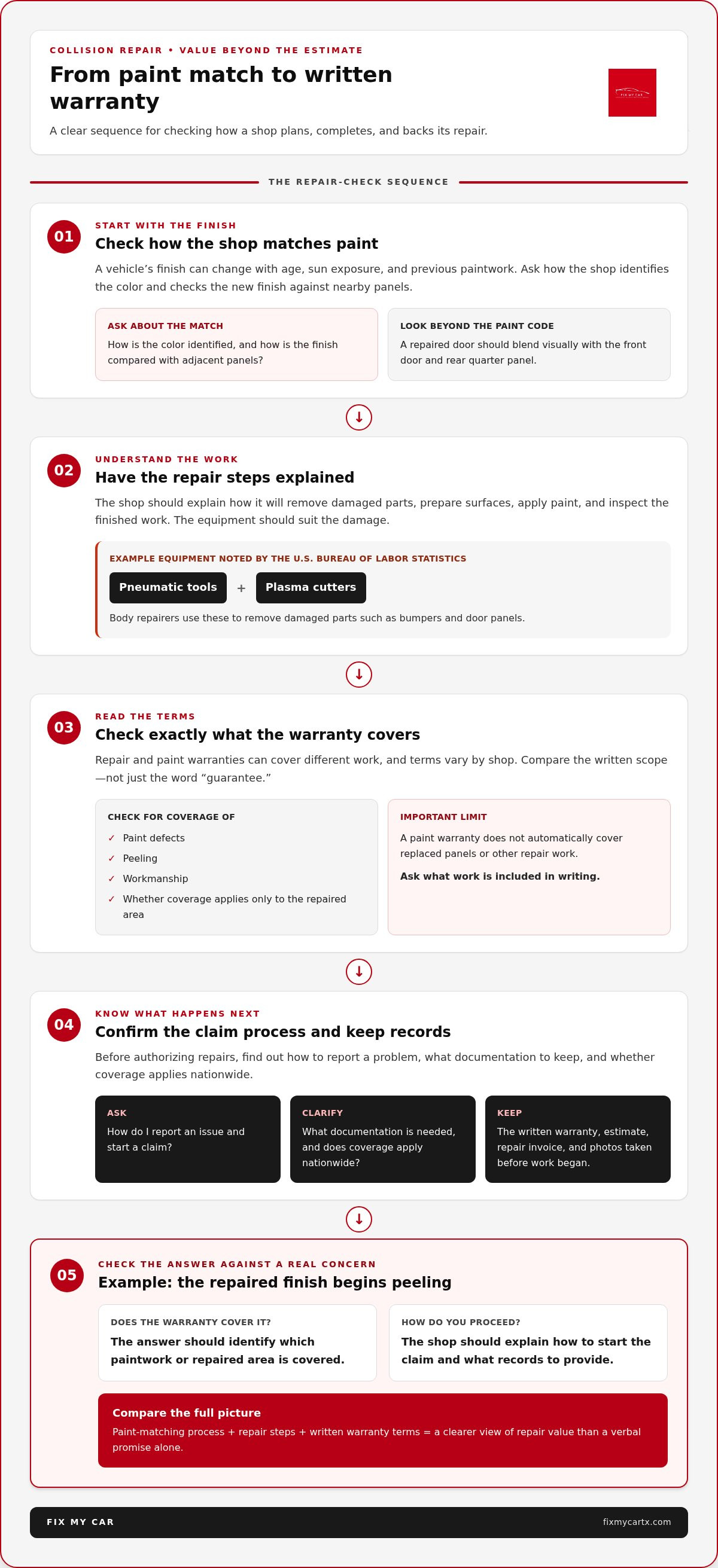
Paint matching is more than choosing a color that looks close under shop lights. A vehicle’s finish can vary with age, sun exposure, and previous paintwork, so a careful match needs to account for the surrounding panels. Top auto body shops use advanced technology to match vehicle paint color. Knowing how the shop approaches the match helps you judge the repair plan: ask how it identifies the color and checks the new finish against adjacent panels. For example, a repaired door should blend visually with the front door and rear quarter panel, not merely match a paint code.
What equipment and repair procedures should a collision repair shop use? The shop should use equipment suited to the damage and explain how it will remove damaged parts, prepare surfaces, apply paint, and inspect the finish. The U.S. Bureau of Labor Statistics notes that body repairers use pneumatic tools and plasma cutters to remove damaged parts such as bumpers and door panels.
For a collision repair warranty, focus on its written scope rather than the word “guarantee.” Repair and paint warranties can cover different work, and terms vary by shop. Check whether coverage applies to paint defects, peeling, or workmanship, and whether it covers only the repaired area. A paint warranty doesn’t automatically cover replaced panels or other repair work. Knowing the limits helps you compare warranty terms accurately.
Review the warranty’s claim process before authorizing repairs. Find out how to report a problem, what documentation to keep, and whether coverage applies nationwide. These details matter if you move or notice an issue far from the original shop. Ask for the warranty in writing and keep it with the estimate, repair invoice, and any photos taken before work began. Clear records connect the covered repair to the specific concern.
Use a simple example to understand the terms: if the repaired finish begins peeling, does the warranty cover the paintwork, and how do you start a claim? A clear answer identifies the covered work and explains the process. Also ask how the shop inspects the completed finish and handles a visible mismatch. Compare the paint-matching process, repair steps, and written warranty together. That gives you a fuller picture of value than a verbal promise alone.
2. Shop reputation, reviews, and recommendations
Warning signs include evasive answers, pressure to authorize work immediately, or reluctance to explain the repair process. A shop that dismisses questions or won’t provide clear written information gives you less confidence about what to expect.
Build a reputation check from several sources instead of relying on one rating. Read Google reviews, ask friends or neighbors about their experiences, and speak with someone who recently had auto body work done. Look for details about the repair itself, not just comments like “great service.” A review describing how a shop handled a delayed part or explained a repair concern gives more useful context.
Compare themes across reviews. One complaint may reflect a specific situation, while repeated comments about missed updates, unclear explanations, or unresolved concerns deserve closer attention. Positive reviews are more informative when they describe concrete outcomes, such as a staff member explaining the process or addressing a concern after pickup.
Use these questions to assess whether a review offers useful evidence:
Does the reviewer describe collision damage or another relevant auto body repair?
Do they explain how the shop communicated during the repair?
Is there a specific example of how a problem or concern was handled?
Do responses from the shop address the issue clearly and respectfully?
Online ratings can help you create a shortlist, but written comments reveal more about the customer experience. Check whether reviews discuss the type of repair your vehicle needs. A review about routine service, for example, may tell you little about how the shop handles accident damage. Notice whether feedback is consistent across different reviewers and dates. A pattern of detailed, relevant experiences is more useful than a single glowing or sharply negative post.
Recommendations from people you know add another perspective. Ask what work their vehicle needed, whether the estimate and final explanation were understandable, and how the shop kept them informed. Their answers can reveal practical strengths or concerns that a star rating cannot. Still, every repair is different, so consider a recommendation alongside reviews and your own conversations with the shop.
After researching a shortlist, visit the shop’s website and call with a few focused questions. Ask how it explains the repair plan and communicates if the work changes. Notice whether the answers are direct and understandable. Clear responses help set expectations before you commit. If you’re comparing local options, review the details of the collision repair process as part of your research.
3. Technician credentials and certifications
Credentials help you assess whether technicians have training relevant to collision repair. Automotive Service Excellence (ASE) certification and I-CAR training are commonly considered when evaluating auto body expertise. I-CAR Gold Class and ASE certifications indicate training related to industry standards for safety and repair quality. Ask which credentials apply to the work planned for your vehicle, rather than treating a certificate as proof of every skill.
ASE, the National Institute for Automotive Service Excellence, certifies automotive technicians and repair professionals. Certification can indicate technical knowledge, but the relevant area matters. A credential related to mechanical service, for example, does not automatically demonstrate collision-repair expertise. Ask which technicians will handle the body repair and what training supports those tasks. A clear answer connects each credential to the work planned.
I-CAR Gold Class is another credential to consider when comparing collision repair training. It signals a commitment to training aligned with repair quality and safety standards. Ask whether technicians working on your vehicle have relevant I-CAR training and how it relates to the damaged areas. A repair involving structural components may call for different expertise than one focused on a dented exterior panel.
Manufacturer-specific certifications can also matter. Vehicles may use different materials, construction methods, and repair procedures, so training tied to a vehicle maker can be a positive sign. If your vehicle has significant damage, ask whether the shop has manufacturer-specific training relevant to its make and model. The important point is not the credential’s name alone, but whether it applies to the repair.
Distinguish individual technician credentials from shop licensing or facility certifications. A technician may hold a personal certification, while a shop credential can reflect broader standards for the business or repair process. Licensing and certification can indicate that a shop meets government or industry-association standards. Ask what each displayed credential represents and whether it applies to the people doing your repair. This helps you distinguish a general business qualification from hands-on technician training.
Use a short, practical review before choosing:
Identify the technician credentials most relevant to the required collision work.
Look for ASE or I-CAR training, including I-CAR Gold Class recognition.
Ask whether manufacturer-specific training applies to your vehicle’s make and model.
Distinguish technician certifications from shop licensing or facility credentials.
Training is most useful when it connects to the repair plan. If an estimate includes panel work and structural repair, for example, ask how the assigned technicians’ credentials relate to both tasks. A shop that explains the connection clearly makes it easier to evaluate its qualifications alongside the proposed work. Consider that explanation as part of your overall assessment, not a substitute for reviewing the estimate and repair plan.
4. Comparing estimates and assessing value
Compare written estimates from several auto body shops, but don’t rank them by the bottom line alone. Each estimate should describe the work, parts, labor, and additional service costs. If one quote lists panel replacement while another lists panel repair, the totals don’t reflect the same work. Ask each shop to explain differences in scope before deciding which estimate offers better value. A clear explanation of these differences is an important part of what to look for in a collision repair shop.
Review the parts information carefully. Repairs may use original equipment manufacturer (OEM), aftermarket, recycled, or reconditioned parts. Each estimate should identify the planned parts so you can compare like with like. If you prefer OEM parts, discuss that preference with the repair shop and your insurer. Depending on your policy and state laws, choosing OEM parts may mean paying the difference from aftermarket parts.
Check that labor and parts costs are listed separately, then ask about every fee or additional charge before work begins. A detailed estimate makes it easier to see what each shop plans to do and which costs relate to specific repairs. Use this checklist as you compare:
Confirm that each estimate describes the same damaged areas and repair work.
Compare the listed parts, labor, and additional service costs.
Ask how the shop will assess damage and identify any hidden damage.
Review how the shop will seek approval if the repair scope changes.
Collision damage may be more extensive than an initial inspection reveals. A shop should explain how it assesses damage, identify planned parts, and describe what happens if technicians find additional damage after repairs begin. A visible dent, for example, may conceal damage behind a panel. Ask how the shop will document that discovery and explain proposed changes before proceeding.
A written estimate should also clarify when the shop will seek your approval for added work. The National Association of Attorneys General says a written estimate should state that the shop will get approval before doing work that exceeds a specified amount of time or money. Read that approval language closely so you understand how changes will be handled and who will contact you. As you decide what to look for in a collision repair shop, give this approval process the same attention as the estimate total.
Treat an estimate as a repair plan, not an unchangeable final bill. The final repair cost may exceed the estimate and what an insurer agreed to pay. Compare how each shop explains that possibility, documents revised work, and communicates with you. A lower estimate may leave out necessary work or use different parts, while a higher one may reflect a broader repair scope. The best basis for comparing value is clear detail and an approval process you understand.
5. Rental cars, shuttle service, and insurance assistance
Transportation can affect your repair choice as much as the estimate. Before scheduling, plan how you’ll get to work, school, or home while your vehicle is being repaired. Ask whether the shop offers a shuttle, ride-share transportation, or help arranging a rental car. Clarify who pays, when the arrangement starts, and whether pickup or drop-off is available. These details help you plan without assuming every option is included.
Review your insurance policy for rental coverage and its terms before arranging a vehicle. Then ask the repair shop how the repair schedule may affect your transportation plan. If technicians find additional damage, for example, ask how the shop will update you about timing so you can adjust rental arrangements. Have transportation costs and responsibilities explained before work begins.
Insurance assistance is another practical point to compare. Ask whether the shop works directly with your insurer on repair paperwork and billing. Find out who will communicate if the repair plan changes, what information you’ll receive, and whether you’ll need to handle any documents yourself. A clear process can make it easier to follow the claim and understand what remains your responsibility.
Ask about possible out-of-pocket costs before authorizing repairs. The estimate, your insurance agreement, and your policy all affect what you may owe. Have the shop explain any charges you’re expected to pay, including costs that could arise if additional damage is found. Keep written copies of the estimate and insurance communications so you can compare the approved work with the repair plan.
An insurer may suggest a network repair shop, but you make the final decision about where your vehicle is repaired. Network shops may be prescreened for quality, customer service, warranties, and timely repairs. They may also offer conveniences such as vehicle pickup and delivery, which can streamline repairs and billing. Compare those practical benefits with your needs rather than choosing based on the network label alone.
Before deciding, use a short transportation and insurance checklist:
Ask which ride, shuttle, rental, or pickup options are available and who pays.
Review your policy’s rental coverage and clarify your likely out-of-pocket responsibilities.
Confirm how the shop handles insurer paperwork, billing, and communication about added damage.
Compare network conveniences with the repair process and support you need.
Recommendations from friends can help you learn how a shop handled insurance communication, but ask for specific examples. Did they understand changes to the repair plan? Were billing responsibilities explained clearly? Whether you choose a network shop or another repair facility, the best fit is one whose process matches your transportation needs and keeps insurance details understandable. For help planning collision repairs and transportation, request collision repair support.
Fix My Car: Collision Repair
Fix My Car is a natural next step when your vehicle needs collision repair and you want help understanding the process. The shop provides free estimates and insurance-friendly handling to help you review the proposed work and coordinate repair paperwork. Complimentary ride-share transportation can also help you manage daily travel while your vehicle is being serviced.
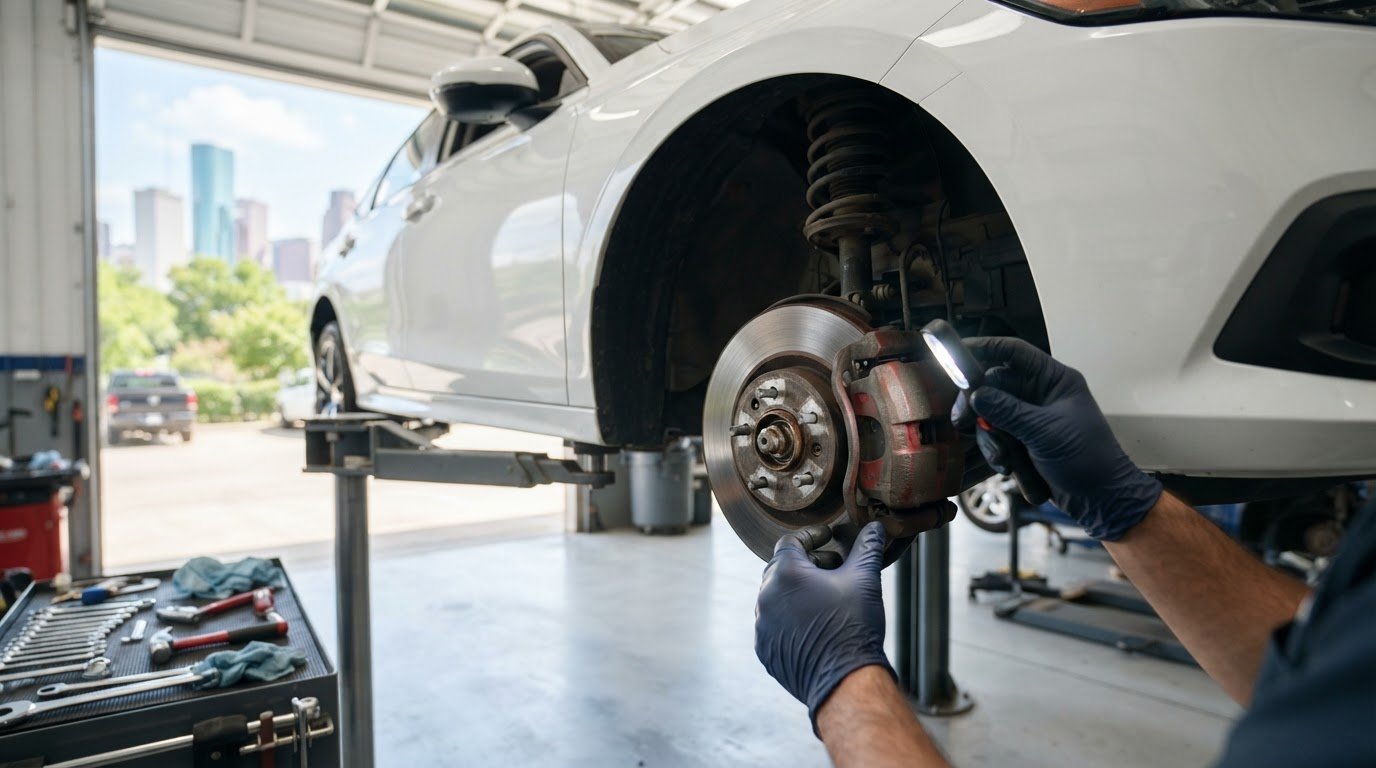
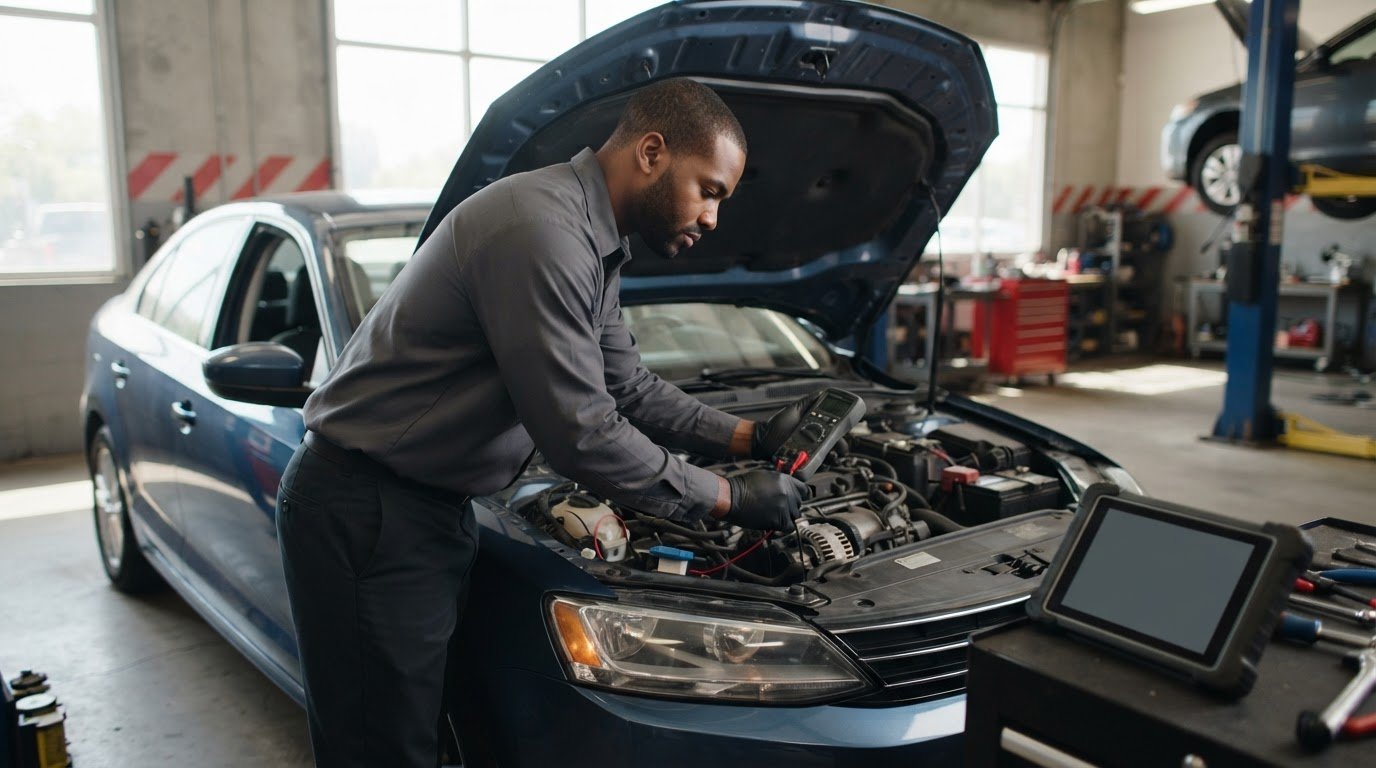
Collision damage may involve more than exterior panels. If your repair also requires mechanical work, brake repair, or air conditioner and heater repair, Fix My Car can address those related vehicle needs. Share the damage details and any questions about your estimate or insurance process so the repair plan can be discussed clearly.
For collision repair support, contact Fix My Car or visit fixmycartx.com.
Move Forward With a Clear Repair Plan
Knowing what to look for in a collision repair shop gives you a clearer basis for deciding what happens next. Rather than trying to resolve every detail at once, write down the concerns you want addressed and keep your repair discussion focused on your vehicle’s needs. That preparation can help you explain what matters and understand the next steps.
Keep your estimate and insurance communications together as a reference for repair discussions. Note new questions as they come up so you can address them directly rather than relying on memory. A focused conversation helps you make decisions clearly and stay involved throughout the process.
Fix My Car offers Collision Repair, Mechanical Work, and Air Conditioner and Heater Repair. These services can address collision damage and related mechanical or climate-control concerns. If you’re ready to discuss repairs for your vehicle, contact Fix My Car today. Take the next step at your own pace, with a clear understanding of what you need.
Frequently Asked Questions
What Should I Look for When I Choose an Auto Body Shop?
Choose a shop that can explain how it will handle your vehicle’s specific damage, from initial inspection through final quality checks. For example, ask how the repair plan accounts for nearby sensors or components if the impact reached a bumper. In Houston, practical access matters too: a shop near home or work can simplify drop-off and pickup. Clear explanations help you compare the proposed process, not just the estimate.
What questions should I ask a collision repair shop before choosing one?
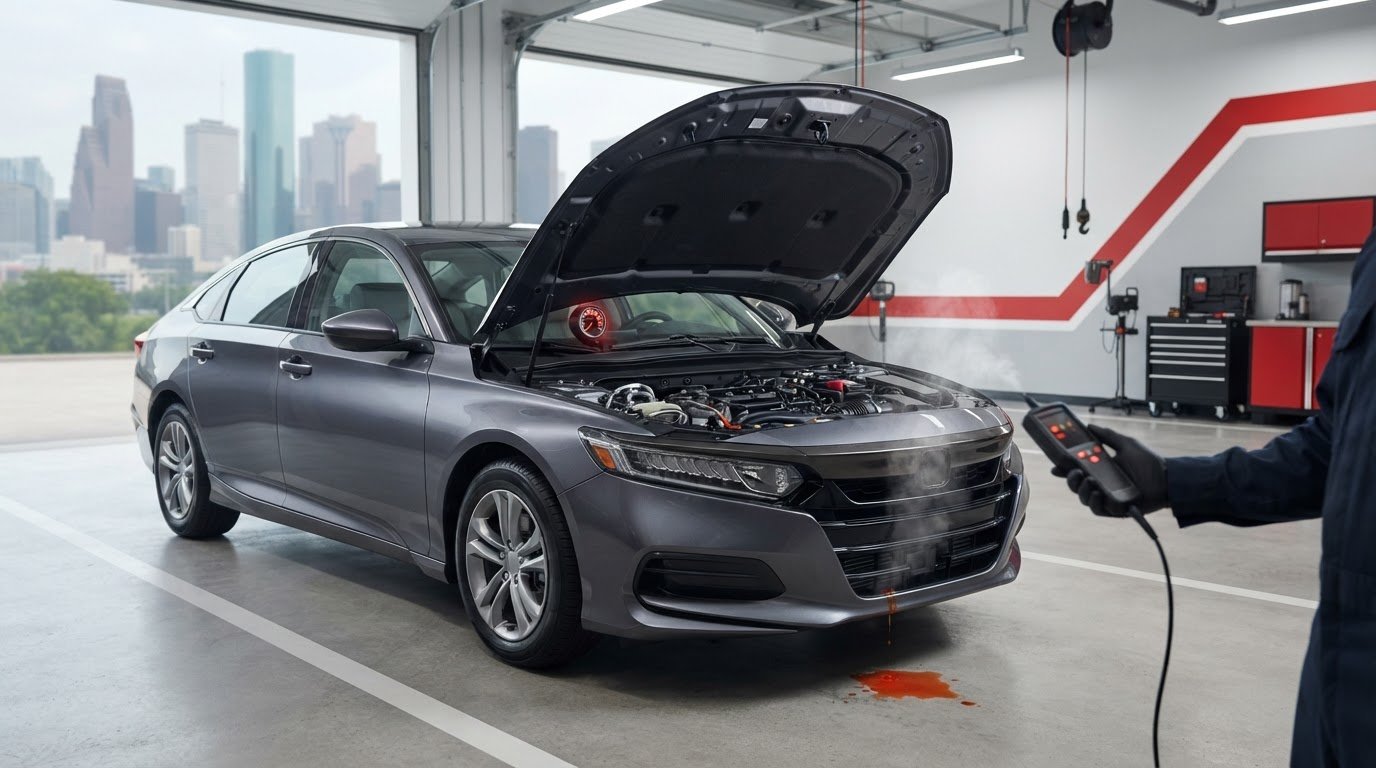
Ask how the shop will document the damage, explain repair progress, and notify you if the work plan changes. Find out who your contact will be and how you’ll receive updates. If your vehicle has warning lights or drivability issues after impact, describe them and ask how the assessment will account for those symptoms. These questions help you judge whether the shop’s communication and process fit your needs.
Does insurance require using a specific collision repair shop?
No. In the United States, an insurer may recommend repair shops, but you make the final choice about where your vehicle is repaired. A network shop may offer streamlined paperwork or other conveniences, while a shop outside the network may also handle repairs. Before choosing, understand how your insurer will review the estimate and communicate with the repair facility, so you know how approvals and claim details will be managed.
What collision repair warranties should a shop provide?
Warranty coverage varies, so look for written terms that identify covered work, exclusions, and claim steps. Check whether the document covers paint, parts, and workmanship separately, since one warranty may not apply to every repair. Also review whether coverage applies nationwide, which can matter if you move or travel. Keep the warranty with your estimate and invoice so you can connect its terms to the completed work.
How long do collision repairs usually take, and what affects repair time?
Repair time varies with the work required, newly discovered damage, and parts delays. There is no single typical repair-time range.
Comentarios