


Used Car Inspection Service Near You: Inspection Cost
The cost of a pre-purchase used car inspection depends on the vehicle, the inspection’s scope, and its location; pricing is provided after a quote request. If you’re searching for a used car inspection service near me, compare what each inspection covers, not just the price.
It’s natural to want a clear picture of a car before committing, especially because a test drive can’t reveal every concern. A thorough inspection can help you understand the vehicle’s visible condition, mechanical findings, and issues that may need attention, so you can make a more informed decision.
This guide explains how mobile inspections work, what can affect the cost, and what photos and video may show in a report. You’ll also learn how to interpret findings and repair recommendations, and when a local repair shop may be a useful next step.
Table of Contents
How much can a pre-purchase used car inspection cost?
The cost depends on the vehicle, the inspection scope, and conditions at its location. A compact car with accessible components may take less inspection time than a vehicle with complex systems or visible damage. Pricing is provided after a quote request; vehicle type, access, location, and requested checks all shape the assessment.
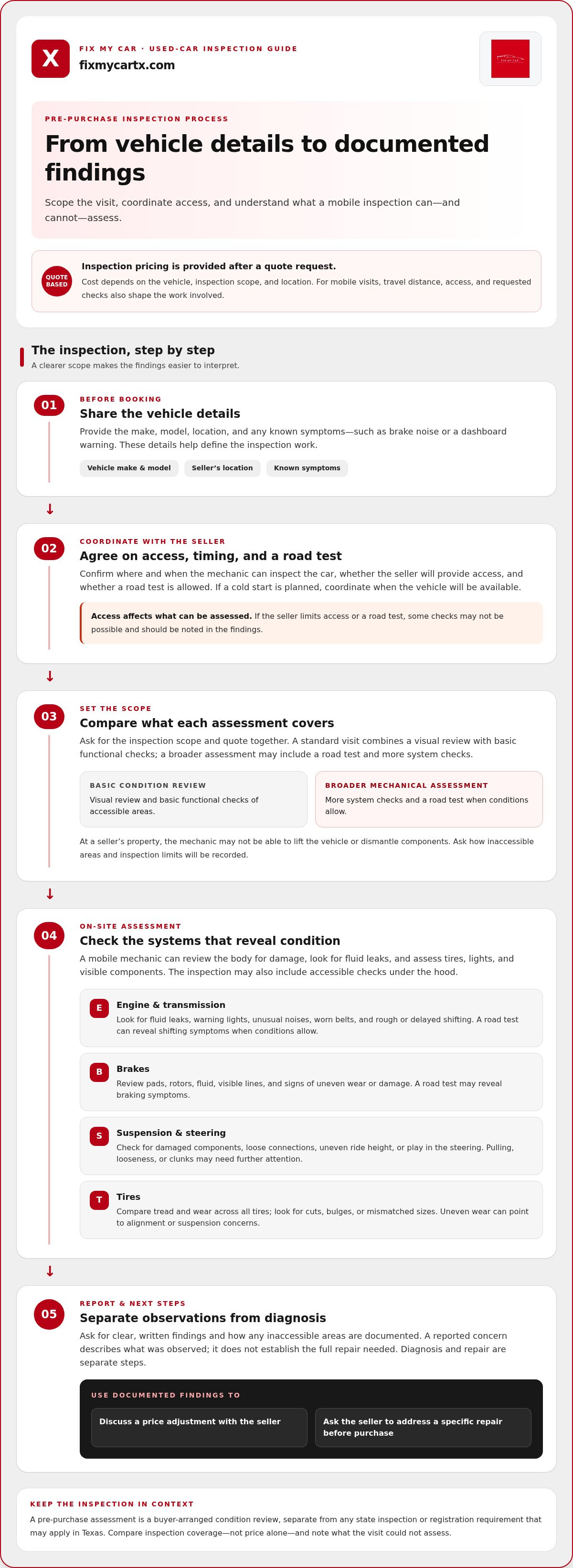
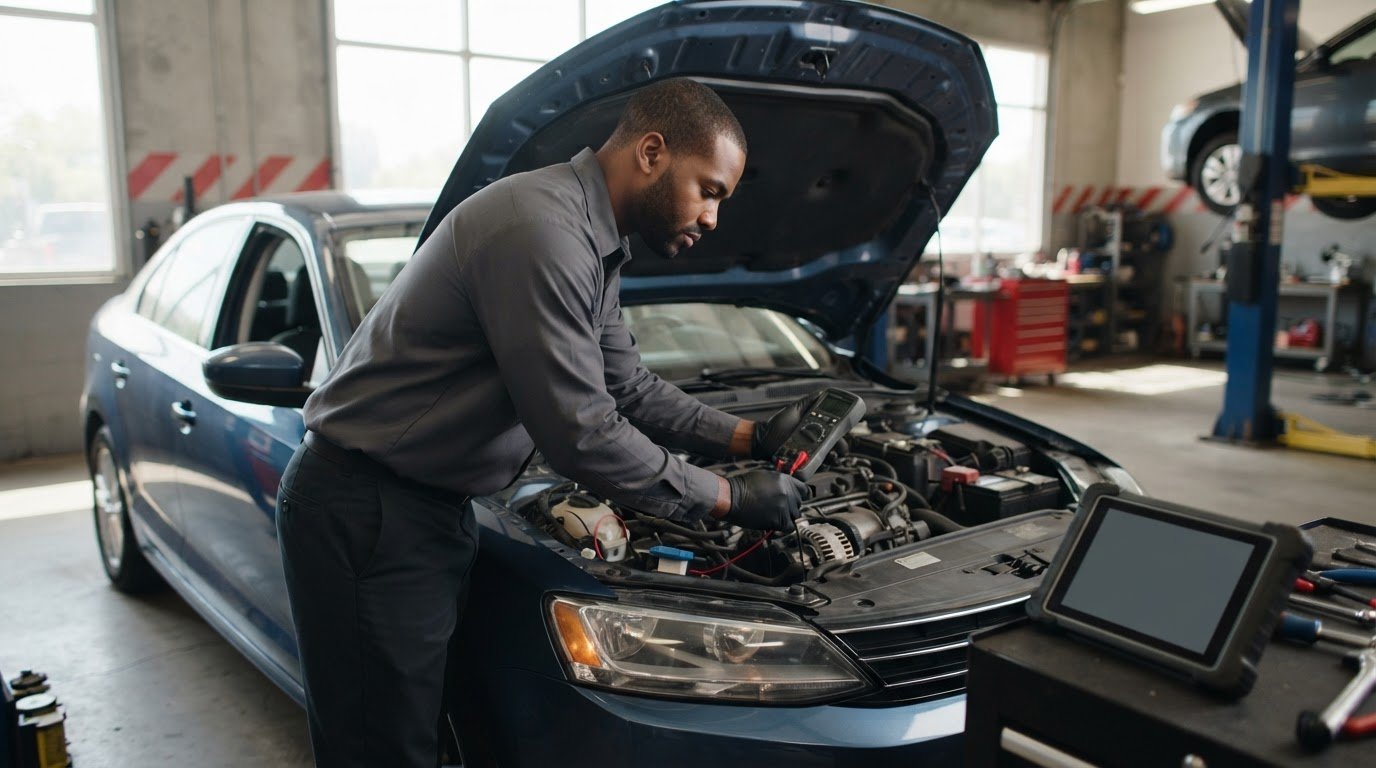
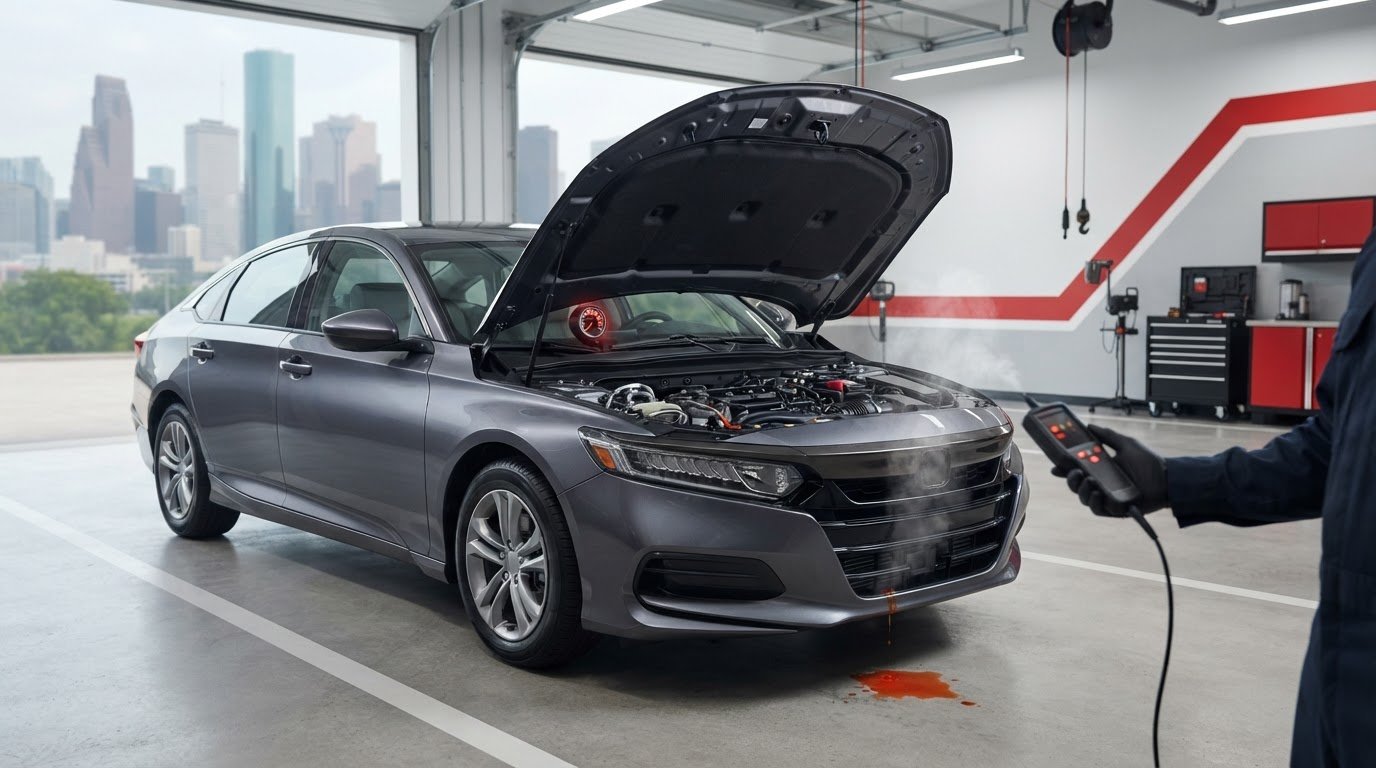
A useful inspection goes beyond a quick visual scan. The engine, transmission, brakes, suspension, steering, and tires each offer clues about the vehicle’s condition and potential repair needs. For example, an engine inspection may look for fluid leaks, unusual sounds, worn belts, and warning lights. A transmission check can include observing how it shifts during a road test, when conditions allow.
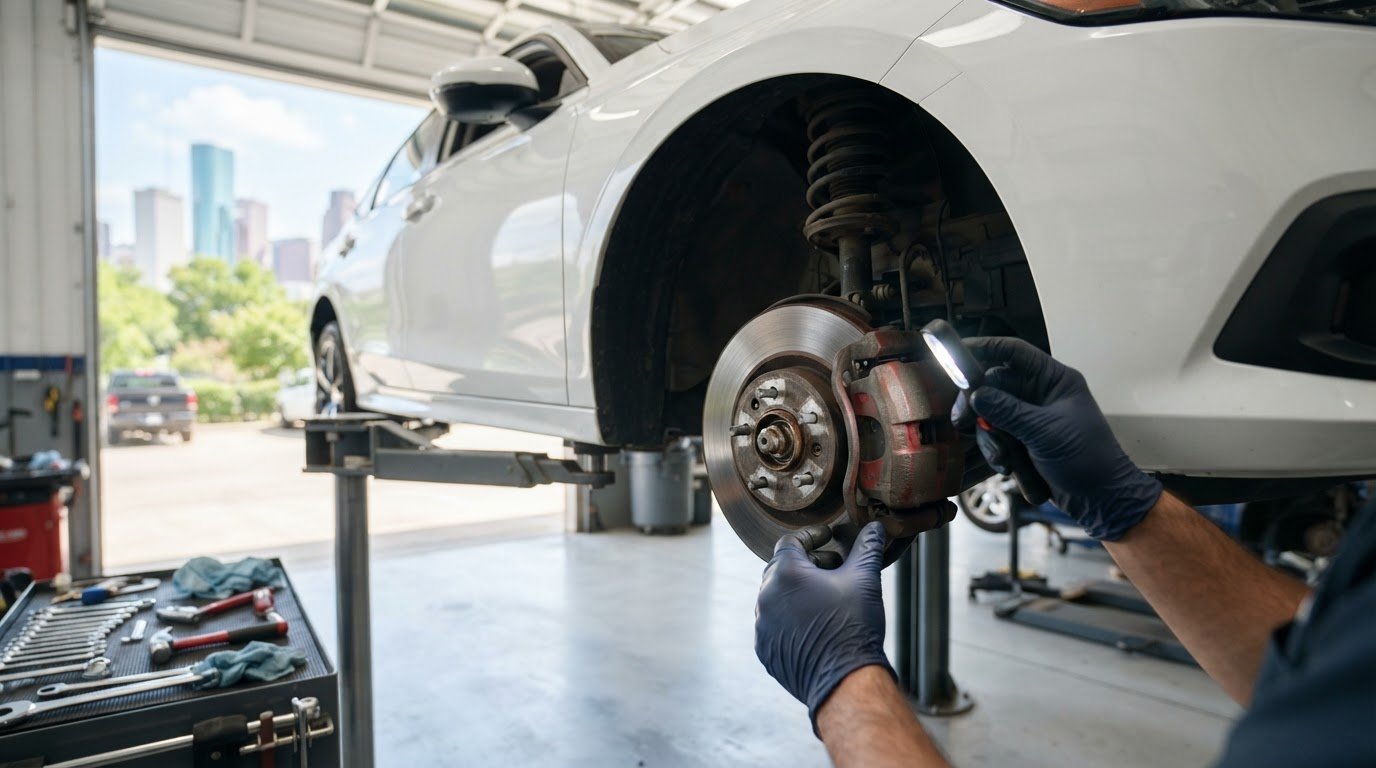
The brakes deserve a close look because wear can affect safe stopping and lead to repair work. An inspector may examine the brake pads, rotors, fluid, and visible lines, then note uneven wear or damage. A reported concern does not establish the full repair needed: diagnosis and repair are separate steps. Brake repair addresses identified issues, while an inspection documents what was observed.
Engine and transmission: Look for leaks, warning lights, abnormal noises, and rough or delayed shifting.
Brakes: Review pad and rotor condition, fluid, and visible signs of uneven wear.
Suspension and steering: Check for damaged components, loose connections, uneven ride height, or play in the steering.
Tires: Compare tread and wear across all tires, and look for cuts, bulges, or mismatched sizes.
Suspension and steering checks often go hand in hand. A vehicle that pulls to one side, feels loose through turns, or clunks over bumps may need further attention. Uneven tire wear can also point to alignment or suspension concerns. Replacing a tire alone may not address the condition causing the wear.
A pre-purchase assessment is a buyer-arranged condition review, separate from any state inspection or registration requirement that may apply in Texas. Ask what systems the inspection covers and how the findings will be documented. The inspection’s limits matter, too: a road test can reveal shifting or braking symptoms that a stationary visual check may not expose.
Before booking, identify the vehicle’s make, model, and location, then decide whether you want a basic condition review or a broader mechanical assessment. A clear scope helps you compare options and understand what the findings can tell you about the car.
Mobile pre-purchase inspections for used cars
A mobile inspection brings a mechanic to the vehicle, such as to a seller’s driveway or workplace. Before booking, agree on access and timing, and confirm whether the car can be driven for a road test.
Standard Inspection Scope
A standard pre-purchase inspection combines a visual review with basic functional checks. The mechanic can examine the body for damage, look for fluid leaks, and assess the tires, lights, and visible components. An inspection may also include checks of accessible components under the hood. When possible, a road test can reveal steering pull, unusual noises, or rough shifting.
Scope matters because a mobile assessment has practical limits. A mechanic may not be able to lift the vehicle or dismantle components at a seller’s property. Ask what the inspection includes, whether it covers a road test, and how inaccessible areas are recorded. This helps you distinguish observations about the car’s condition from issues that need further examination.
Benefits of a Mobile Inspection
Having the inspection at the vehicle’s location can simplify scheduling and avoid arranging transport before you know more about its condition. It also lets the mechanic assess the car where it is normally parked, including visible damage or a warning light present when the engine starts. According to NHTSA, 1 in 3 vehicles on U.S. roads has at least one safety-related defect.
Choose a mechanic who explains the inspection scope, documents findings clearly, and separates observed symptoms from possible causes. Ask how the report identifies safety concerns and maintenance needs. A useful report helps you focus on the vehicle, not guesswork. If the inspection identifies repair needs, mechanical work options may be a relevant next step.
Arranging an Inspection With the Seller
Contact the seller before scheduling to agree on an inspection time and location. Share the vehicle’s make, model, and location with the mechanic, then confirm that the seller will provide access and allow the planned checks. A cold start can reveal different symptoms than a warmed-up engine, so coordinate when the vehicle will be available.
To find a trustworthy mobile mechanic, look for a clear scope, written findings, and an explanation of inspection limits. Can you negotiate based on the report? Yes. Use documented findings to discuss a price adjustment or ask the seller to address a specific repair before purchase.
Pre-Purchase Inspection Costs
Mobile inspection costs depend on the vehicle, travel distance, access, and requested scope. A basic visual assessment differs from a broader evaluation that includes a road test and more system checks. Ask for the scope and quote together, so you can compare what the fee covers rather than treating every inspection as identical.
For a quote, provide the vehicle details, the seller’s location, and any known symptoms, such as brake noise or a dashboard warning. These details help define the work involved. If the seller limits access or a road test, that can also affect what the inspection can assess and report.
Digital inspection report with photos and video
A digital report gives you a record to review alongside the seller’s description. Look for clear findings, supporting photos, and video showing a sound or movement, such as engine noise during startup. Each visual should identify the area examined and explain why it matters to the vehicle’s condition.
Read the report by system, not just by its overall rating. A favorable score can summarize the mechanic’s assessment, but it shouldn’t replace individual observations. For example, a tire photo may show uneven tread wear, while a video may capture a steering noise. Check whether the report distinguishes observed damage from a possible cause that needs further diagnosis.
Access affects how useful the report is. A well-organized digital file should be easy to open, save, and share with a co-buyer or seller. Check that the vehicle is identified correctly, the inspection date is visible, and the photos match the written notes. If the vehicle identification number is used, compare it with the VIN on the vehicle and sales paperwork.
A report has limits. A photo records only what the camera can show, and an inspection doesn’t automatically reveal concealed damage, intermittent faults, or missing service history. If a section says “not inspected,” treat it as unanswered, not as a clean result. Likewise, missing maintenance records mean the report cannot establish that routine oil changes or other past services occurred.
Use a separate vehicle-history check alongside the physical inspection. Review available title, reported collision, odometer, and maintenance information, then compare those details with the car and the inspection findings. A history record and a mechanic’s visual assessment answer different questions. A reported event may need closer inspection, while a clean-looking panel cannot establish the vehicle’s full history.
Don’t treat “certified” or a color-coded rating as a complete explanation. Read the inspection scope, notes, and limitations behind the label. If a dashboard warning appears in a photo, look for a written description explaining whether the inspector observed it during startup or operation.
A money-back guarantee is separate from an inspection result. Read its written terms for the covered situation, claim steps, deadline, and remedy; don’t assume repairs are covered or that a particular finding triggers a refund. Photos and video can help you discuss documented concerns with the seller, but they support your decision rather than make it for you.
100-Point inspection checklist
A “100-point” vehicle inspection checklist organizes checks across the car’s major systems. The exact items can vary, so use the checklist as a guide to coverage, not proof that every component received the same depth of testing. Ask how technicians mark each item: inspected, showing wear, requiring attention, or inaccessible.
Start with the vehicle’s identity and exterior. A practical checklist can record the VIN, odometer reading, body-panel condition, glass, lights, and signs of repair. Look for uneven paint, inconsistent panel gaps, cracked glass, and moisture inside the cabin. These observations can flag areas for closer review, but they don’t establish the cause on their own.
Engine bay: Check for fluid residue, damaged hoses, loose belts, corroded battery terminals, and warning lights at startup.
Transmission and drivetrain: Note delayed shifts, unusual vibration, or fluid concerns during available checks and a road test.
Steering and suspension: Assess steering response, visible component damage, ride height, and clunks over uneven pavement.
Brakes and tires: Review visible pad and rotor condition, tire tread, sidewall damage, and uneven wear.
Cabin and controls: Test seat belts, windows, locks, gauges, climate controls, and dashboard indicators.
Inside the cabin, a technician can operate each control and note faults, such as a window that stops midway or a heater that blows cool air. Seat-belt damage, a persistent air-bag warning, or damp carpeting deserves a specific report entry. These checks connect visible symptoms with systems the buyer may use every day.
A checklist should also separate condition from action. “Worn” describes an observation; “replace” is a repair recommendation that needs context. For example, a report might note a cracked belt and recommend replacement, while recording a small paint scratch as cosmetic. Ask for the reason behind each recommendation and whether it affects safe operation, drivability, or routine maintenance.
Use the checklist to spot missing coverage. If a box is blank, ask whether the item was inaccessible, not tested, or simply omitted from the report. A vehicle inspection may not include disassembly, and a road test may be limited by location or seller access. Those limits matter when comparing two reports that both carry a “100-point” label.
For a practical review, group findings into safety concerns, mechanical issues, and maintenance items. Match each note with its photo, test result, or symptom. This helps you discuss specific evidence with the seller and decide whether further diagnosis is needed before purchase.
Inspection findings and repair recommendations
An inspection report is most useful when it connects each finding to evidence and a practical next step. Separate observed conditions, such as a cracked windshield, from suspected causes, such as a vibration that may need diagnosis. This helps you judge what the inspection established and what remains uncertain.
Warning signs include fluid leaks, dashboard alerts, uneven tire wear, brake noise, steering pull, and visible structural damage. Ask the inspector where each issue appeared and whether it affected operation during the inspection. A warning light, for example, is a finding; identifying its underlying cause may require further diagnostic work.
Read each recommendation alongside its supporting note, photo, or test observation. “Brake pads show wear” describes a condition, while “replace the pads” recommends an action. Ask what evidence supports the repair and whether it concerns safe operation, drivability, or routine maintenance. This helps prevent mistaking an inspection finding for a complete repair diagnosis.
Prioritize concerns by consequence, not by the length of the report. A braking issue or damaged steering component deserves attention before a cosmetic scratch. A cracked windshield can affect visibility, while an air-conditioning concern may affect comfort rather than stopping. Group findings as safety-related, mechanical, or cosmetic to clarify your next steps.
Use the findings when discussing the purchase with the seller. Point to a specific report item, such as a leaking shock absorber or damaged tire, and ask whether the seller will adjust the terms or address the concern. Keep the discussion factual: share the documented observation, don’t present a suspected cause as proven, and retain the report for reference.
A practical review follows this sequence:
Match: Connect each recommendation to a report note, photo, symptom, or test result.
Rank: Address safety-related concerns before comfort or appearance items.
Clarify: Separate observed symptoms from repairs that require additional diagnosis.
Decide: Compare the vehicle’s condition and repair needs with your buying priorities.
Some findings point to a specific repair category. A documented braking concern may call for brake repair; collision-related body damage may need a separate repair assessment. Treat the inspection as a decision tool, not a promise that every hidden fault has been found. The report supports a more informed choice, but your comfort with its documented risks remains central.
If the report identifies brake concerns, explore brake repair options as a next step. For other findings, use the written observations to decide whether further diagnosis or a discussion with the seller makes sense.
Fix My Car: Collision Repair
Fix My Car can help when an inspection identifies collision damage that needs repair. Its Mechanical Work, Brakes Repair, and Air Conditioner and Heater Repair services address mechanical concerns, brake wear, and heating or air-conditioning issues identified in the report.
Use the inspection findings to explain the concern and identify the area needing attention. For collision-related damage, details such as affected panels, glass, or visible structural components can help frame the repair conversation. An inspection report records observed conditions; repair work is a separate step.
If you’re ready to discuss a repair need, contact Fix My Car or visit Fix My Car online.
Make your next move with confidence
An inspection can inform your decision, but your priorities determine what happens next. Consider whether you’re comfortable taking on the vehicle’s documented repair needs or want the seller to address them before purchase. If you searched for a used car inspection service near me, use the findings to make a clear decision about the car, guided by your own priorities.
When findings point to repair work, Fix My Car offers Collision Repair, Mechanical Work, and Air Conditioner and Heater Repair. Sharing relevant inspection notes can help focus the repair conversation on the specific concerns documented for the vehicle.
Contact Fix My Car about repair needs and take the next step at your own pace.
Frequently Asked Questions
Which items are included in the inspection?
Inspection items vary by checklist, so review the written scope before the appointment. Common areas include the vehicle’s exterior, interior controls, engine compartment, tires, brakes, steering, and suspension. For a Houston car with signs of storm exposure, ask whether the inspection includes checking for visible water intrusion, such as damp carpeting or musty odors. Confirm how the report labels components that could not be accessed.
What does a used car inspection include?
A used car inspection usually combines a visual review with functional checks of accessible systems. For example, the inspector may operate windows and lights, examine visible wiring, and note dashboard warnings during startup. A road test can add information about acceleration, shifting, and noises while driving. The report should distinguish direct observations from possible causes, since identifying a symptom doesn’t always pinpoint the required repair.
How much does a pre-purchase car inspection cost near me?
The inspection price depends on the vehicle, requested scope, travel distance, and access at the seller’s location; a quote request establishes the cost for the case. A basic visual assessment and an inspection that includes a road test involve different work. In Houston, share the vehicle’s location and any known concerns when requesting a quote, then compare the included checks rather than price alone.
How long does a pre-purchase vehicle inspection take?
Inspection time depends on the vehicle, requested checks, access, and whether a road test is possible. A car with visible damage or warning lights may need more careful documentation than one with no obvious concerns. The inspection can also take longer if the seller needs to locate keys, move the vehicle, or provide access to the cabin and engine compartment. Ask for the expected appointment window when arranging the visit.
Can I get a used car inspected before buying from a private seller?
Yes, you can arrange an inspection before buying from a private seller by agreeing on access, location, and timing. Explain that the assessment helps you make an informed purchase decision, then coordinate directly so the inspector can see the vehicle. Use the report in your buying discussion: documented concerns can support questions about the car’s condition or the terms of sale.
Are used car inspections required or regulated in my state?
A pre-purchase inspection is a buyer-arranged condition review, separate from state inspection or registration requirements. While private pre-purchase checks are voluntary, local regulations may apply, and Texas requires specific vehicles to pass safety or emissions inspections depending on the county.
Mobile mechanic vs dealership inspection for a used car
A mobile mechanic from Fix My Car can inspect the vehicle right at the seller’s location, though access and the ability to lift the car or perform a road test may sometimes be limited. Be sure to confirm the exact inspection scope and how any inaccessible areas will be documented in the final report.
Comentarios