


Signs of Hidden Damage After a Collision: What to Watch For
What if the dent you can see is the least important damage your car sustained? After a collision, a vehicle may look mostly intact yet feel different on the road. New noises, warning lights, fluid leaks, or changes in steering can be signs of hidden damage after collision, even when the impact seemed minor.
It’s understandable to wonder whether an inspection is necessary if the car still runs. But damage can affect parts behind body panels or systems that aren’t visible from the outside, and symptoms may appear later. Knowing what to watch for can help you recognize when to stop driving and seek professional attention.
This article explains which changes deserve prompt attention, why they may show up after a collision, and what to document before an inspection. You’ll also learn how a professional assessment can look beyond visible damage. Fix My Car provides collision and related mechanical repair in North Houston, along with free collision repair estimates, to help clarify your vehicle’s condition.
Table of Contents
Why a Collision Can Cause Hidden Damage Beyond the Visible Dent
A visual check shows the outer surface, not every part behind it. Hidden collision damage is harm to vehicle components that isn’t apparent from an exterior inspection. For example, a bumper cover may look scraped or slightly dented while concealing damage to brackets or other parts behind it. The cover alone can’t confirm whether those components are intact.
Impact energy doesn’t always stop where the metal or plastic first makes contact. Force can travel through connected parts and stress mounting points, nearby panels, or areas of the vehicle structure. The impact’s direction and location, along with the vehicle’s design, affect which components might be involved. That doesn’t mean every collision causes concealed damage. It means appearance alone can’t confirm the condition of parts you can’t see.
Vehicles are designed with occupant protection in mind, and some are built to manage impact forces through specific structural areas. The broad overview of Car safety describes how vehicle design relates to protection in a crash. Depending on how an impact reaches the vehicle, damage may involve more than the spot where a visible dent appears.
Cosmetic damage changes what you see; hidden structural or mechanical damage can affect what supports, moves, or protects the vehicle. A small-looking mark doesn’t reliably show what happened behind the surface. A professional collision assessment can evaluate more than visible body panels.
What counts as hidden damage after a collision?
Possible concerns include structural damage, mechanical problems, electrical issues, restraint-system damage, or water intrusion if the impact affects a window, seal, or body opening. These are categories to consider, not a diagnosis based on appearance. A bumper cover, for instance, may hide a damaged mounting point or component while showing only a small mark outside. An inspection helps determine what, if anything, was affected.
Why a minor-looking impact can still affect vehicle systems
Even a low-speed impact can transmit force through connected parts. The outcome depends on where the vehicle was struck, the angle of contact, and how its components are arranged. A corner impact may affect different attachments than a straight-on hit. That possibility doesn’t prove damage occurred, and a larger-looking dent doesn’t reveal exactly what lies underneath. Treat the visible mark as one clue, not a complete account of the collision.
Interpret signs of hidden damage after collision in context rather than using them to diagnose a fault at a glance. A sound, warning light, or change in how the vehicle behaves can have more than one cause. Likewise, no obvious symptom doesn’t establish that concealed components are unaffected. An assessment can connect the impact location and visible condition with the changes you’ve noticed, giving you a clearer basis for deciding what attention the vehicle may need.
Signs of Hidden Collision Damage by Vehicle System
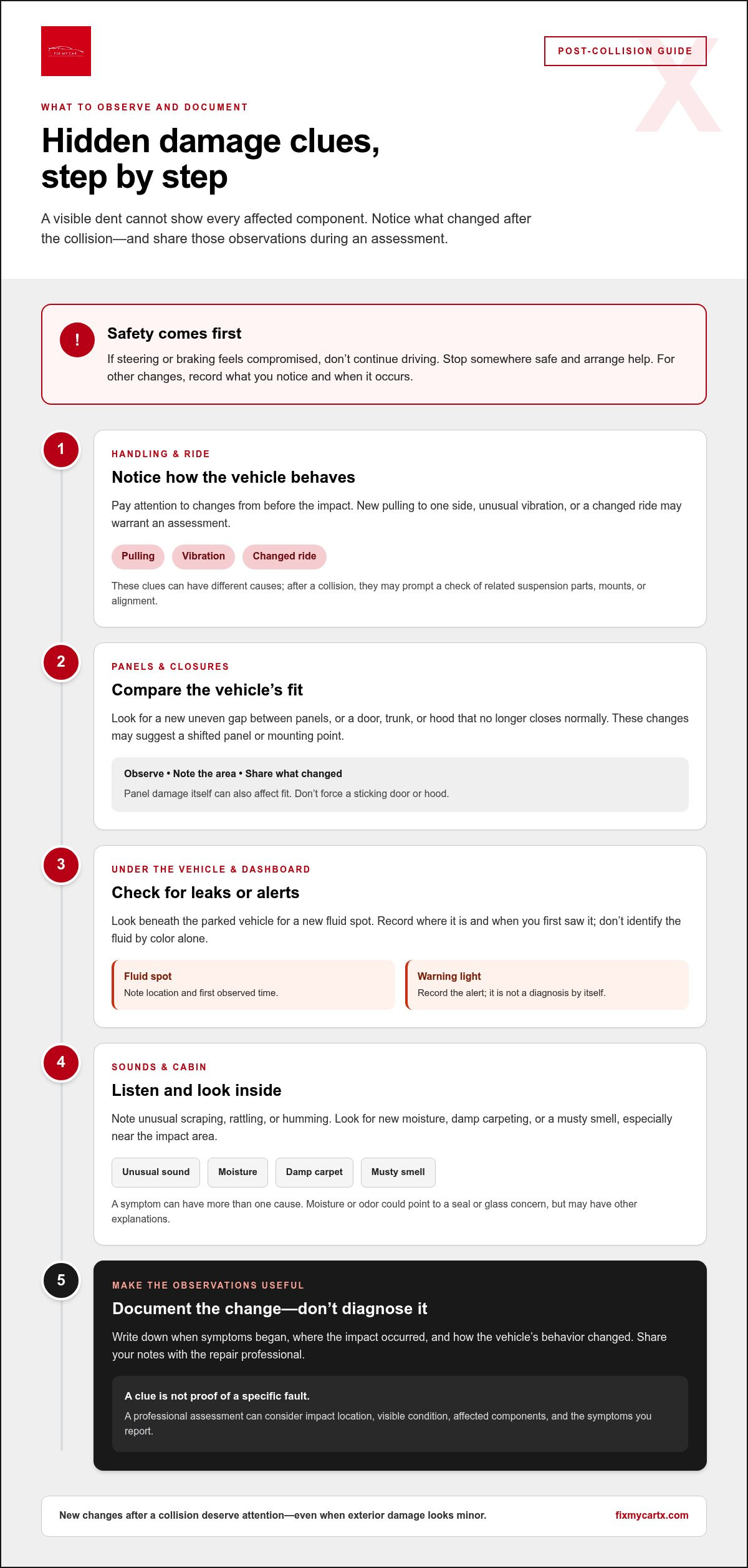
After an impact, pay attention to changes from how your vehicle behaved before. A symptom can point to an area that deserves attention, but it can’t identify a damaged part by itself. Some clues show up right away; others become noticeable later. The combination of symptoms, impact location, and how the car behaves can help a technician decide what needs closer inspection.
Changes in steering, ride, panels, or vehicle alignment
Notice how the vehicle tracks on a familiar, safe stretch of road. New pulling to one side, unusual vibration, or a change in ride may warrant an assessment. These clues can have different causes, but after a collision they may prompt a check of related suspension parts, mounts, or alignment. You can also look for an uneven appearance in the tires, without assuming that wear alone proves collision damage.
Compare panel spacing on both sides of the vehicle. A new uneven gap, or a door, trunk, or hood that no longer closes normally, may suggest a shifted panel or mounting point. Damage limited to the panel itself can also affect how it fits. Don’t force a sticking door or hood. Record what changed and tell the repair professional which area was struck.
Leaks, warning lights, noises, and cabin changes
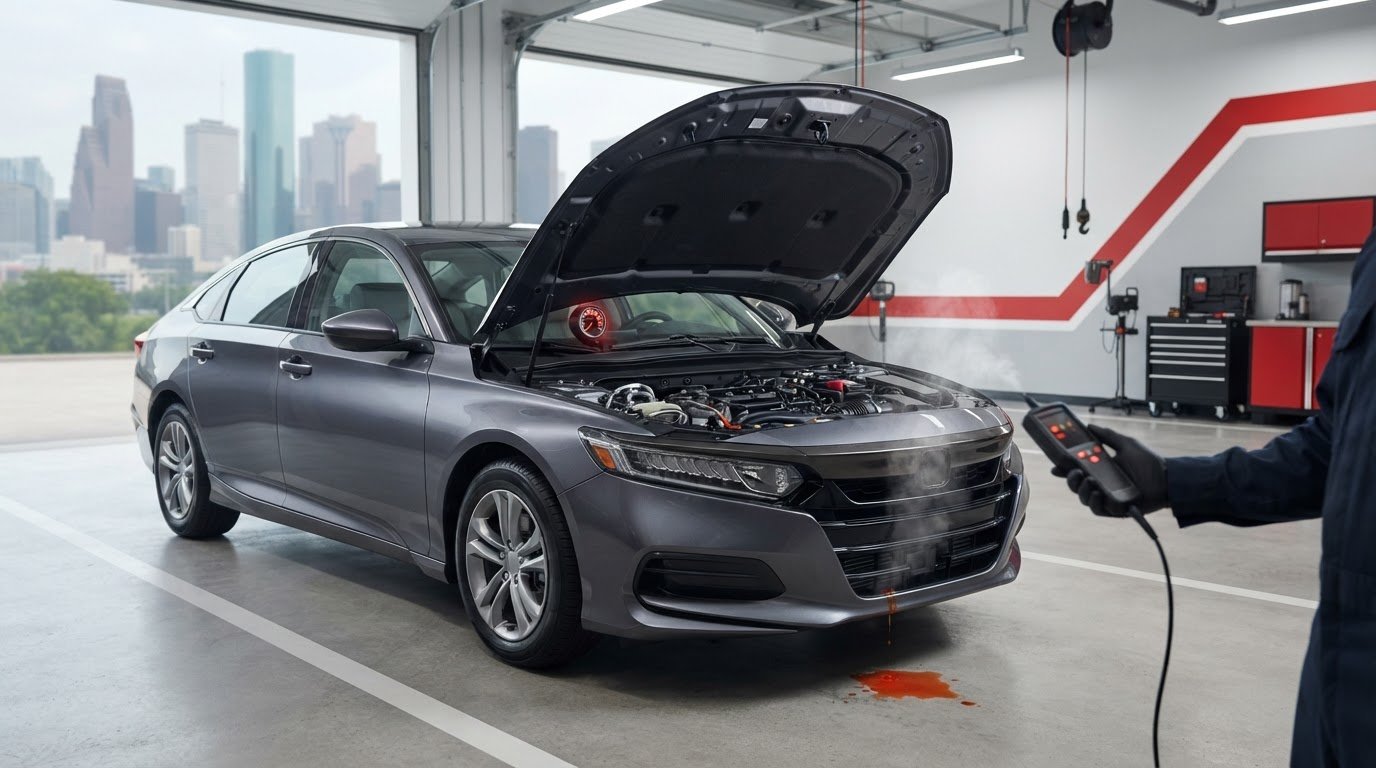
Check the ground beneath the parked vehicle for a new fluid spot. Note where it is and when you first saw it, but don’t identify the fluid by color alone. A new dashboard warning, electrical malfunction, or unusual sound such as scraping, rattling, or humming also deserves attention. The source may not be obvious from the symptom, so don’t treat a warning light as a diagnosis.
Look inside for new moisture, damp carpeting, or a musty smell, especially near the impact area. These observations could point to a seal or glass concern, but they can have other causes. The NHTSA Special Crash Investigations program documents details of selected crashes, highlighting how crash circumstances matter when understanding vehicle damage. Your notes about when a symptom began can give an inspection useful context.
New pulling, vibration, uneven panel gaps, leaks, warning lights, unusual noises, or cabin moisture after a collision are all reasons to arrange a professional assessment. These signs of hidden damage after collision are clues, not proof of a specific fault. If steering or braking feels compromised, don’t continue driving. Stop somewhere safe and arrange help. For other changes, record what you observe and when it occurs. Fix My Car offers North Houston collision repair and can assess concerns beyond visible panels.
Could Hidden Damage Follow a Minor Collision? Reading the Clues Carefully
A small dent doesn’t prove that damage extends beyond the bodywork, but it can’t rule it out either. The appearance of the impact is only one part of the picture. Avoid assuming either that something is broken or that the vehicle is unaffected. A professional assessment can help make sense of concerns that aren’t easy to judge from the outside.
Context matters. Note where the impact occurred, which direction it came from, and what changed afterward. A new vibration that began after a collision is useful information, but it doesn’t confirm a collision-related fault. Tires, road surfaces, and other issues can also affect how a vehicle feels. Crash testing and vehicle research, including work at the IIHS Vehicle Research Center, help explain why the way an impact reaches a vehicle can matter.
What can make a symptom more concerning after impact?
Give particular attention to a symptom that’s new, appeared after the collision, or is getting worse. Several changes together may provide more context than one isolated clue. For example, a new pull accompanied by vibration is worth reporting, but neither symptom identifies the cause. Describe what you observed, not what you suspect: “The steering started pulling right after the impact” is more useful than “The suspension is damaged.”
Interpret signs of hidden damage after collision alongside the vehicle’s normal behavior. Tell the repair professional whether the change happens while turning, braking, accelerating, or driving over bumps. If you’re unsure whether it’s new, say so. Clear observations help guide an assessment without turning a hunch into a diagnosis.
When should you stop driving and seek prompt help?
Use extra caution with symptoms that may affect safe vehicle control. If steering or braking changes severely, you see smoke, or an active fluid leak appears, pull over in a safe place as soon as you can. Turn on your hazard lights if appropriate, and don’t continue driving if the vehicle doesn’t feel safe to operate. Arrange towing rather than trying to drive it to a repair facility.
A warning light or unusual behavior can also make safe operation uncertain, even if the car still moves. If so, avoid driving until you’ve arranged an appropriate assessment. If the vehicle is stable and there’s no urgent safety concern, write down what happened and when, then arrange a collision inspection. The goal isn’t to guess at a fault or panic over every small change. It’s to recognize when a change deserves a closer look and choose a safer next step.
What to Do If You Suspect Hidden Damage After a Collision
Take a steady, safety-first approach. You don’t need to identify the damaged part yourself. Your observations can help a repair professional understand what changed and assess areas beyond the exterior panels.
Prioritize safety. If the vehicle doesn’t feel safe to control, or you notice severe steering or braking changes, smoke, or an active leak, stop in a safe place and arrange towing. Don’t keep driving just to reach a repair shop.
Record what you notice. Note when each symptom began, where the impact occurred, and how the vehicle’s behavior changed.
Document visible details. If it’s safe, photograph the damage and surroundings without moving the vehicle or disturbing damaged parts.
Arrange an assessment. Share your notes and photos so a professional can consider both the visible damage and related concerns.
Document symptoms and changes without attempting a diagnosis
Write down specific observations: a dashboard warning or message, a new sound, a fluid spot, a change in steering, or moisture inside the cabin. Include when and where you noticed each change, and whether it happens consistently or only in certain conditions. Separating facts from guesses makes your notes easier to use. For example, write “a rattling sound began after the impact” rather than concluding that a particular part is loose.
When safe and appropriate, photograph visible damage from several angles. Include nearby surroundings if they help show where the vehicle was struck. Don’t crawl beneath the vehicle to look for damage, and don’t touch damaged airbag or other safety-system components. Leave close inspection to trained professionals.
Arrange an inspection and prepare useful information
When arranging an assessment, explain when the collision happened, which area was hit, and what you’ve noticed since. Share any warning messages and describe how the vehicle behaves differently. A clear timeline distinguishes what you observed from what you suspect and gives the professional useful context for the inspection.
A collision assessment may need to look beyond exterior panels and consider affected components and reported symptoms. Fix My Car provides collision and related mechanical repair in North Houston, with free collision repair estimates. An estimate can help clarify what the assessment finds and what work may be recommended. Signs of hidden damage after collision are useful clues to share, not a substitute for a professional assessment.
Bring your notes and photos, and ask for the findings to be explained clearly. To arrange an assessment, request a free collision repair estimate from Fix My Car.
How a North Houston Collision Inspection Can Find What You Cannot See
A collision inspection looks beyond the mark on the outside. A professional assessment can consider where the impact occurred, what the exterior shows, and which changes you’ve noticed since. Sharing those details helps the technician understand the concern and assess related components that aren’t visible during a quick walk-around.
Signs of hidden damage after collision are clues to discuss, not a diagnosis. A new noise or change in handling may direct attention to an area, but the cause needs to be evaluated in context. An inspection can help determine whether the concern relates to the collision or has another explanation.
What a professional collision assessment can consider
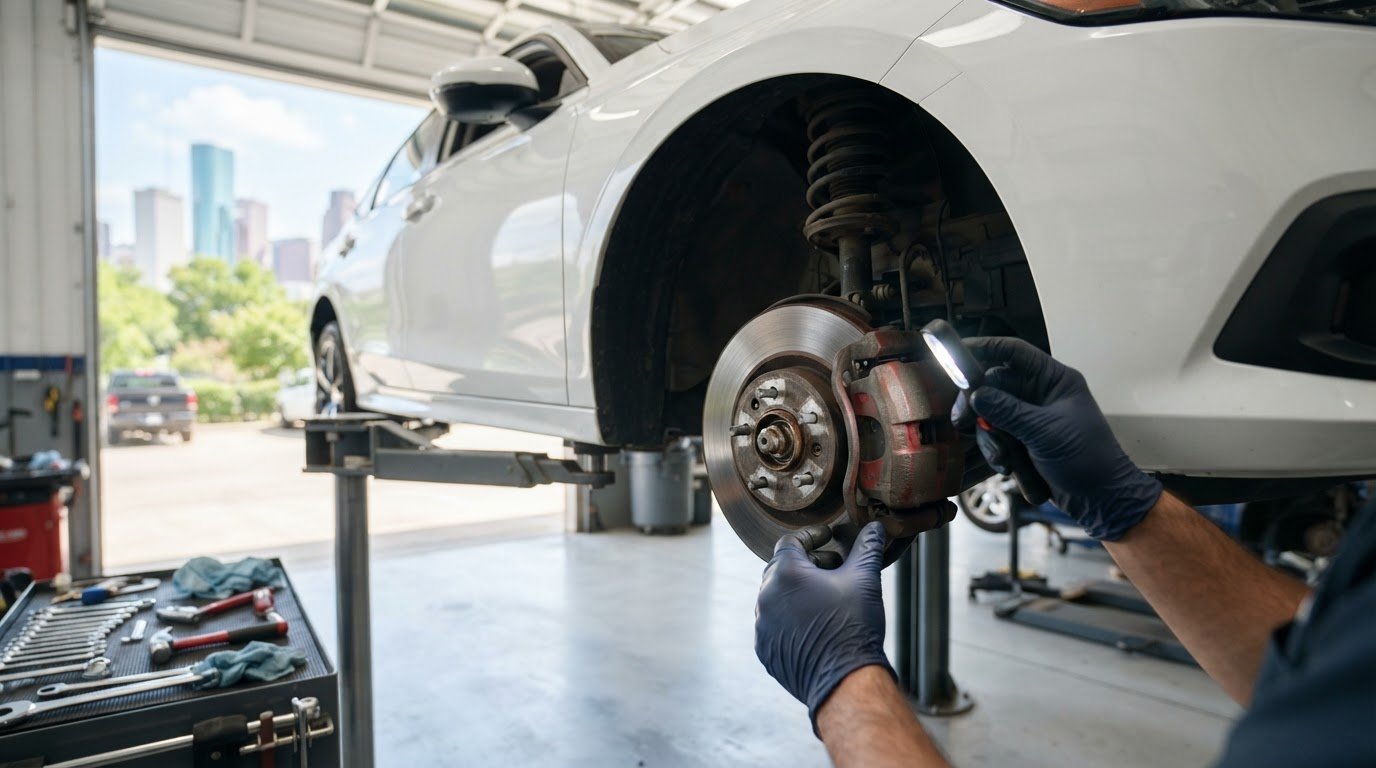
The assessment can start with the vehicle’s visible condition and your account of the impact. The technician can consider the affected area, panel fit, and reported changes, then assess related components and mechanical concerns as appropriate. This broader view matters because exterior panels may conceal affected parts.
Some findings may become apparent only when damaged areas are assessed more closely. That doesn’t mean additional damage is present in every case. It means the first visual impression may not tell the whole story. Repair recommendations should reflect the vehicle’s actual condition, not assumptions based only on the size of a dent or the sound of a symptom.
Your notes can make the assessment more useful. Share when the collision happened, where the impact occurred, what changed afterward, and whether symptoms are consistent or intermittent. Photos of visible damage can also provide context. The technician can consider those observations alongside the vehicle’s condition and explain what the assessment indicates.
Local collision repair support in North Houston
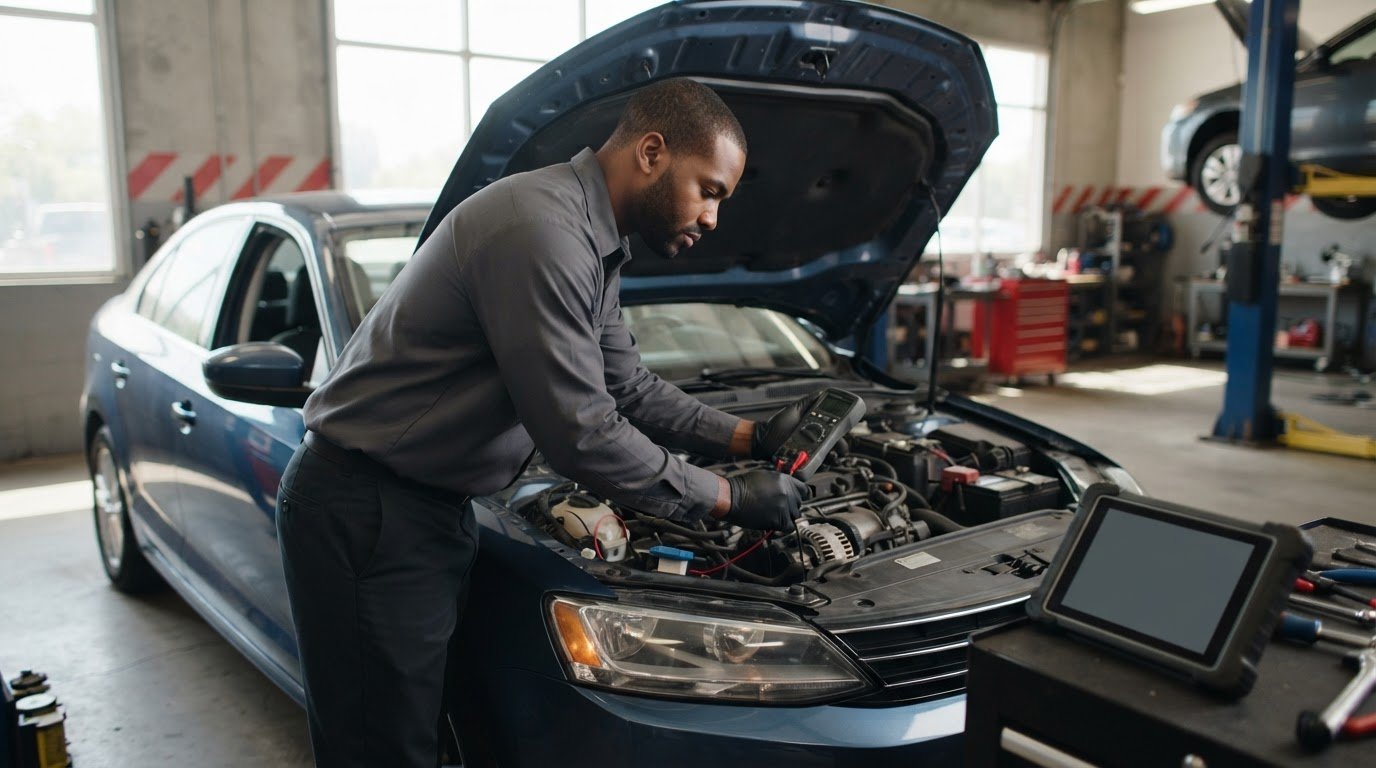
For drivers in North Houston, Fix My Car provides collision and related mechanical repair. ASE-certified technicians assess vehicle concerns, and free collision repair estimates can help you understand recommended work before moving forward. An estimate is based on the vehicle’s condition and assessment, not simply the appearance of the exterior.
Bring your observations, photos, and any warning messages you recorded. Be straightforward about what you’ve noticed, even if you aren’t sure it’s related to the collision. A clear conversation helps connect your concerns with what the vehicle shows during assessment.
If your vehicle has changed since an impact, arranging an inspection is a practical next step. Fix My Car serves North Houston drivers seeking collision repair and a clearer understanding of their vehicle’s condition. Request an assessment and a free estimate to discuss the findings and appropriate repair options.
Take the Next Step Toward Confidence on the Road
After a collision, uncertainty can linger even when the vehicle looks mostly normal. If you’ve noticed signs of hidden damage after collision, keep your notes together, share what changed, and let an inspection help clarify the vehicle’s condition. You don’t need to diagnose the issue before requesting an assessment.
Fix My Car serves North Houston drivers with collision and mechanical repair. Its manufacturer certifications and complimentary ride-share transportation while vehicles are being serviced can offer added support as you plan what comes next.
A free estimate is a practical starting point for understanding recommended repairs. Request a free collision repair estimate from Fix My Car and share the details you’ve observed. Taking a careful next step can bring greater clarity as you decide how to move forward.
Frequently Asked Questions
Can a minor collision cause hidden damage?
Yes. A minor-looking collision can affect components that aren’t visible from outside, although many minor impacts don’t cause hidden damage. A vehicle may seem normal while parked but behave differently during a turn or when opening and closing a door. Don’t assume either that damage exists or that everything is fine. If you notice a new change after impact, record the details and have the vehicle assessed.
What are the most common signs of hidden damage after a collision?
Common clues include new noises, vibration, steering changes, uneven panel gaps, fluid spots, warning lights, electrical issues, or moisture inside the vehicle. Signs of hidden damage after collision can overlap with symptoms of unrelated problems, so use them as observations, not diagnoses. For example, note whether a sound happens while turning or braking. That context helps a repair professional interpret the symptom.
Is it safe to drive after a collision if the car looks fine?
You can’t determine safety from appearance alone. Before driving, consider whether the controls feel normal and whether you’ve noticed smoke, an active leak, or a warning that affects safe operation. Don’t take the car on a test drive just to see whether a concerning symptom happens again. If you’re uncertain about steering, braking, or safe control, stay off the road and arrange help.
How soon can hidden collision damage appear?
It may be noticeable at the scene or become apparent later, and there’s no timeline that fits every collision. A sound might only stand out during a later turn, or you may notice a warning message after restarting the vehicle. Record the date and circumstances when you first observe a change. If a dashboard message appears, photograph it when safe so you can share its wording with the repair professional.
What happens if hidden collision damage is left unchecked?
The effects depend on the condition and component involved. Some concerns may remain unchanged, while others could affect how the vehicle operates or how a related system functions. You can’t reliably predict the outcome from a symptom alone. If a change persists or worsens, arrange an assessment rather than waiting for it to become easier to identify. A professional can evaluate the vehicle and explain what attention, if any, is appropriate.
Can a mechanic find hidden damage without taking the car apart?
An initial assessment can identify visible concerns and help determine what further evaluation may be useful, but a visual check can’t show every concealed area. Next steps depend on the impact and what the vehicle is doing. Before work proceeds, ask for a clear explanation of any additional findings and why they matter. That conversation helps distinguish an initial observation from a confirmed repair need.
Should I get an inspection if there are no warning lights after a collision?
No warning light doesn’t prove that every part is undamaged. Dashboard alerts don’t describe the condition of every body, structural, or mechanical component. An inspection may be worthwhile if a panel has shifted, a door no longer fits as before, or the vehicle feels different. If everything seems unchanged, keep the collision details on hand and watch for new symptoms rather than treating a clear dashboard as a complete assessment.
What information should I bring to a collision damage inspection?
Bring the approximate time and location of the collision, the area of impact, and a brief timeline of anything that changed afterward. Include the exact wording of warning messages and note the conditions associated with a sound or handling change. Photos taken at the scene or before repairs can provide useful context. If you noticed the same concern before the collision, mention that too, so the assessment can account for it.
Comentarios