


Signs of a Bad Transmission Solenoid: Symptoms and Next Steps
A harsh shift or sudden delay can make it seem like your transmission is failing, but those symptoms don’t prove a solenoid is the cause. The signs of bad transmission solenoid problems can overlap with issues involving fluid, wiring, sensors, or other transmission components. That uncertainty can make it hard to know what to do next.
Unpredictable gear changes and warning lights deserve attention. A faulty solenoid can disrupt transmission-fluid flow and affect shifting, but symptoms and diagnostic codes are clues, not a diagnosis. A technician can use scan results, a road test, and checks of the fluid and electrical system to narrow down the cause.
In this guide, you’ll learn which symptoms may point to a solenoid, what else could cause them, and when to stop driving and seek help. Fix My Car’s ASE-certified technicians provide mechanical and diagnostic services in North Houston, helping Houston drivers understand the findings before deciding on next steps.
Table of Contents
What Are the Signs of a Bad Transmission Solenoid?
Several changes in shifting can raise suspicion about a transmission solenoid, but none confirms that the solenoid has failed. The signs of bad transmission solenoid trouble may overlap with low or contaminated fluid, electrical faults, or other transmission problems. Pay attention to what the vehicle does and when it happens. Those observations can help with diagnosis, but they aren’t a reason to assume a specific repair.
A solenoid is an electrically operated component; the general overview of What is a Solenoid? explains the basic principle. In a transmission, its operation is part of a larger system, so similar symptoms can have different causes.
How shifting changes may signal a problem
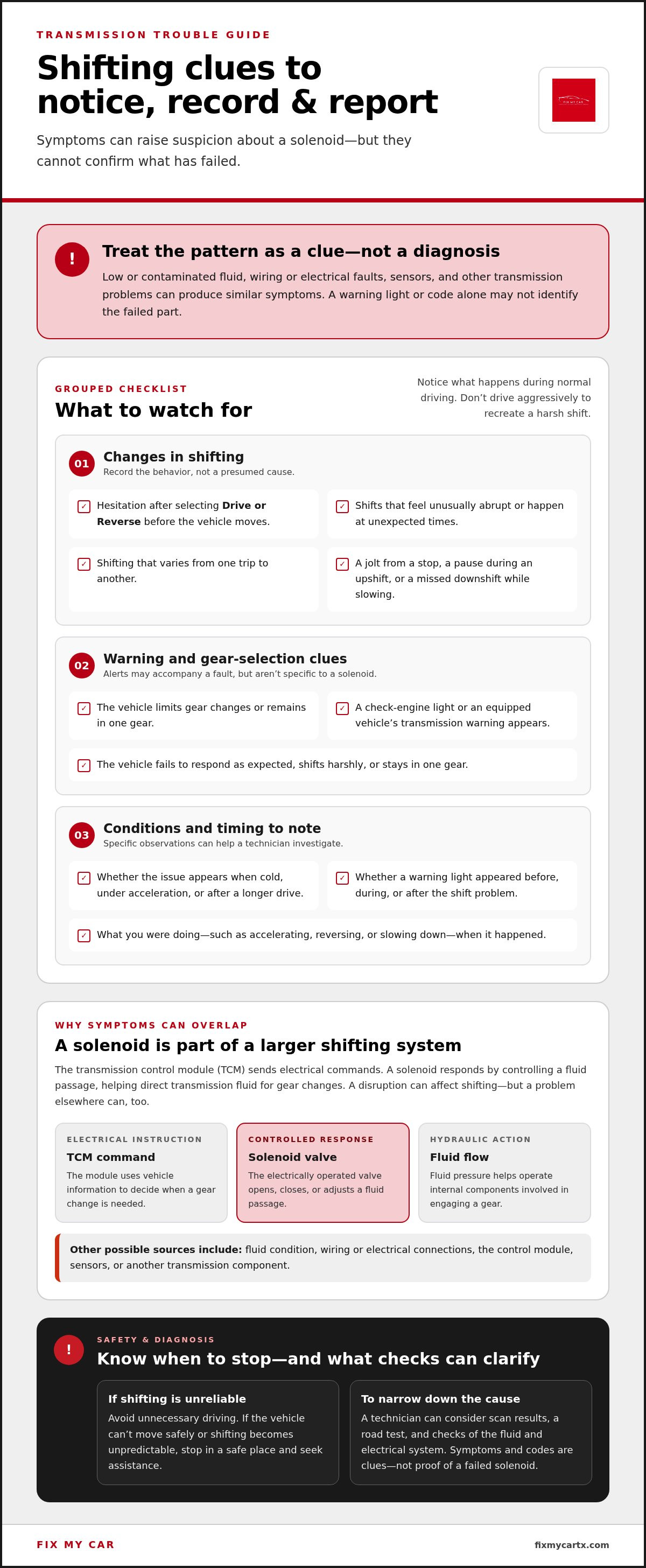
Notice whether the vehicle hesitates after you select Drive or Reverse before it begins moving. A delay deserves attention, but it doesn’t identify the source on its own. Shifts while driving may also feel unusually abrupt, happen at unexpected times, or vary from one trip to another. You might notice a jolt as you accelerate from a stop, a pause during an upshift, or a missed downshift as you slow for a turn.
The pattern depends on the vehicle and transmission design. A symptom that appears only when the vehicle is cold, under acceleration, or after a longer drive is still worth reporting. Don’t try to reproduce a harsh shift by driving aggressively. Note what happens during normal driving instead.
Warning lights, stuck gears, and other clues
Some vehicles may limit gear changes or remain in one gear when the control system detects a fault. Drivers may call this limp mode. A check-engine light or, on vehicles equipped with one, a transmission warning may appear. These alerts can accompany a solenoid issue, but they aren’t specific to solenoids. The vehicle’s computer can flag problems elsewhere in the transmission or related electrical system.
Record whether the light appeared before, during, or after a shift problem.
Note what you were doing, such as accelerating, reversing, or slowing down.
Describe whether the vehicle stayed in one gear, shifted harshly, or failed to respond as expected.
A combination of shifting problems and warning lights deserves prompt attention, but only proper diagnosis can show whether a solenoid is responsible. If shifting becomes unpredictable or the vehicle can’t move safely, stop in a safe place and seek assistance rather than continuing to drive. Clear notes about timing and conditions can help a technician investigate without treating a symptom as proof.
How a Transmission Solenoid Works, and Why Failure Changes Shifting
An automatic transmission must select the right gear at the right time. That process depends partly on transmission fluid moving through specific passages. A transmission solenoid is an electrically controlled valve that helps direct the fluid. It connects electronic commands with the hydraulic action involved in changing gears.
A transmission solenoid turns electrical instructions into controlled fluid flow that helps an automatic transmission shift. If the electrical signal or the valve’s movement is disrupted, fluid may not reach the intended passage as expected. That can affect shift timing or gear selection, but an unusual shift doesn’t automatically point to a failed solenoid.
The connection between electrical signals and fluid pressure
The transmission control module, or TCM, uses information from the vehicle’s systems to decide when a gear change is needed. It sends an electrical command to one or more solenoids. In response, a solenoid opens, closes, or adjusts a fluid passage, depending on its design.
Hydraulic pressure is the force applied as transmission fluid moves through the system. That pressure helps operate internal components that engage a gear. The basic sequence is a command, valve movement, then a hydraulic response. Transmission designs differ, so solenoids’ number, placement, and arrangement aren’t the same in every vehicle.
Why a solenoid fault can affect more than one shift
A solenoid or its electrical connection may influence a particular fluid route, and that route can be involved in more than one shift condition. If a valve sticks or a signal is interrupted, the transmission may respond late, select a gear unexpectedly, or fail to shift as intended. The pattern depends on the vehicle’s design and the fault.
The TCM coordinates shifting based on information from the vehicle, while solenoids carry out specific commands. A problem with the module, wiring, fluid condition, or another transmission component can also interfere with shifting. So, even if a symptom seems to match the signs of bad transmission solenoid trouble, it remains a clue rather than confirmation.
This is why a warning light or code alone may not identify the failed part. A code can point a technician toward a circuit or operating condition to investigate, but further checks are needed to locate the cause. Diagnosis may involve examining electrical connections and transmission fluid, then assessing how the transmission behaves under operating conditions.
If shifting concerns continue, a professional mechanical diagnosis can help determine whether the issue involves a solenoid or another part of the system. Fix My Car provides mechanical diagnostic service for Houston-area drivers seeking a clearer understanding of what their vehicle needs.
Bad Solenoid or Another Transmission Problem? How Diagnosis Separates Them
Shifting symptoms can point to a transmission concern without identifying the part responsible. The same delay, harsh shift, or missed gear may have different explanations depending on the vehicle and the test results. Treat the signs of bad transmission solenoid trouble as starting clues, not a reason to assume the solenoid needs replacement.
The comparison below outlines possibilities a technician may consider. It’s a guide to potential causes, not a remote diagnosis. No symptom in the table confirms a particular fault on its own.
Symptoms that can overlap with other faults
Transmission fluid helps the system operate, so a low level, degraded fluid, or contamination may affect shifting. A leak can contribute to a low level, but an inspection is needed to establish the cause. Wiring or connector damage can disrupt a solenoid’s electrical signal. Sensor or control-module concerns may also affect how the transmission responds. These are possibilities, not conclusions; vehicle-specific checks are needed to identify the actual cause.
What diagnostic checks help confirm the cause
A technician may start by asking when the symptom occurs, then scan the vehicle for relevant trouble codes. The scan helps direct further testing, but codes need to be considered alongside the vehicle’s behavior and inspection results. Diagnostic codes guide testing, but they don’t independently identify every failed part.
Further checks may include reviewing the transmission fluid’s level and condition, inspecting electrical connections, and assessing how the vehicle shifts under appropriate operating conditions. The technician can compare the findings with vehicle-specific service information to determine which tests make sense next. For example, a code that points toward a solenoid circuit calls for checking that circuit, not treating the code alone as proof that the solenoid has failed.
This step-by-step process helps distinguish an electrical issue or fluid concern from a fault within the transmission itself. It also helps prevent a symptom from being mistaken for a confirmed repair need. Before agreeing to work, ask for a clear explanation of what the diagnostic findings show and how they support the proposed next step.
What to Do When You Notice Transmission Solenoid Symptoms
Shifting trouble can be unsettling, especially when you’re unsure whether it’s safe to keep driving. The signs of bad transmission solenoid trouble are observations to share with a technician, not a diagnosis. Note what the vehicle is doing, avoid unnecessary trips if shifting is unreliable, and arrange a professional assessment.
Write down what happens. Record when the symptom began, which gear or driving condition was involved, and whether it has happened more than once.
Limit unnecessary driving if shifting is unreliable. There isn’t one safe distance that applies to every vehicle or fault. If gear selection becomes unpredictable, don’t continue simply to see whether the problem goes away.
Arrange a diagnosis before choosing a repair. Don’t replace a solenoid based on symptoms alone or treat a warning light that disappears after clearing as proof that the fault is fixed.
What details to record before an inspection
Clear observations help a technician understand the concern. Note whether the issue happens when selecting Drive or Reverse, during acceleration, or while slowing down, and whether it repeats under similar conditions. Record any warning lights or messages and when they appeared. Include recent maintenance or unusual events, such as a leak you noticed. Describe what you observed rather than labeling a part as failed.
If a warning disappears, write down that it appeared and what the vehicle was doing at the time. Clearing a light or code isn’t a repair; the underlying cause may still need investigation. Share your notes and any messages with the technician so they can compare your observations with inspection and test results.
When to arrange prompt professional attention
Arrange an assessment promptly if shifts are getting worse, the vehicle can’t select gears predictably, or warning indicators return. If it won’t shift safely or its behavior makes continuing the trip unsafe, pull over somewhere safe and seek assistance. Avoid testing the transmission in traffic or making repeated trips to reproduce the fault. How far a vehicle can be driven depends on its condition, so there’s no universal safe distance.
Professional mechanical diagnosis can help distinguish a possible solenoid concern from fluid, wiring, or broader transmission issues. Fix My Car’s ASE-certified technicians provide mechanical and diagnostic services in North Houston. Let the findings, rather than a symptom or cleared warning light alone, guide the repair decision.
For help assessing persistent shifting concerns, arrange a mechanical diagnostic assessment with Fix My Car.
Transmission Diagnosis in Houston: How Fix My Car Can Help
If shifting symptoms persist, a professional mechanical diagnosis is a practical next step. A delay, harsh shift, or warning light may be among the signs of bad transmission solenoid trouble, but it doesn’t confirm that the solenoid has failed. Fix My Car’s technicians assess symptoms and diagnostic findings to help identify what needs attention before recommending a repair.
What to expect from a careful diagnostic visit
Share your notes: when the shifting change began, which gears or driving conditions bring it on, whether it repeats, and what warning lights or messages appeared. Those details help the technician understand the concern in context. The assessment may include reviewing diagnostic codes, inspecting relevant components, and evaluating the vehicle’s reported behavior. The next step depends on the findings for your specific vehicle.
A code or symptom can point toward an area to investigate without identifying a failed part on its own. A careful diagnostic process considers the full picture rather than jumping straight to solenoid replacement. Fix My Car’s ASE-certified technicians provide mechanical work and diagnostics, and the findings guide any recommendations. You can receive a free estimate for proposed work before deciding how to proceed.
A local next step for North Houston drivers
Fix My Car serves the Houston community from its North Houston location. If your vehicle is shifting unpredictably, an assessment can help clarify whether the issue involves a solenoid or another transmission-related cause. Share the symptoms you’ve observed, along with any warning-light details, so the team can consider them during diagnosis.
Fix My Car also provides complimentary rideshare transportation while vehicles are being serviced. That can help with transportation needs while your vehicle is at the shop, while the priority remains understanding the diagnostic findings and recommended next step.
You don’t need to identify the failed component before seeking help. Arrange a diagnostic visit with Fix My Car in North Houston to have persistent shifting concerns assessed and receive an estimate based on the findings.
Take the Next Step With Confidence
Unusual shifting can make it tempting to settle on a cause before the facts are clear. Treat the signs of bad transmission solenoid trouble as a reason to get informed, not as proof that a particular part has failed. A diagnosis gives you a sounder basis for deciding what to do next and helps keep guesswork out of the repair conversation.
Bring your observations and questions to the visit. Ask what the diagnostic findings indicate, which repair options address them, and what the estimate covers. Clear answers can make a stressful vehicle problem feel more manageable, even when the cause isn’t what you first expected.
If shifting concerns continue, schedule a diagnostic visit with Fix My Car. Get your vehicle assessed in North Houston and use the findings to decide on the next step.
Frequently Asked Questions
Can a bad transmission solenoid make a car jerk when shifting?
Yes, a faulty solenoid can contribute to jerking because it helps regulate transmission-fluid flow during shifts. Similar jolts can also come from fluid problems, wiring, sensors, or other transmission faults, so the symptom doesn’t identify the failed part. Note whether it happens during a particular shift, such as moving from first to second, or under a specific driving condition. Arrange an inspection if the jerking persists or gets worse.
Is it safe to drive with a suspected bad transmission solenoid?
It depends on how the vehicle behaves, so there’s no universal mileage estimate that makes continued driving safe. If it can’t select gears predictably or feels unsafe to control, stop in a safe location and seek assistance rather than continuing. Less severe symptoms still warrant prompt attention because the cause is unknown. Avoid extra trips to test the transmission, and describe the behavior clearly when arranging an inspection.
What happens if a transmission solenoid fails while driving?
A vehicle may shift harshly, delay a gear change, stay in one gear, or limit shifting, depending on its transmission and the fault. Some vehicles may also show a warning or enter a reduced-operation mode, but these outcomes aren’t certain. Other problems can cause similar behavior. If shifting becomes unpredictable or affects your ability to control the vehicle, pull over safely and seek assistance before continuing.
Can a bad transmission solenoid trigger a check-engine light?
Yes, a solenoid-related fault may be associated with a check-engine light if the vehicle’s control system detects it. The light alone doesn’t prove the solenoid has failed. A diagnostic scan can retrieve stored codes, which a technician interprets alongside your observations and inspection results. Treat the warning as a prompt to investigate, not an instruction to replace a particular part. Note whether it appears with a shift change or other vehicle behavior.
How do mechanics diagnose a bad transmission solenoid?
Mechanics typically begin with your description of the symptoms and a scan for relevant trouble codes. They may then assess how the vehicle shifts, inspect fluid condition and electrical connections, and carry out checks suited to the vehicle and reported problem. The exact process varies by transmission. A code or symptom on its own may not identify the faulty part, so the technician weighs the findings together before recommending a repair.
Can low transmission fluid cause symptoms similar to a bad solenoid?
Yes, low or degraded fluid can affect transmission operation and contribute to delayed, harsh, or inconsistent shifts. Those behaviors can also occur with solenoid or electrical problems, so they don’t reveal the cause by themselves. Fluid level and condition should be checked using the procedure for that vehicle. Don’t add fluid without confirming the required specification; an incorrect type or an unaddressed leak may create further concerns.
Will a transmission solenoid problem fix itself?
Don’t assume it will. An intermittent issue may disappear temporarily, but that doesn’t show the underlying fault has gone away. Keep track of when symptoms return and whether they change with particular gears or driving conditions. A warning light that turns off or a brief period of normal shifting isn’t confirmation of a repair. Arrange diagnosis if the problem recurs, worsens, or affects predictable gear selection.



Comentarios