


Luxury Car Body Repair in Houston for Collision Damage
Collision damage to a luxury vehicle calls for a repair plan based on the full extent of the damage, not just what is visible on the surface. Luxury car body repair in Houston can involve inspecting body panels, paint, glass, and related mechanical components, then identifying the repairs needed for the vehicle.
After a collision, you may be weighing repair quality, your vehicle’s condition, and what the process involves. That uncertainty is understandable, especially when damage looks minor but may affect components beneath the exterior. This guide explains what collision repair can include and what influences the work.
Learn how technicians assess damage, how body and related repairs fit together, what can affect an estimate, and what to consider when choosing a repair shop. Understanding the process helps you decide on a practical next step for your vehicle.
Table of Contents
Luxury and exotic vehicle collision repair
Luxury collision repair should address visible body damage and any affected systems. In Houston, a thorough assessment helps define the work before repairs begin.
Choosing a Houston Repair Shop
Choose a shop that explains its inspection, repair plan, parts choices, and final checks in plain language. Ask how technicians handle vehicle-specific materials and collision technology, including diagnostic scans or measuring equipment. Credentials may cover particular manufacturers or repair procedures, so ask what each one applies to. For example, a Mercedes-Benz with bumper damage may need attention to nearby sensors as well as paint and panel fit.
Insurance and Shop Choice
Insurance coverage for luxury car body repair in Texas depends on your policy, the type of claim, and the damage. Collision coverage may apply to crash damage, but claim decisions and payment depend on the policy terms. Discuss the estimate and approval process with your insurer, and ask how the shop can coordinate documentation. Before repairs start, understand what the estimate includes and how newly discovered damage will be addressed.
Make and Brand Specialization
For Mercedes-Benz, BMW, Audi, Porsche, or Lexus repairs, look for experience with the specific make and model, not just luxury vehicles generally. Ask for examples of similar auto body repairs and how the shop approaches brand-specific repair instructions, parts, paint matching, and sensor checks. Reviews can reveal patterns in communication and completed work, but read the details rather than relying on star ratings alone. Review any written warranty carefully, including its stated coverage and limits.
Accident Steps and Shop Services
After a collision in Houston, move to a safe place if possible, document the scene and vehicle damage, and report the claim to your insurer. Arrange an assessment before authorizing repairs. Estimates, towing, and loaner vehicles are separate from the repair itself; terms for these services depend on the shop’s arrangements and your insurance policy. Clarify the logistics as you review the repair estimate.
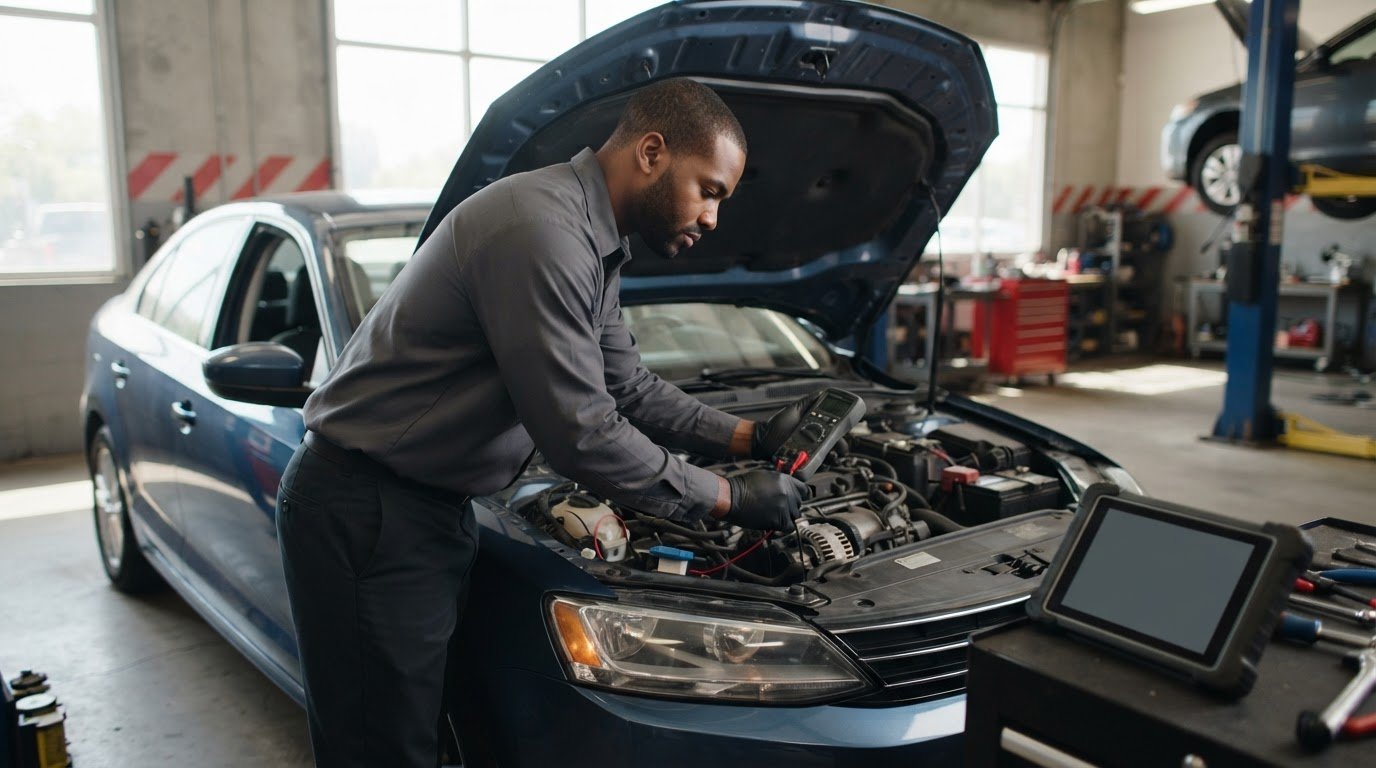
Technology can help identify damage that a visual inspection may miss. A scan can flag electronic-system faults, while measurements can help assess body alignment. These findings inform the repair plan, but technicians should also check panel gaps, paint finish, lights, and vehicle functions after the work.
For luxury collision repair, ask for a clear explanation of each repair decision. Documentation makes it easier to compare the initial estimate with additional work and understand what the final inspection covers.
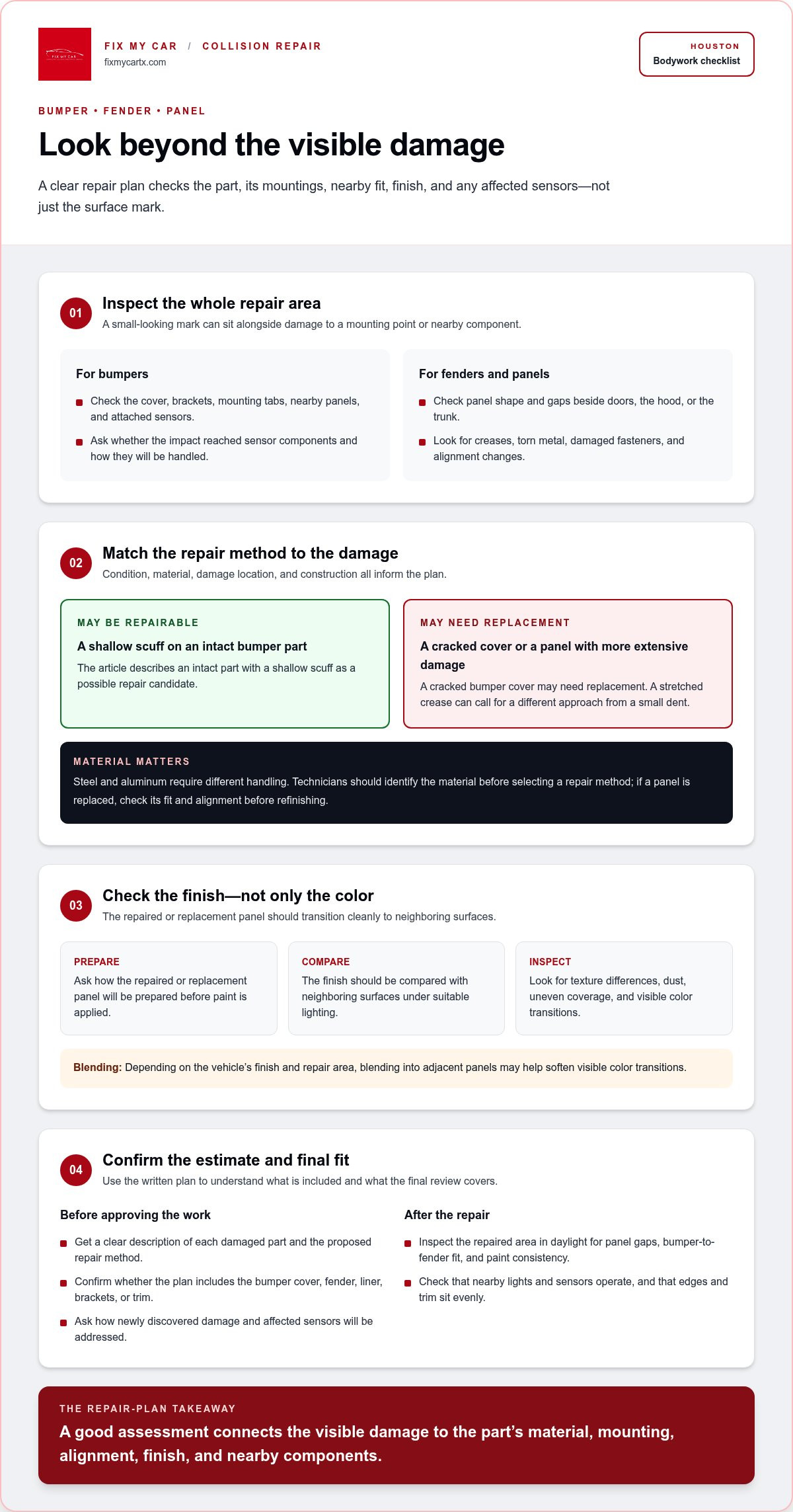
Bumper, fender, and panel repair
A bumper may look lightly scraped yet have broken mounting tabs underneath. Inspect the cover, brackets, nearby panels, and attached sensors. A cracked cover may need replacement, while a shallow scuff on an intact part may be repairable. The material, damage location, and condition of the mountings guide the repair plan.
Fenders and body panels need to be checked for both shape and fit. A technician examines the gaps beside doors, the hood, or the trunk, then looks for creases, torn metal, and damaged fasteners. A dent near a fender edge can affect alignment even if the paint damage seems minor. Restoring the panel’s contour helps maintain consistent gaps and clean transitions.
Whether a panel can be repaired or needs replacement depends on the damage, material, and construction. Steel and aluminum require different handling, so technicians identify the material before choosing a method. A crease that has stretched the metal may need a different approach from a small dent with intact paint. If a panel is replaced, its fit and alignment should be checked before refinishing.
Paint matching is another key step. Technicians prepare the repaired or replacement panel, apply the finish, and compare it with neighboring surfaces under suitable lighting. Depending on the vehicle’s finish and repair area, blending into adjacent panels may help soften visible color transitions. The surface should also be checked for texture differences, dust, and uneven coverage.
Before approving an estimate, ask for a clear description of each damaged part and the proposed repair method. Confirm whether the plan includes the bumper cover, fender, liner, brackets, or trim. Credentials may relate to specific training or repair procedures, so ask what they cover. Also ask how sensor components will be handled if the impact reached them.
After the work, inspect the repaired area in daylight. Check the panel gaps, bumper-to-fender fit, paint consistency, and operation of nearby lights or sensors. For example, a bumper should sit evenly against the fender, without loose edges or mismatched trim. If collision damage includes bodywork and related mechanical concerns, collision repair services can address the repair needs together.
OEM-approved parts and manufacturer-specific procedures
OEM means original equipment manufacturer. An OEM part is produced for a vehicle’s make, while “OEM-approved” describes parts accepted under particular manufacturer requirements. The terms are not interchangeable in every estimate. Ask which part category is listed, who makes the part, and how it fits the proposed repair for your vehicle.
Part choice can affect fit, finish, and how connected components work together. A replacement bumper on a Mercedes-Benz, for example, may need openings or mounts for parking sensors. A BMW headlamp assembly may connect with vehicle electronics. The repair plan should identify affected parts and explain how technicians will restore their placement and function.
Manufacturer-specific procedures guide more than part selection. They may specify repair methods, material restrictions, bonding or joining steps, and calibration after a component is removed. Aluminum panels, for example, need appropriate handling and repair methods. Technicians should follow procedures relevant to the vehicle’s make, model, and damaged area rather than treating every body structure alike.
Review the estimate line by line before approving work. Look for the part description, whether it is new or reused, and any listed labor or calibration. If disassembly reveals hidden damage and changes the estimate, ask for an explanation of the added work and how it relates to the repair. Clear documentation helps you compare the planned and completed work.
Part identity: Ask whether each replacement is OEM, aftermarket, or recycled, and note the stated manufacturer.
Procedure: Ask which vehicle-specific instructions apply to the damaged section.
Connected systems: Identify sensors, cameras, lights, or trim that may need removal, installation, or calibration.
Records: Keep the estimate, change approvals, and final invoice together.
“OEM-approved” does not automatically describe every component or repair method. Approval may apply to a particular part, process, or repair network. Ask what it covers and whether it applies to your vehicle’s exact model. For a Porsche door repair, for instance, the discussion may involve the replacement panel, material, joining method, and adjacent electronic components.
After the repair, compare the invoice with the finished vehicle. Check the fit around the replaced panel, confirm listed components were addressed, and ask for records of any required calibration. A detailed handover helps you understand which parts were installed and which manufacturer-specific steps were completed.
Repair process and final inspection
Luxury collision repairs typically progress through assessment, authorization, disassembly, repair, refinishing, and inspection. At each stage, technicians document what they find and the work that follows.
There is no single timeline for luxury car body repair in Houston. The schedule depends on the damage, parts availability, repair procedures, and any additional issues found during disassembly. A damaged door that needs refinishing involves different work from a collision affecting structural components, glass, and sensors.
Document and assess: Technicians photograph visible damage, note affected areas, and prepare an initial repair plan. A dented quarter panel, for example, may conceal damage behind its outer surface.
Review and authorize: Compare the estimate with the planned work before repairs proceed. If disassembly reveals additional damage, review the revised scope and its reasons.
Disassemble and inspect: Remove damaged trim or panels as needed, then inspect adjoining parts and attachment points. This step can uncover broken brackets or hidden damage not visible from outside.
Repair and refinish: Technicians restore or replace approved components, prepare surfaces, and apply paint. Curing and refinishing stages must be completed before final fit and finish checks.
Reassemble and test: Install repaired parts, reconnect affected components, and check the functions related to the repair.
Clear communication matters throughout the repair. Ask for updates when the initial estimate changes and an explanation of new findings. For example, removing a bumper may reveal a damaged absorber or mounting point. A documented revision connects that discovery to the additional work and schedule.
The final inspection should cover more than appearance. Check that panel gaps look consistent and that doors and the trunk open smoothly. Look for paint that blends with adjacent surfaces. If a headlamp was repaired, check that it works; if glass was involved, inspect the installed area and surrounding trim. These checks cover both the finish and components affected by the collision.
Electronic components need attention when a repair affects them. If a sensor, camera, or related system was removed or disturbed, the repair plan should identify the necessary checks or calibration. Ask which functions were tested and whether the final paperwork records that work. Checks should match the components involved, not follow a generic checklist for every vehicle.
Before pickup, compare the finished vehicle with the documented repair scope. Review the final invoice, confirm the listed work, and inspect the repaired area in good light. A clear handover explains the completed repairs and any maintenance or follow-up instructions related to the work.
Best luxury car body repair shops in Houston, TX
Build a useful Houston shortlist around the repair your vehicle needs, not a star rating alone. A scraped bumper, a creased aluminum door, and collision damage near a camera require different capabilities. Look for a shop that explains its inspection, identifies affected components, and connects each repair step in the estimate to the damage.
Compare written estimates by scope, not just by the total. One may include paint blending and replacement clips, while another lists only panel repair. Ask which parts and labor each covers, how additional damage will be documented, and whether sensor checks are included when an impact reaches a bumper or windshield. Clear details make estimates easier to compare.
Review technician training and experience with the specific make and model. A shop repairing a Porsche, Lexus, or BMW should be able to explain how it handles that vehicle’s materials, parts, and repair instructions. Ask what a credential covers and who will work on the vehicle. Training is most relevant when it relates directly to the repair.
Repair plan: Check whether the estimate identifies damaged areas, parts, refinishing, and related system checks.
Communication: Look for clear explanations of estimate changes and how approvals are recorded.
Inspection: Ask what the final review covers, such as panel fit, paint appearance, lights, and affected sensors.
Customer feedback: Read review details for examples involving similar vehicles and repairs, rather than relying on ratings alone.
Reviews can reveal patterns, but they do not replace a discussion about your specific repair. Comments about a shop’s updates may help you assess communication, while a review describing a repaired fender offers more relevant detail about bodywork. Look for feedback that clearly describes the vehicle, damage, and completed repair.
Ask how the shop handles insurance estimates, towing, loaner vehicles, and written warranties. These are separate considerations, and terms can differ. Read warranty documents for coverage, exclusions, and claim requirements. For transportation, clarify who provides the arrangement and what terms apply before making plans.
Compare the repair scope, parts description, communication process, and inspection plan side by side. Choose a provider like Fix My Car whose explanations address your vehicle’s actual damage and whose written estimate makes the proposed work clear.
Ask whether the estimate is free and whether towing or a loaner vehicle is available. Confirm who provides transportation and what terms apply before making plans.
Fix My Car: Collision Repair
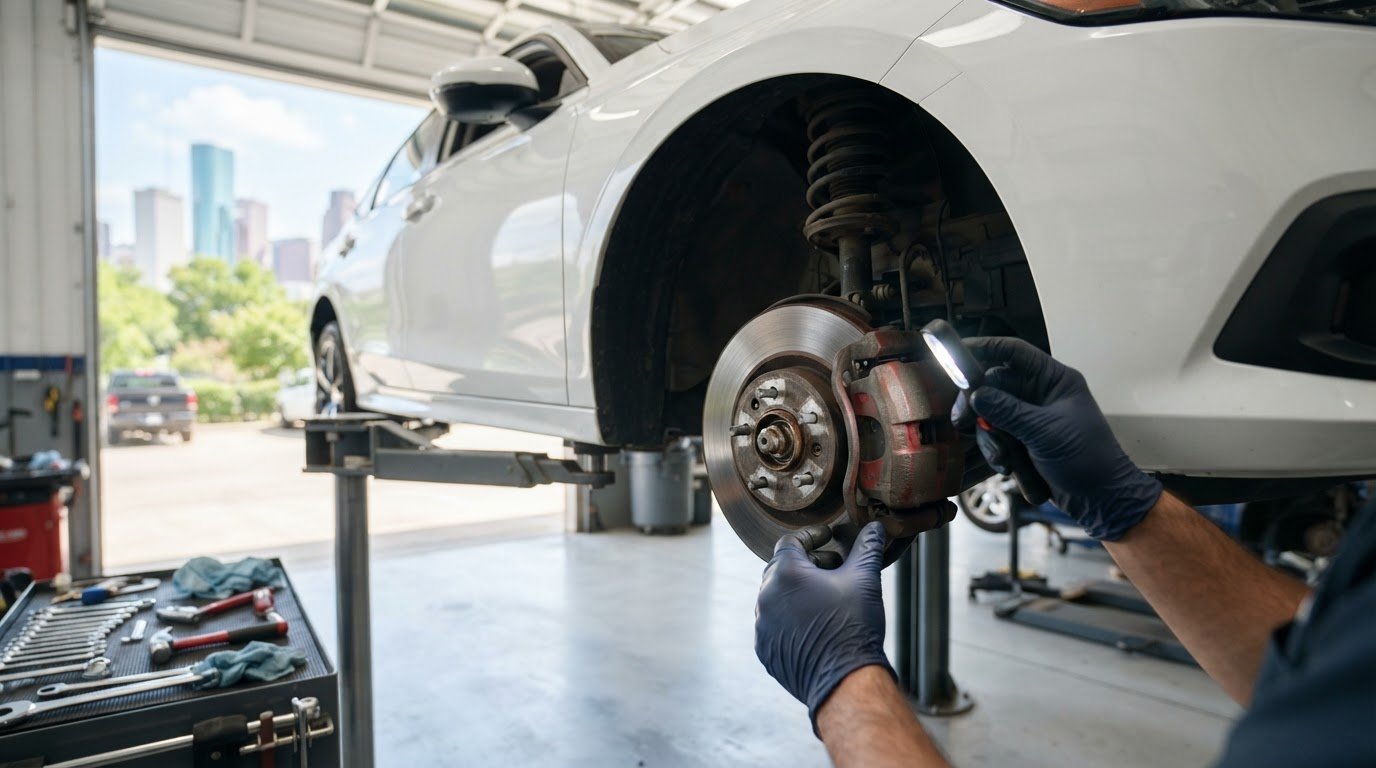
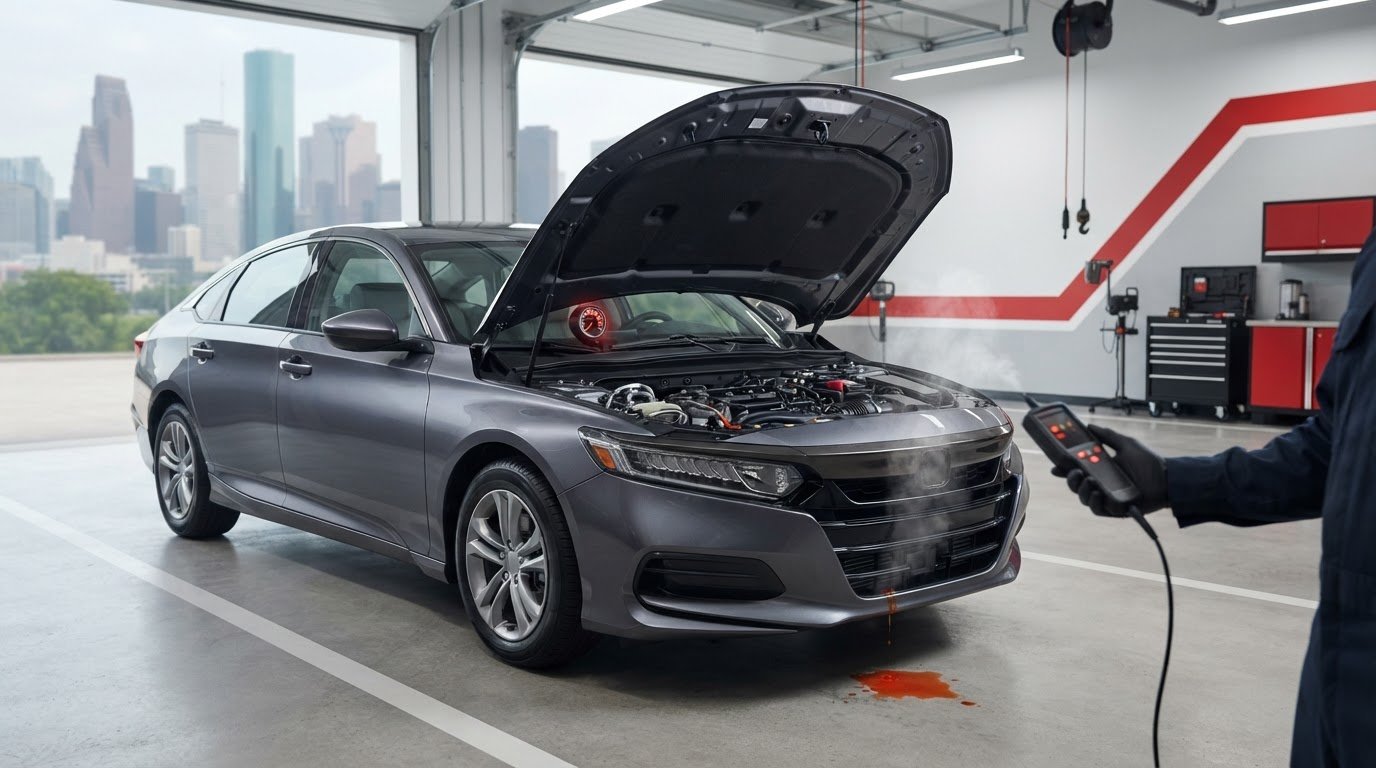
Fix My Car provides Collision Repair for drivers with accident-related body damage. Turn to the shop for an assessment and repair plan, especially when collision damage may extend beyond exterior panels. If the impact affects how the vehicle drives, Mechanical Work can address related issues. Brakes Repair or Air Conditioner and Heater Repair may also be relevant when those systems are affected.
Share the damage details and any insurance estimate to help clarify the repair needs. Noting which areas were hit, such as the bumper, fender, or wheel area, gives the discussion a useful starting point. Fix My Car can help you determine the next step for collision repair. Contact Fix My Car or visit fixmycartx.com.
Move Forward With a Clear Repair Plan
Turn what you know about the damage into a practical repair discussion. For luxury car body repair in Houston, bring your observations, insurer’s estimate, and questions about how the damage affects the vehicle. This gives the conversation a clear starting point without requiring you to diagnose the problem yourself.
Fix My Car offers Collision Repair for accident-related body damage, as well as Mechanical Work and Air Conditioner and Heater Repair when those needs are part of the picture. Sharing the affected areas and any concerns you have noticed helps focus the discussion on your vehicle’s needs.
Take the next step at your pace. Contact Fix My Car to discuss repairs and start with a straightforward conversation about your vehicle.
Frequently Asked Questions
How can I verify a Houston luxury auto body shop’s certifications and OEM repair credentials?
Ask the shop to identify each credential, its issuing organization, and the vehicle makes or repair procedures it covers. Compare that information with the credential issuer’s current records, where available. ASE certification and a manufacturer-specific repair credential are different qualifications. When arranging a Houston estimate, ask who will work on your vehicle and whether their training applies to its make, model, and damaged components.
OEM parts vs. aftermarket parts for luxury car repairs: How do cost, quality, and insurance coverage compare?
OEM parts come from the vehicle’s original manufacturer or approved supply chain; aftermarket parts come from other producers. Fit, finish, design, and documentation can vary by component, so compare the exact part listed in the estimate. Repair cost depends on the part and labor involved. Insurance payment depends on your policy and claim terms, so review the insurer’s estimate alongside the shop’s parts description before approving work.
What are the risks of choosing a non-certified body shop for luxury car repairs?
A shop without relevant training may be less familiar with a vehicle’s materials, repair instructions, or connected systems. This can make it harder to choose an appropriate repair method or identify checks needed after the work. Certification alone does not establish the quality of every repair. Ask how the shop documents procedures, handles make-specific requirements, and verifies affected components before deciding.
Comentarios