


How to Judge Whether a Mechanic’s Repair Advice Is Fair
A confident recommendation doesn’t prove your car needs the work. To tell if a mechanic is ripping you off, compare the advice with your owner’s manual, ask to see the problem, and request an itemized explanation of the repair and its urgency. If the car is safe to drive and the recommendation still doesn’t make sense, a second opinion can help you decide what to do next.
It’s reasonable to want clear answers before approving work, especially when a repair sounds urgent or unfamiliar. This guide explains how to distinguish safety or damage concerns from routine recommendations, ask useful questions, and understand what an estimate should include. You’ll also learn when to pause and seek another assessment, so you can make an informed decision without feeling pressured.
Table of Contents
1. Checking maintenance recommendations against the owner's manual
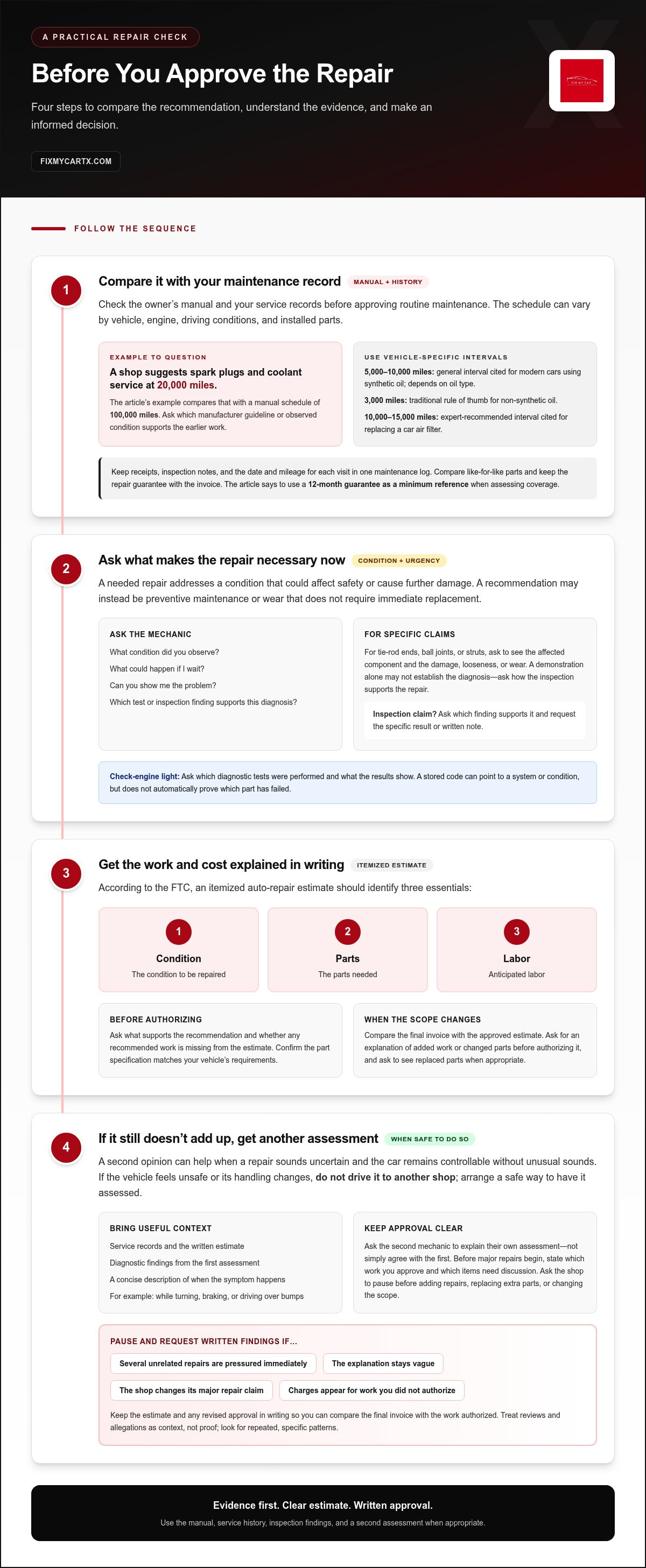
Start with the maintenance schedule in your owner’s manual, then compare it with the shop’s recommendation and your service records. The schedule can vary by vehicle, engine, driving conditions, and the parts installed. For example, a recommendation to replace spark plugs and service coolant at 20,000 miles may be much earlier than a manual’s 100,000-mile schedule. Ask which manufacturer guideline or observed condition supports the earlier work. That comparison is a practical first step in judging whether a mechanic’s advice is fair.
Use the manual’s intervals as a reference, not a substitute for inspecting a worn or damaged part. CarGurus says modern cars using synthetic oil can generally go 5,000 to 10,000 miles between oil changes, depending on oil type. The traditional rule of thumb for non-synthetic oil was 3,000 miles. Experts recommend replacing a car air filter every 10,000 to 15,000 miles. Check your vehicle’s schedule and service history before approving a replacement based only on a generic interval.
Keep receipts, inspection notes, and the date and mileage for each visit in one maintenance log. When a shop recommends replacing a part, compare its stated part specification with the vehicle’s requirements and any written quote you already have. Prices can vary with part type and application, so compare like with like rather than choosing by a part name alone. Keep the repair guarantee with the invoice, and review its written terms. Use a 12-month guarantee as a minimum reference when assessing repair coverage.
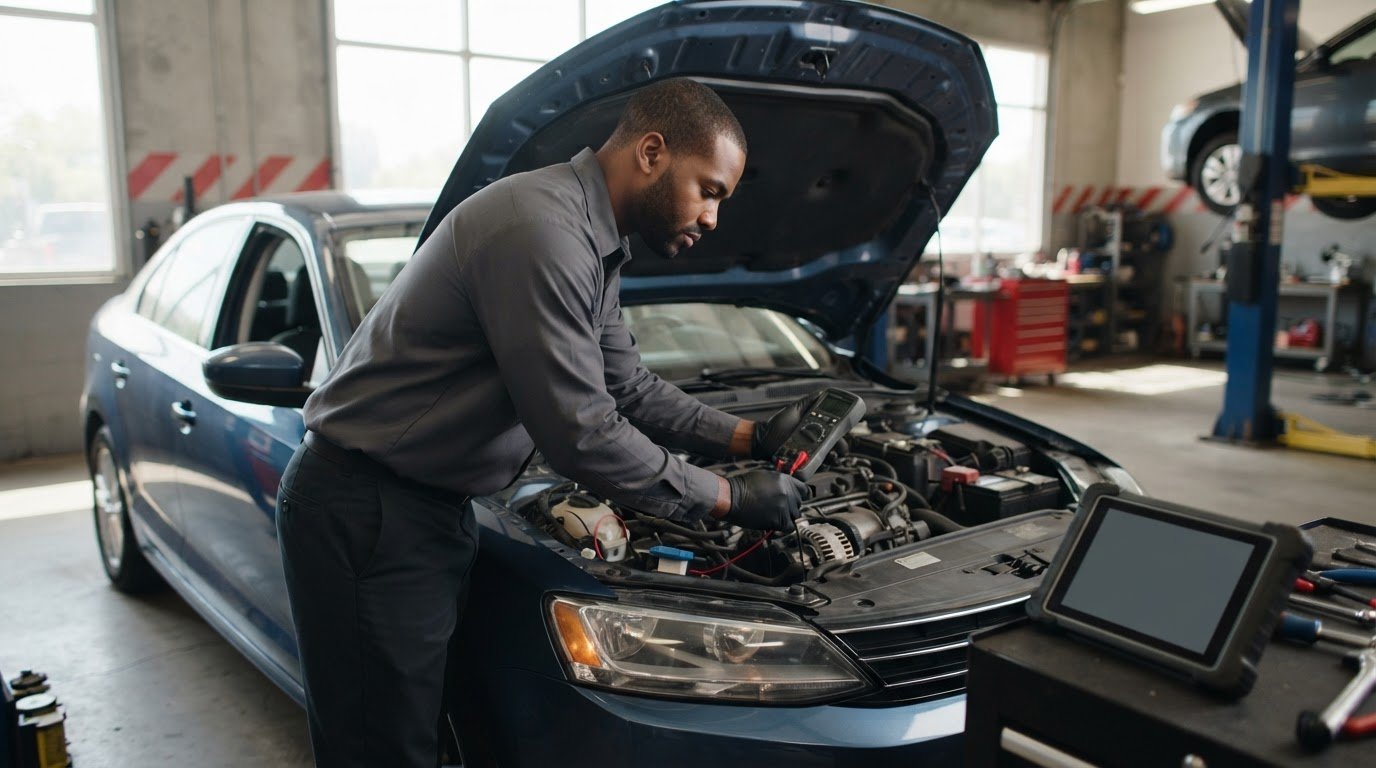
For a check-engine light, ask which diagnostic tests were performed and what the results show. A stored code can point to a system or condition, but it doesn’t automatically prove which part has failed. Ask how the diagnosis supports the recommended repair, and keep the test results with your receipts.
What should a written auto repair estimate and invoice include? According to the FTC, an itemized estimate should identify the condition to be repaired, the parts needed, and anticipated labor. Compare the final invoice with the approved estimate, and ask for an explanation of added work or changed parts before authorizing it.
2. Distinguishing needed repairs from recommended repairs
A needed repair addresses a condition that could create a safety issue or cause further vehicle damage. A recommendation may instead involve preventive maintenance or wear that doesn’t require immediate replacement. Ask which applies and what could happen if you wait. If a component should be replaced soon, for example, ask what condition the mechanic observed and how it affects the car now.
If a shop says a repair is required to pass an inspection, ask which inspection finding supports that claim. Request the specific result or written note, and ask the mechanic to show you the condition. Keep inspection-related repairs separate from general maintenance recommendations, so you can distinguish what the shop says is necessary from what it advises for prevention.
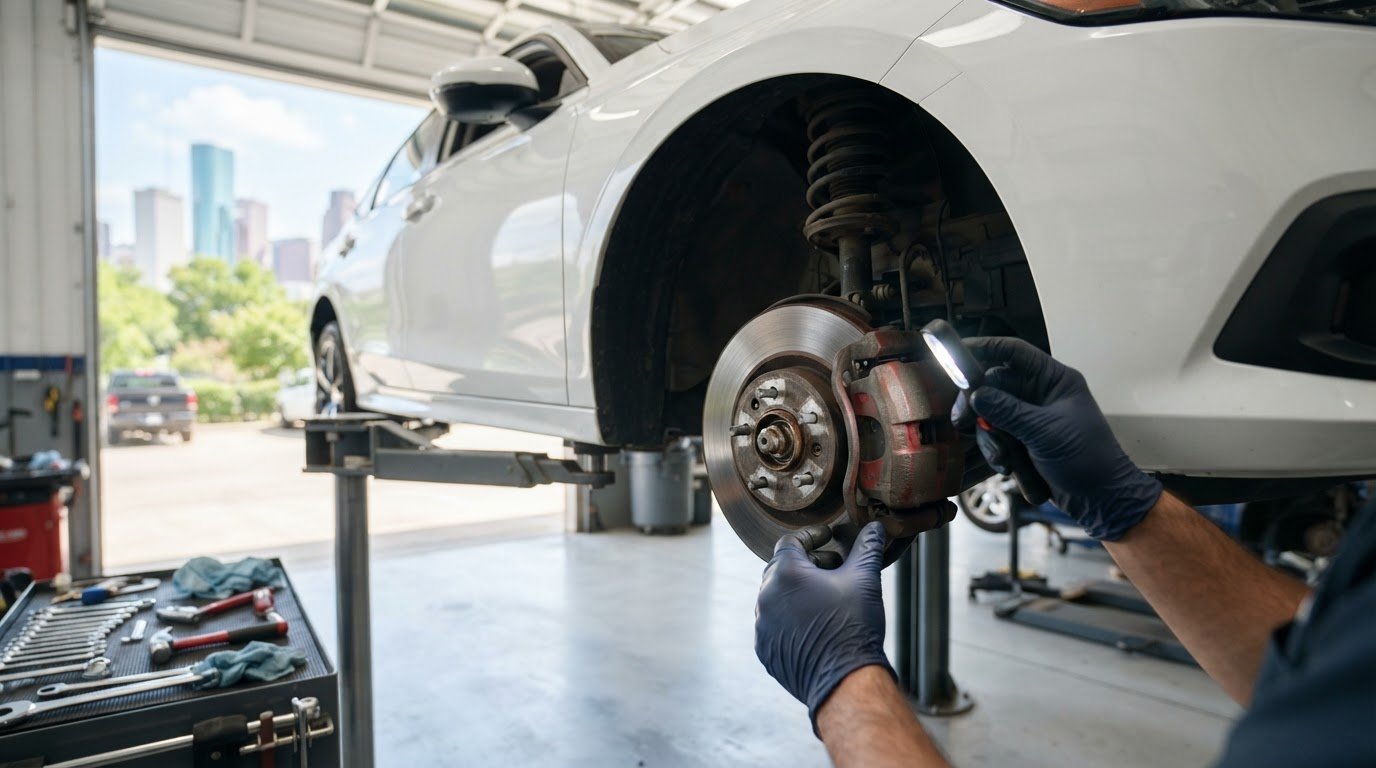
For suspension or front-end work, ask the mechanic to identify the affected component and show you the damage, looseness, or wear. A recommendation to replace tie-rod ends, ball joints, or struts should be supported by an observable condition. A demonstration alone may not establish the diagnosis, so ask how the inspection supports the repair. If the shop switches from one major repair claim to another, pause and request the findings in writing.
Warning signs include pressure to approve several unrelated repairs immediately, vague explanations, or charges for work you didn’t authorize. Reviews can provide context, but look for repeated, specific patterns rather than relying on one post. Compare detailed customer accounts, verify claimed credentials through the issuing organization, and search the shop’s name with complaint-related terms. Treat allegations as claims, not proof.
According to the FTC, an itemized auto-repair estimate should identify the condition to be repaired, the parts needed, and anticipated labor. Compare those details with the mechanic’s explanation, and ask about recommended work missing from the estimate. If you need a hands-on assessment of a documented vehicle concern, explore a professional repair assessment before deciding which work to approve.
3. Getting a second opinion
A second opinion can help when a costly repair sounds uncertain, especially if your car remains controllable and makes no unusual sounds. This can be particularly useful for proposed tie-rod-end or ball-joint work, where the diagnosis should point to a specific inspection finding. If the vehicle feels unsafe or its handling changes, don’t drive it to another shop. Arrange a safe way to have it assessed.
How can you verify a mechanic’s diagnosis before approving repairs? Ask what symptom or test points to the failed part, then have another mechanic independently assess the same concern. Share the first written estimate and diagnostic findings, but ask the second mechanic to explain their own assessment rather than simply agree with the first.
Bring the car’s service records, the estimate, and a concise description of when the problem occurs. Note, for example, whether a noise happens while turning, braking, or driving over bumps. These details can help the second technician reproduce the symptom and distinguish a repair need from a guess. During service, ask which inspection results support the proposed work.
Before major repairs begin, state clearly which work you approve and which items need further discussion. Ask the shop to pause before adding repairs, replacing extra parts, or changing the scope. Keep the estimate and any revised approval in writing, so you can compare the final invoice with the work you authorized.
For a referral, ask people you trust which mechanic clearly explained a difficult diagnosis and provided a useful written estimate. A specific account of how a shop handled a similar issue is more helpful than a general recommendation. You can also compare detailed reviews for repeated comments about clear explanations, thorough diagnostics, and communication.
A second opinion doesn’t mean the first mechanic is dishonest. It gives you another assessment to compare, especially when the evidence is unclear or the proposed repairs involve several connected parts. If both assessments identify the same faulty component and explain the symptoms consistently, you’ll have a clearer basis for deciding what to authorize.
4. Asking mechanics to explain recommended work
Before approving a recommendation, ask the mechanic to explain the finding in plain language and connect it to a symptom, test, or inspection. If the shop proposes replacing a sensor, ask which reading or diagnostic result supports that conclusion. Then ask what the repair should address and whether another cause could produce the same symptom. A useful explanation points to evidence, not just urgency.
Keep your questions focused on the decision at hand. Ask which work is essential now, what can wait, and what could happen if you delay. For a repair involving multiple parts, ask why each needs replacement and whether they failed together or independently. Request an itemized estimate that separates parts and labor, then compare it with the explanation you received.
You can also ask to see the old parts after replacement. A worn belt, damaged hose, or cracked component may make the recommendation easier to understand. Ask before the repair whether the shop can keep the replaced part for you. The U.S. Bureau of Labor Statistics notes that automotive service technicians and mechanics keep records of diagnostic tests and repairs, so ask which findings support the work and how they’ll appear in your service records.
Build confidence by writing down the answers and checking that they remain consistent. If a technician says a noise comes from a specific wheel bearing, ask which inspection finding points to it. If the explanation changes to a different component, ask what new evidence led to the revised diagnosis. You’re looking for clarity, not a technical lecture; a good explanation should make the decision understandable.
Before authorizing work, repeat back the agreed repairs and ask the shop to document them. For clear answers about a proposed repair, discuss your mechanical repair.
Fix My Car: Collision Repair
Fix My Car provides collision repair assessments when an accident damages your vehicle. If the concern is mechanical rather than collision-related, its mechanical work service may be the right fit. Matching the service to the problem keeps the next step focused on the work your vehicle needs.
Bring your written estimate, diagnosis, and questions about the recommended repairs. Clear details help frame a conversation about the reported damage and proposed work. For collision concerns, Fix My Car can assess the repair needs. For a separate mechanical issue, explain the symptoms and share the existing findings.
Contact Fix My Car to discuss your vehicle’s repair needs.
Make Your Next Repair Decision With Confidence
Knowing how to tell if a mechanic is ripping you off starts with staying involved in the decision, not assuming every recommendation is wrong. You deserve to understand what your vehicle needs and why. Keep your records organized, ask for explanations you can follow, and make sure the work you approve matches the work proposed. That approach can help you move forward with greater confidence, even when the repair feels unfamiliar.
When you need help with a vehicle concern, Fix My Car offers Mechanical Work, Collision Repair, and Air Conditioner and Heater Repair. Choose the service that fits the issue, then discuss the symptoms or damage affecting your vehicle. The next step can be a straightforward conversation about the repair you’re considering. Talk with Fix My Car about your repair needs, and take the next step with a clearer plan.
Frequently Asked Questions
What can you do about it?
If a repair recommendation feels questionable, pause before approving additional work and keep your documents together. Compare the proposed repair with your service records, then ask the shop to explain any findings you don’t understand. To judge whether a mechanic is ripping you off, focus on evidence and authorization, not pressure or assumptions. In Houston, you can seek another assessment if the vehicle is safe to move.
What are common signs an auto mechanic is overcharging or recommending unnecessary repairs?
Watch for recommendations that change without a clear explanation, repairs unrelated to your complaint, or pressure to decide before reviewing the estimate. A shop should connect each proposed repair to a symptom or inspection finding. If you brought the car in for a starting issue, for example, ask how a newly suggested suspension repair relates to that concern.
What is a fair labor rate for auto repair in the United States?
There isn’t one fair labor rate for every repair shop in the United States. The total depends on the repair’s complexity, the vehicle’s design, diagnostic work, the shop’s labor rate, and estimated hours. Compare estimates for the same repair, vehicle, parts, and labor scope. For a quote in Houston, ask the shop to separate labor from parts so you can see what drives the total.
How can I compare repair estimates and parts prices?
Compare estimates line by line, not just by total. Check that each describes the same repair, part type, quantity, labor, and additional work. For parts, compare matching specifications and whether the estimate identifies new, remanufactured, or used components. Ask the shop to explain differences in labor hours or part selection. A lower estimate isn’t comparable if it leaves out work included in another.
Can a mechanic perform additional repairs without my approval?
Make your approval clear before work begins. Identify the repairs you authorize and tell the shop to pause if diagnosis reveals additional work. Ask for any change to be described in an updated estimate, then approve or decline it in writing. Keep messages and estimate copies with your records. This creates a clear account of the agreed scope and helps prevent confusion when you review the final invoice.
What are my rights if a mechanic charges more than the estimate?
Start by comparing the final invoice with the estimate and any documented changes you approved. Ask the shop to explain each difference, including added parts, labor, or diagnostic work, and request an itemized invoice. Keep copies of estimates, messages, and payment records. If the explanation doesn’t resolve the discrepancy, document your concern in writing and consult the consumer-protection resources available in your state.
Comentarios