


How Long Does Body Work on a Car Take? A Realistic Repair Timeline
Could two cars with similar-looking damage have very different repair timelines? Yes. If you’re wondering how long does body work on a car take, the answer depends on more than the visible dent or scrape. Your car moves through several repair stages, with time in the shop including both hands-on work and waiting between steps.
It’s understandable to want a firm pickup date, especially when you’re arranging rides or managing daily plans. Teardown can uncover hidden damage, parts may take time to arrive, and insurance reviews can add steps. A free estimate helps establish the initial repair scope, but the timeline may change if technicians find additional damage.
This guide explains the main repair stages, what can extend the schedule, and which milestones to ask about. You’ll also find practical ways to plan transportation while your car is being repaired, including complimentary ride-share transportation for Fix My Car customers. With a clearer picture of the process, you can plan ahead and follow progress.
Table of Contents
How Long Does Body Work on a Car Take? Why There Is No Single Timeline
A reliable repair timeline depends on your vehicle, the damage, the parts required, and the full scope of work. The answer to “how long does body work on a car take” is specific to your car, not just to how severe the damage looks at first glance.
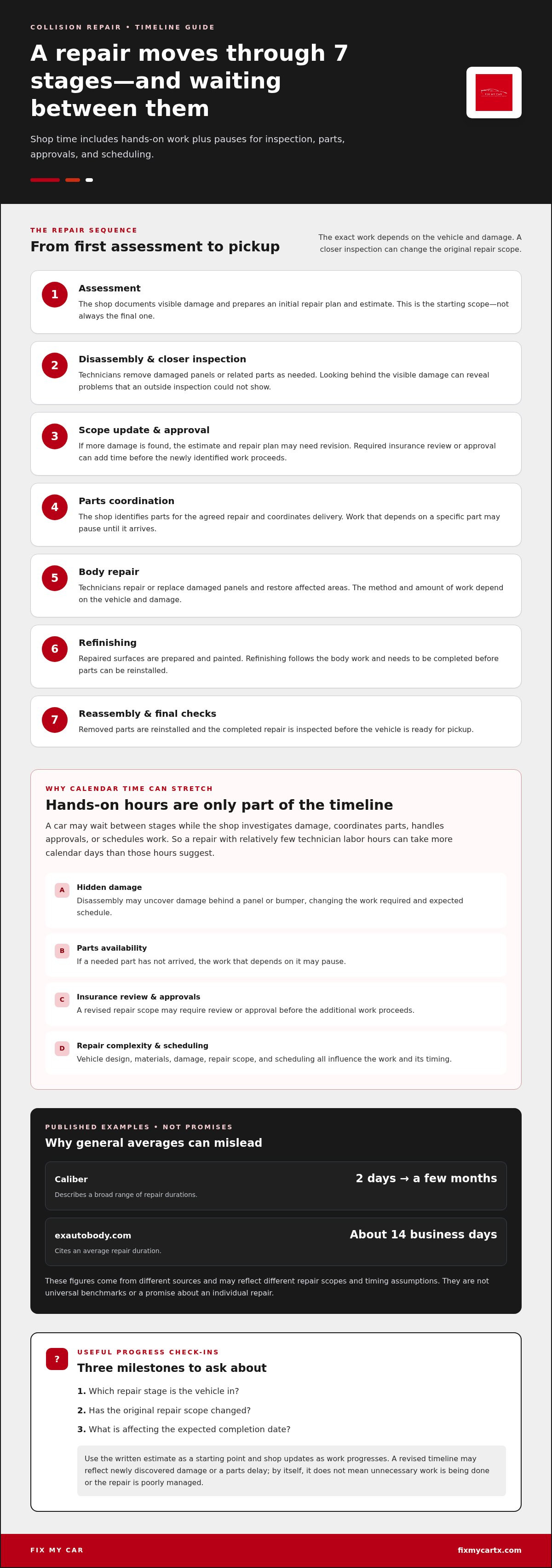
Time in the shop isn’t all hands-on repair. Your car may wait between stages while parts arrive, approvals are handled, or work is scheduled. A repair with relatively few technician labor hours can therefore take more calendar days than those hours suggest. For planning, the shop’s estimate and progress updates are more useful than a general number found online.
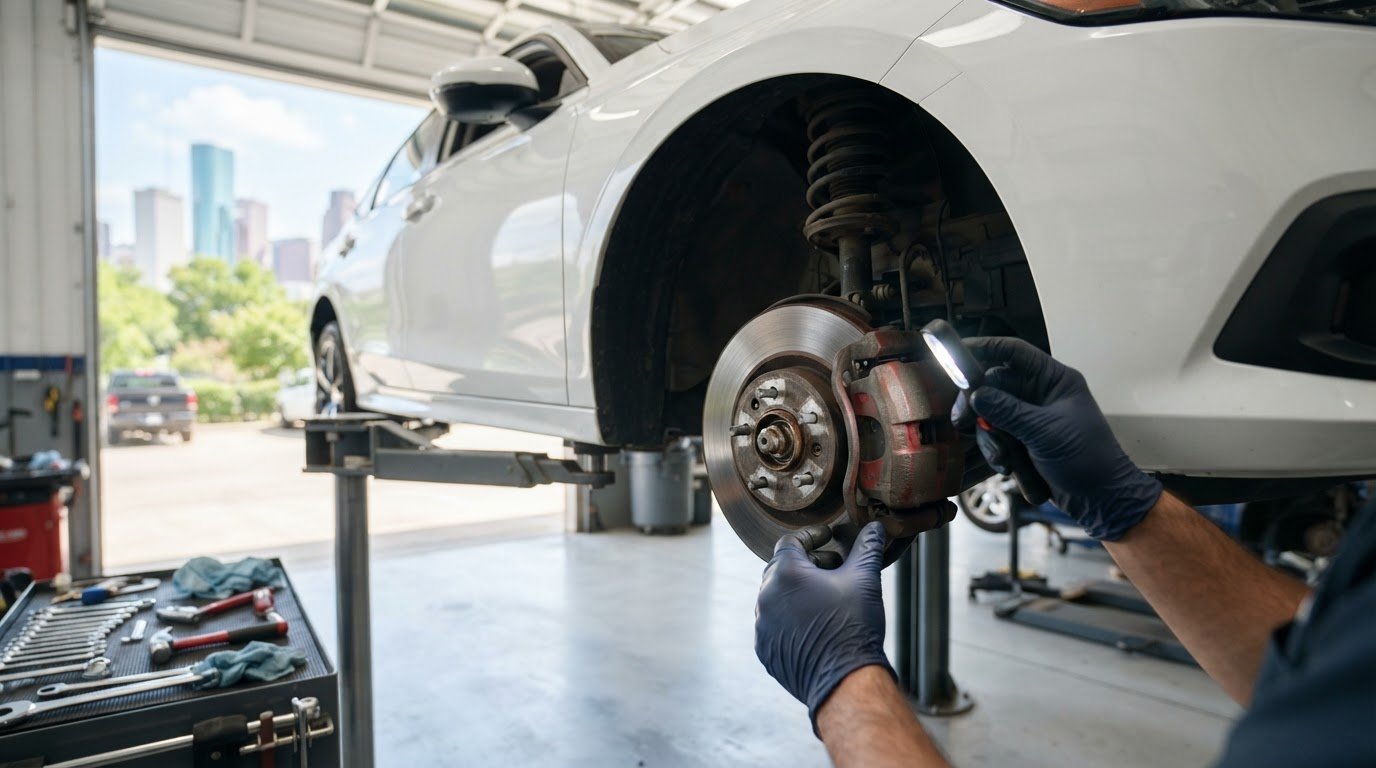
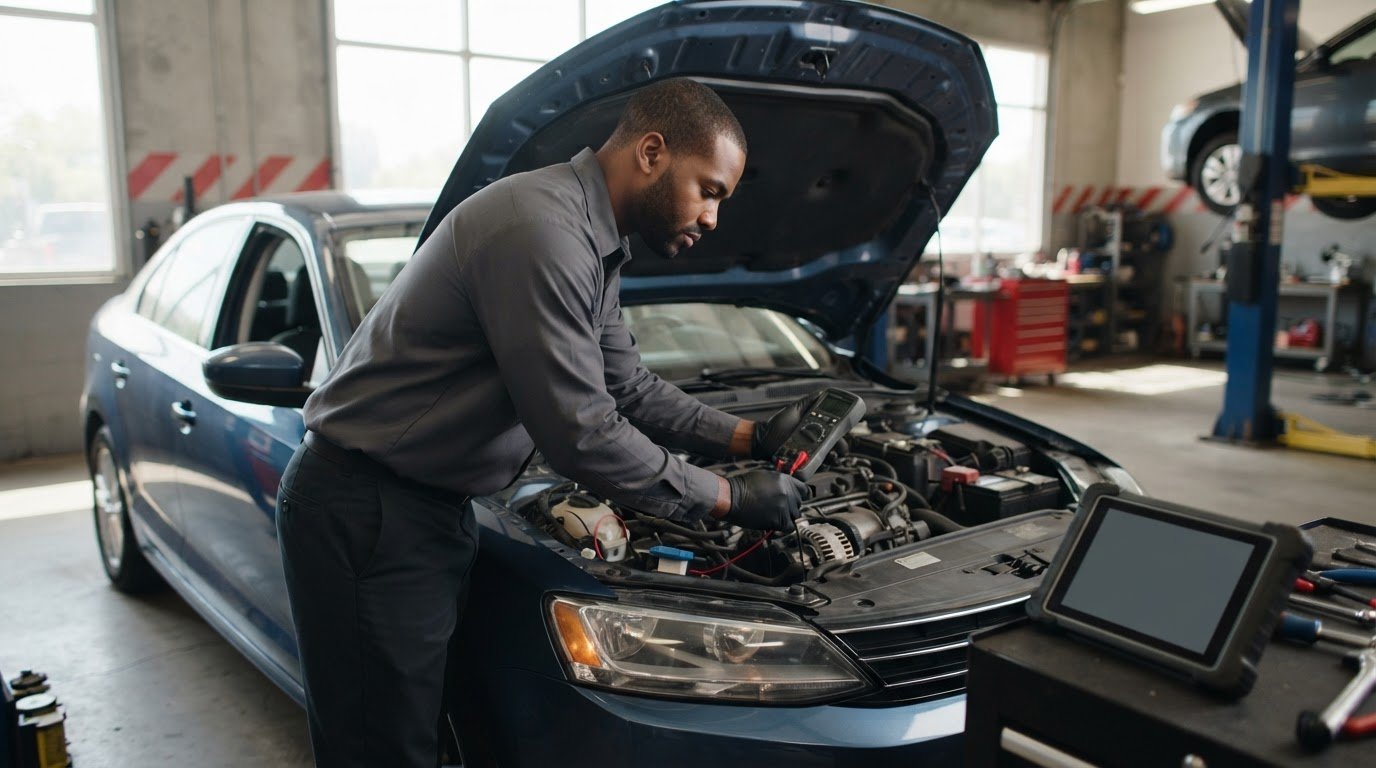
Collision body work focuses on repairing or replacing damaged exterior panels and related areas. Mechanical repairs address systems such as brakes, steering, or the engine. A collision can require both types of work, but a dented panel and a mechanical fault involve different tasks and may follow different repair steps.
What counts as body work after a collision?
Body work can include repairing a dented door, replacing a damaged bumper, aligning a panel, or refinishing a surface so the repaired area matches the rest of the vehicle. Vehicle design matters too: car body construction varies, and the structure and materials around a damaged area can affect how technicians approach the repair.
Visible damage doesn’t always show the full scope. A bumper cover may look like the main problem, while inspection after disassembly reveals damage to components behind it. The repair plan may then need revision, affecting both the work required and the expected schedule.
Why online repair averages can be misleading
An average combines vehicles with different damage, repair plans, parts needs, and waiting periods. It can offer broad context, but it can’t account for what technicians find on your specific vehicle. A small cosmetic repair and a repair involving multiple panels or hidden damage shouldn’t be expected to follow the same timeline.
Published figures illustrate that variation. Caliber describes repair duration as ranging from two days to a few months, while exautobody.com cites an average of about 14 business days. These figures are examples from those sources, not universal benchmarks or a promise about an individual repair. They may also reflect different repair scopes and timing assumptions.
For practical planning, use your written estimate as a starting point, then follow shop updates as the work progresses. Ask which stage your vehicle is in, whether the original repair scope has changed, and what is affecting the expected completion date. A revised timeline may reflect newly discovered damage or a parts delay. By itself, it doesn’t mean unnecessary work is being done or that the repair is poorly managed.
What Happens During Body Work? The Repair Stages That Shape the Timeline
Body work follows a sequence, but the exact steps depend on the vehicle and the damage. Knowing the sequence helps explain why the answer to “how long does body work on a car take” includes more than the time a technician spends repairing panels. Some stages involve active work; others depend on parts, approvals, or scheduling.
A car’s repair timeline includes hands-on work and the time spent waiting for the next stage. Here’s how the process commonly unfolds:
Assessment: The shop documents visible damage and prepares an initial repair plan and estimate. This sets the starting scope, which may change after closer inspection.
Disassembly and closer inspection: Technicians remove damaged panels or related parts as needed to inspect affected areas. This can reveal damage that wasn’t visible from the outside.
Scope update and approval: If inspection uncovers additional damage, the estimate and repair plan may need revision. Any required insurance review or approval can add time before the newly identified work proceeds.
Parts coordination: The shop identifies parts needed for the agreed repair and coordinates their delivery. Work that depends on a specific part may pause until it arrives.
Body repair: Technicians repair or replace damaged panels and restore affected areas. The method and amount of work depend on the vehicle and the damage.
Refinishing: Repaired surfaces are prepared and painted. This follows the body work and must be completed before parts can be reinstalled.
Reassembly and final checks: Technicians reinstall removed parts and inspect the completed repair before the vehicle is ready for pickup.
How assessment and disassembly can reveal more damage
An initial visual inspection can identify obvious dents, scrapes, or a damaged bumper, but it may not show what happened behind a panel. Disassembly gives technicians a closer look at the impact area and helps determine whether the original repair plan covers the work required. If additional damage is found, the shop can update the estimate and explain how the revised scope affects the timeline.
Why parts, repair, paint, and reassembly affect timing
Parts coordination can create a gap between assessment and hands-on repair, especially when work depends on an item that hasn’t arrived. Once the parts are available, the repair still moves through distinct stages: panel work must be completed before refinishing, and refinishing must be ready before reassembly. Final checks take time too. Each step helps ensure the vehicle is put back together properly, not simply made to look complete.
If you’re planning a collision repair, a free collision repair estimate can help establish the initial scope. As the repair progresses, updates can clarify whether the vehicle is being worked on, waiting for a part or approval, or moving through final checks.
How Long Do Different Types of Car Body Repair Take?
Repair categories can help set expectations, but they can’t predict exactly how long your car will be in the shop. A small area of cosmetic damage may need a limited repair, while damage across several panels can involve more parts, refinishing, and coordination. If you’re asking how long does body work on a car take, treat any category estimate as a starting point, not a promised pickup date.
The ranges below are illustrative planning estimates, not Fix My Car turnaround times. Vehicle design, repair method, parts availability, paint work, and damage uncovered during inspection can all change the schedule.
These ranges describe broad examples, not identical jobs. A single-panel repaint may take less time than a repair that also involves hidden damage, parts replacement, or additional refinishing. Your written estimate and repair updates are a better guide for your vehicle.
Why minor, bumper, and multi-panel repairs differ
A localized dent may involve one panel and a focused repair. Bumper work can require removing the cover to inspect what’s behind it, then repairing or replacing components and refinishing the area. Multi-panel damage adds coordination: technicians may need to fit several panels, prepare surfaces, and blend paint so repaired sections look consistent with the surrounding finish. Each added operation can affect the schedule.
Why structural damage needs a vehicle-specific assessment
Structural damage can involve areas that aren’t visible from outside the vehicle. The shop needs to assess the affected structure and determine the repair scope before estimating the work. Precision matters because the goal is to restore the vehicle according to the repair plan, not simply make the damage less noticeable. For more context on collision repair in North Houston, see how the process considers both the repair and the vehicle’s condition.
If the estimate changes after inspection, ask which repair steps or newly identified damage account for the updated timeline. That detail helps you plan around your car’s actual repair rather than a broad category average.
What Can Delay Body Work, and How Can You Plan Around It?
A change in the expected completion date can be frustrating, especially when you’re coordinating work, family plans, and transportation. It doesn’t automatically mean the shop is doing unnecessary work or providing poor service. Collision repairs can uncover new information or depend on steps beyond the technician’s hands-on work. Knowing what is holding up progress can help you make a realistic plan.
Common factors that may affect the schedule include:
Parts availability: A repair may pause if a required part hasn’t arrived.
Additional damage: Disassembly can reveal damage that wasn’t visible during the initial inspection, changing the repair scope.
Insurance review: Revised work may need review or approval before it can proceed.
Repair complexity: The vehicle, materials, and number of affected areas influence the work involved.
Scheduling: Each stage must fit into the repair sequence, so a delay in one step can affect what follows.
If an estimate or repair plan changes, ask what prompted the change and which work it covers. The collision repair estimate guide can also help you understand what details an estimate may include. A revised timeline is easier to assess when you know whether the vehicle is waiting for a part, an approval, or the next repair stage.
How to stay informed when the repair schedule changes
Keep updates focused on what you need to plan. Ask which repair stage the vehicle is in, whether parts, inspection findings, or approvals are affecting progress, and what needs to happen next. You can also agree with the shop on a practical update schedule, such as checking in at a mutually convenient interval or after a key milestone. This gives you a clearer picture without relying on a date that may change.
For example, “Is the repair waiting on a part or ready for the next stage?” can help distinguish active work from a delay. If the expected date shifts, ask what has changed since the last update and whether the estimate or repair scope has been revised.
How to manage transportation while your car is in the shop
Before dropping off your vehicle, plan a backup commute and consider how you’ll handle errands or appointments if the repair takes longer than expected. Fix My Car provides complimentary ride-share transportation while vehicles are being serviced, a practical option for getting around during the repair. Rental-car referrals are also available.
A few clear questions can make a changing schedule feel more manageable: What stage is the car at? What is it waiting on? When should I expect the next update? For help establishing the repair scope, request a free collision repair estimate from Fix My Car.
Getting Body Work in North Houston: What to Expect From Fix My Car
For Houston drivers, a clear repair plan can make a stressful situation easier to manage. Fix My Car is a North Houston collision repair shop serving local drivers. The team provides free estimates to outline proposed work and insurance-friendly handling to help with the insurance process. An estimate is a starting point, not a guaranteed start or pickup date. The repair scope and timeline depend on your vehicle’s condition.
How an estimate helps set expectations
An estimate gives you an initial view of the identified damage, proposed repairs, and work that may be needed. It helps frame the repair, but it may not account for damage hidden beneath a panel or bumper. If closer inspection reveals additional work, the scope may change, and the expected timeline may need updating too.
That distinction matters when you’re trying to answer how long does body work on a car take. A free estimate helps establish what’s known at the outset; it doesn’t lock in a completion date. Updates as the repair progresses can clarify whether the original plan still fits or new findings have changed the work involved. Fix My Car’s ASE-certified technicians and manufacturer certifications support its collision repair work. The estimate and repair updates help you understand the plan for your specific vehicle.
Local support while your vehicle is being repaired
Repair logistics matter, especially if you rely on your car for work, school, or daily errands. Fix My Car serves the North Houston community with collision repair and insurance-friendly handling. You can discuss the repair scope and next steps with the shop as work moves forward.
Transportation is another practical part of planning. Fix My Car provides complimentary ride-share transportation while vehicles are being serviced. This can help you get around during the repair, while a backup commute gives you another option if plans change. The shop also provides rental referrals.
A vehicle-specific estimate gives you a clearer starting point without promising a fixed completion date. Request a free collision repair estimate to discuss your vehicle’s repair scope and next steps.
Take the Next Step With a Clear Repair Plan
Not knowing when you’ll have your car back can make planning difficult. Rather than relying on a broad online average, start with information specific to your vehicle and stay in touch as the repair progresses. That’s the most useful way to approach the question, “how long does body work on a car take?”
Fix My Car helps North Houston drivers move forward with free estimates, ASE-certified technicians, manufacturer certifications, and complimentary ride-share transportation while vehicles are being serviced. The estimate offers a starting point for understanding the proposed work, while updates help you adapt if inspection findings change the plan. No general timeline replaces an assessment tailored to your car.
Ready to understand the next steps for your vehicle? Request a free collision repair estimate from Fix My Car and get a clearer view of the work ahead.
Frequently Asked Questions
How long does body work on a car usually take?
There’s no dependable single timeline for body work because repairs vary in scope. A localized scrape may involve fewer steps than damage affecting multiple areas, while unavailable parts or insurance review can add waiting time. To understand how long does body work on a car take for your vehicle, use the repair plan as a guide and ask how the shop will communicate changes. For Houston drivers, vehicle-specific information is more useful than a broad average.
What type of car body repair takes the longest?
Structural damage and extensive repairs across multiple areas often involve more assessment and repair steps than a small dent or isolated scrape. The actual scope depends on what inspection reveals, including damage that may not be apparent from outside the vehicle. A qualified repair shop needs to assess the affected areas before estimating the work. A broad label like “major damage” alone can’t tell you how long a particular repair will take.
Can body work take longer after the repair has started?
Yes, a repair can take longer if technicians find damage that wasn’t visible before work began. For example, removing a damaged bumper may expose an affected component behind it, requiring a revised repair plan. The schedule can also change if additional parts are needed or an updated estimate requires review. Ask the shop to explain what changed, how it affects the remaining work, and when you can expect another update.
How long does it take to repair a bumper after an accident?
Bumper repair time depends on whether the bumper can be repaired or needs replacement, as well as what inspection reveals. Refinishing may add preparation and paint steps, and damage behind the bumper can expand the job. A scuff on the cover and an impact affecting nearby components aren’t equivalent repairs. The shop’s assessment of your vehicle and repair method will provide a more useful estimate than a general bumper timeline.
Does insurance approval affect how long collision body work takes?
It can. The shop and insurer may need to review the proposed repair, and newly discovered damage may require an updated estimate and further coordination. The time involved depends on the repair details and review process, so there isn’t one approval timeline that applies to every claim. Ask which decision or information is outstanding and whether technicians can continue other parts of the repair while that item is being reviewed.
What should I ask the body shop if my car repair is taking longer than expected?
Ask, “Which stage is my car in now?” Then clarify whether progress depends on parts, inspection findings, or an approval. If the scope changed, ask what new work was identified and whether the estimate was updated. Finish by asking what needs to happen next and when you should expect another update. These direct questions help you understand the reason for the delay and plan transportation without assuming the cause.
Can I drive my car while I wait for body work?
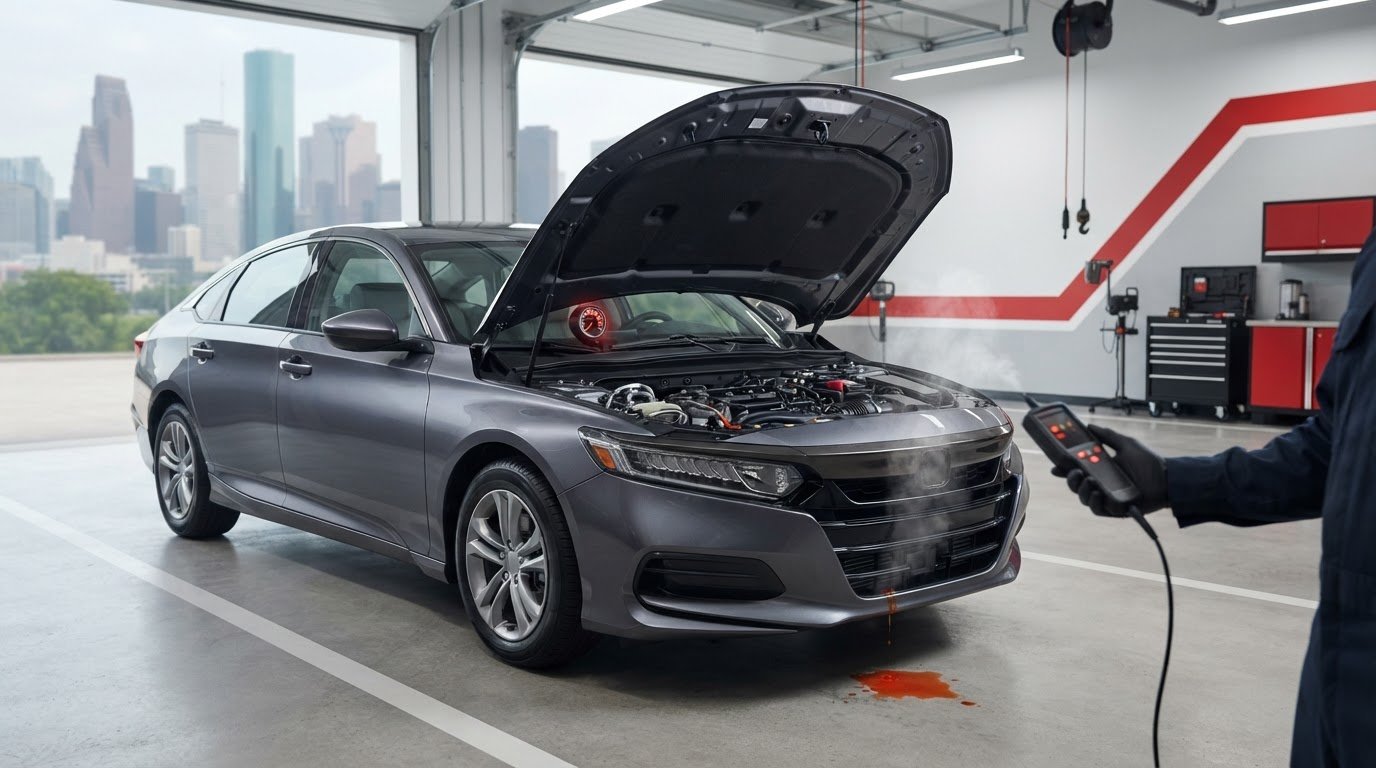
Whether a damaged car is safe to drive depends on the type and location of the damage, not just how it looks. A loose bumper, damaged lights, or problems affecting steering or braking may raise safety concerns. Don’t rely on appearance alone to decide. Have a qualified repair professional assess the vehicle and follow their guidance about driving it or arranging another way to get it to the shop.
Comentarios