


Commercial Fleet Maintenance in Houston: 2026 Guide
A fleet rarely loses a workday all at once. An overdue service, an overlooked warning light, or an unexpected repair can disrupt schedules and leave managers juggling vehicles instead of operations. A repeatable plan for commercial fleet maintenance houston businesses can use helps turn those interruptions into service needs you can track, prioritize, and address.
If you manage several vehicles, routine upkeep has to fit around daily work, while unexpected repairs may need attention sooner. Keeping service history and vehicle needs organized helps you decide what to address first and plan repairs with less guesswork.
This guide explains how to build a practical maintenance and repair process, which vehicle information helps you set priorities, and how to coordinate service in Houston. Fix My Car is an independent North Houston repair shop serving the Houston area, with fleet repair services focused on prioritized servicing to help minimize downtime. Our ASE-certified technicians handle fleet mechanical work and collision repair, with attention to your vehicles and operating needs.
Table of Contents
Commercial Fleet Maintenance in Houston: What a Reliable Program Needs
How to Build a Fleet Maintenance Plan That Fits Daily Operations
Scheduled Maintenance vs. Reactive Fleet Repair: How to Balance Both
How Houston Fleet Managers Can Coordinate Service and Reduce Disruption
Fleet Maintenance and Repair in Houston: Plan Your Next Step with Fix My Car
Commercial Fleet Maintenance in Houston: What a Reliable Program Needs
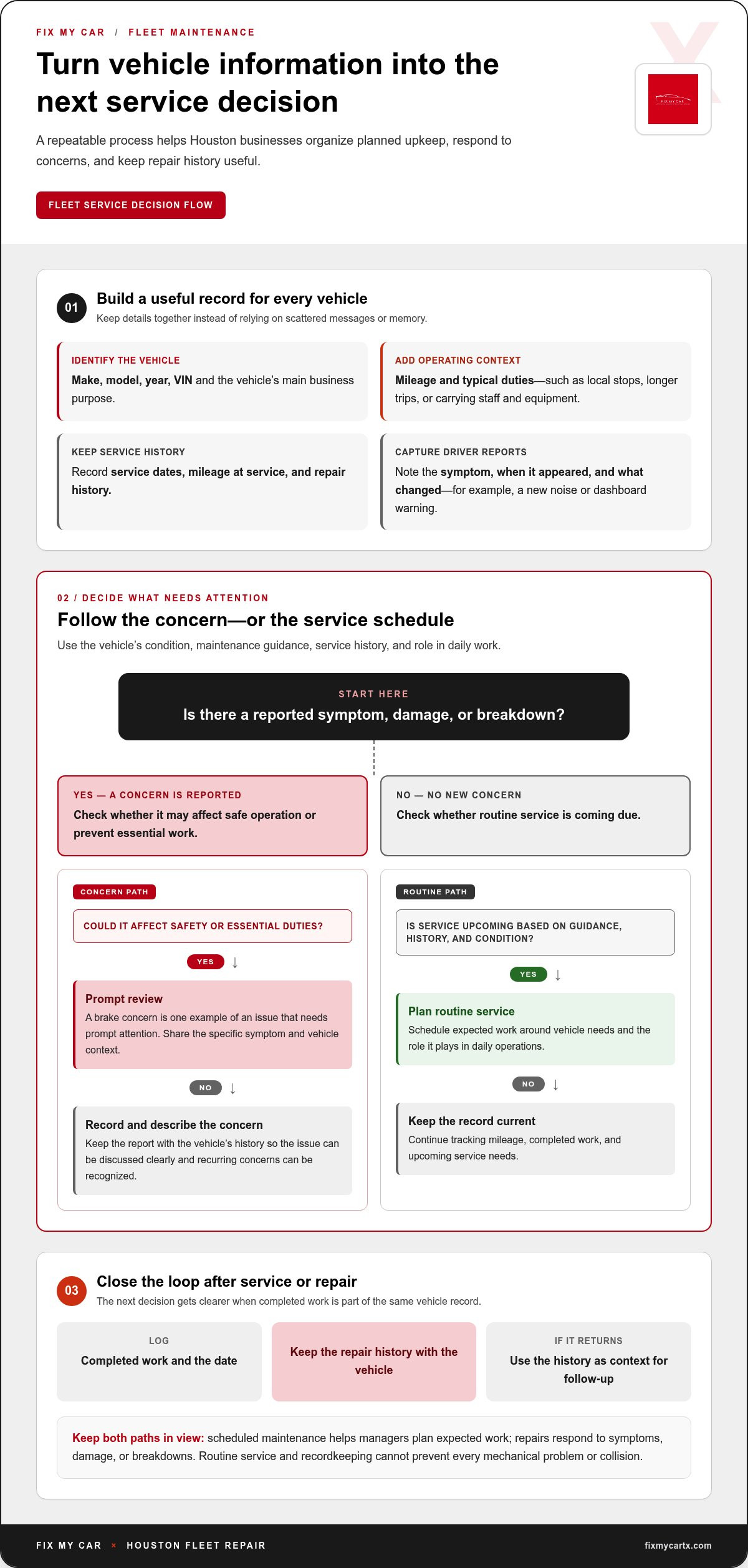
Fleet maintenance is the planned upkeep and repair coordination for vehicles a business owns or operates. It gives managers a way to track service needs and respond to problems as part of daily operations, instead of treating every repair as an isolated event. A useful approach to commercial fleet maintenance houston businesses can put into practice connects each vehicle’s condition with its service needs and the work it performs.
There are two related parts to the process. Scheduled maintenance is planned around the vehicle’s maintenance guidance, service history, and condition. Repairs are prompted by a reported symptom, damage, or breakdown. A consistent program accounts for both: routine service helps managers plan expected work, while a clear reporting process helps them respond when a concern appears between appointments. Neither scheduled maintenance nor recordkeeping can prevent every mechanical problem or collision.
Vehicle availability affects more than transportation. When a work vehicle is out of service, a route may need to change, staff schedules may shift, and customer commitments can become harder to meet. Fleet management covers more than maintenance, but upkeep is an important part of it. The Fleet Management Overview provides broader context on how vehicle maintenance fits into managing a fleet.
Which vehicles and businesses benefit from fleet maintenance?
A fleet maintenance process can support a single work car, a group of vans, or other vehicles used for business. The right process depends on how vehicles are used and what the business relies on them to do, not just the number of vehicles. A vehicle making frequent local stops may have different service needs from one used for longer trips or to carry tools and equipment.
Start by listing each vehicle’s duties, typical use, and importance to daily work. A van that carries staff to scheduled appointments may need different service planning from a car used occasionally for business travel. Houston businesses also operate on different routes and schedules, so plan around the work each vehicle performs rather than applying one routine to the entire fleet.
Why Houston businesses need a consistent service process
Service records bring scattered observations together. Recording completed work, reported symptoms, and upcoming service needs gives managers a clearer basis for deciding what to address and when. It also helps distinguish a new concern from a recurring one, making discussions about repairs more specific.
Business schedules often leave limited room for surprises. Planned upkeep gives managers a chance to organize service around operating needs, while prompt reporting helps prevent a known concern from being overlooked. A process cannot eliminate unexpected repairs, but shared records make it easier to understand what each vehicle needs and coordinate next steps. For Houston businesses, that means planning can account for route demands, staff availability, and customer commitments without assuming every vehicle follows the same pattern.
How to Build a Fleet Maintenance Plan That Fits Daily Operations
A useful maintenance plan turns vehicle information into clear next steps. It should show upcoming service, capture new concerns promptly, and distinguish routine appointments from repairs that could affect safety or essential work. For commercial fleet maintenance houston businesses can organize around actual vehicle use, start with a consistent process and keep records easy to update.
Inventory every vehicle. Create a central list with each vehicle’s identifying details, such as make, model, year, and vehicle identification number. Add its main business purpose so its role is clear.
Review how each vehicle is used. Record mileage and typical duties, such as frequent local stops, longer trips, or carrying staff and equipment. These details put service needs in operational context.
Track service and driver reports. Log service dates, mileage at service, repair history, and driver-reported symptoms. Note when a warning appeared and what changed instead of relying on a vague description such as “running poorly.”
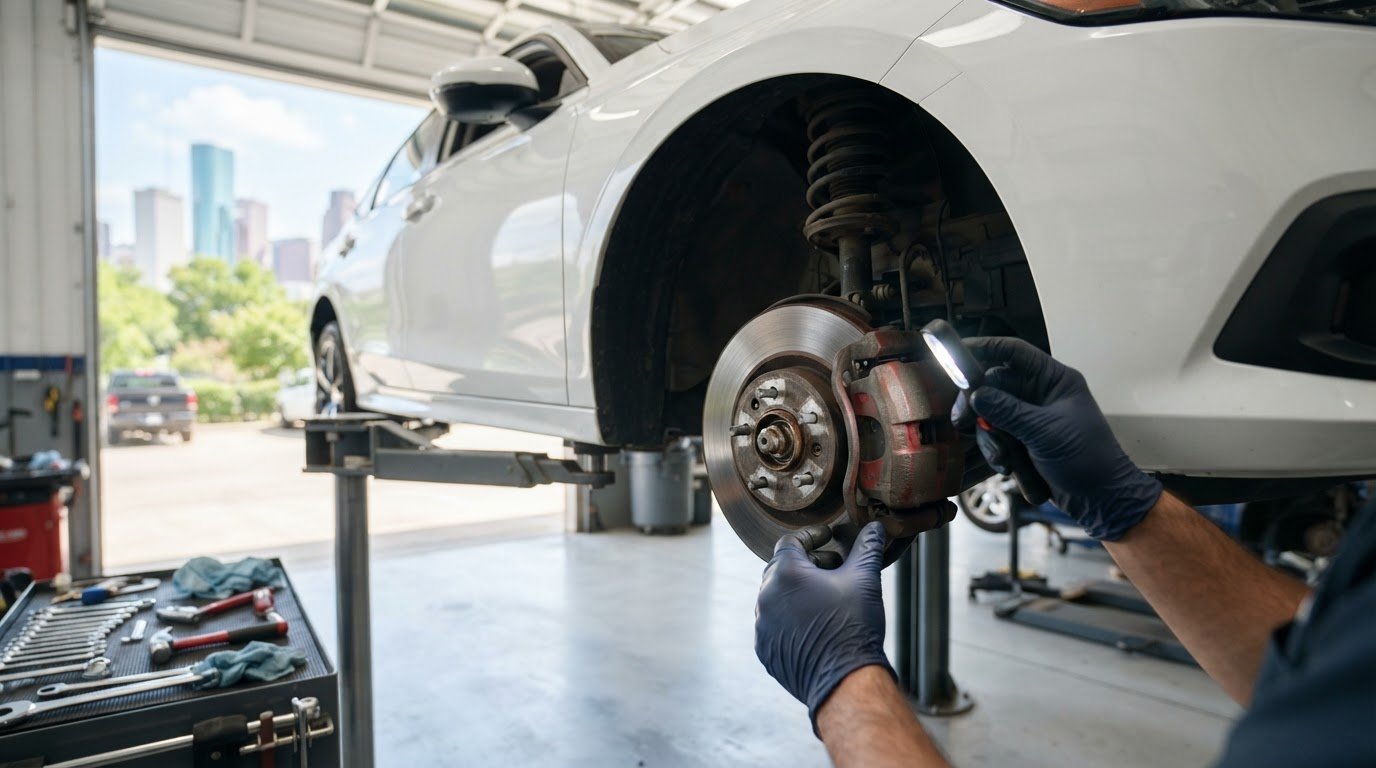
Prioritize needs. Separate safety-related concerns and problems affecting essential duties from upcoming routine service. A reported brake concern needs prompt attention; planned maintenance can be scheduled based on the vehicle’s needs and role.
Document repairs and follow-up. Add the completed work and date to the vehicle’s record. If a concern returns, the history gives managers and repair technicians useful context.
What fleet information should managers organize?
Keep a separate record for each vehicle rather than relying on scattered messages or one person’s memory. Along with identifiers, mileage, service dates, and repair history, record driver observations such as a new noise, a dashboard warning, or a change in braking feel. Consistent details help reveal recurring concerns and make it easier to describe a problem clearly. When a vehicle needs technical attention, professional mechanical work can help identify and address the issue.
How should businesses prioritize maintenance and repair?
Use a simple urgency distinction: concerns that may affect safe operation or prevent a vehicle from doing essential work need prompt review. Routine service can be planned around the vehicle’s needs and operating schedule. Group appointments when it suits your operation, but don’t delay a pressing concern just to combine visits. Fleet professionals can also explore maintenance-planning perspectives in NAFA Fleet Management Best Practices.
In short: inventory vehicles, review usage, track service and symptoms, prioritize by safety and business need, then document every repair. Fix My Car provides fleet repair services for business vehicles in Houston, with prioritized servicing focused on helping minimize downtime.
Scheduled Maintenance vs. Reactive Fleet Repair: How to Balance Both
A sound fleet plan has two tracks: scheduled upkeep for foreseeable service needs and a clear response for problems that arise unexpectedly. Neither replaces the other. Regular maintenance helps managers plan service, but it cannot prevent every mechanical problem or collision. The practical goal is to follow a routine while leaving room to assess symptoms, damage, and changes in how a vehicle operates.
When is scheduled maintenance the practical choice?
Use the manufacturer’s maintenance schedule as a planning reference, then consider the vehicle’s current condition and service history. Mileage is one useful signal, but the vehicle’s duties matter too. A vehicle making frequent stops or carrying equipment may have different demands from one used less intensively. Avoid applying one interval to every vehicle. Review records regularly and plan service according to each vehicle’s guidance and use.
When does a fleet vehicle need repair attention?
Don’t wait for the next routine appointment to record a safety concern, warning light, visible damage, or unusual operation. Note what the driver noticed and when, then arrange an appropriate assessment. Mechanical symptoms call for mechanical diagnosis; impact damage may require collision repair. A vehicle can need both, so a collision inspection should not replace checking how it operates. For accident-related considerations, see this guide to commercial vehicle collision repair in Houston.
For managers organizing commercial fleet maintenance houston operations, separating planned work from new repair requests makes priorities easier to see. Keep upcoming service on the calendar, but assess reported concerns on their own merits. If a safety-related issue raises questions about whether a vehicle should remain in service, prioritize its assessment rather than grouping it with routine appointments.
Fix My Car coordinates fleet upkeep and repairs, including mechanical and collision work. Its prioritized servicing is focused on helping minimize downtime. Learn about Fix My Car’s fleet repair services as you plan service for your business vehicles.
How Houston Fleet Managers Can Coordinate Service and Reduce Disruption
Service coordination starts before a vehicle reaches the shop. Clear information helps the repair team understand the concern and the vehicle’s role in your operation. Thoughtful appointment planning helps managers account for routes, staffing, and customer commitments. For commercial fleet maintenance houston businesses can coordinate effectively, share both the vehicle’s condition and the practical demands surrounding its use.
What should managers prepare before arranging fleet service?
Gather the details that help the team understand the vehicle and reason for service. Describe what the driver noticed, when it began, and whether it has changed. Explain the vehicle’s work role and any scheduling constraints, too. This context supports a more informed service plan and helps distinguish a routine need from a concern that deserves prompt attention.
Vehicle details: Make, model, identifying information, and current mileage.
Service history: Recent maintenance or repairs that may relate to the current concern.
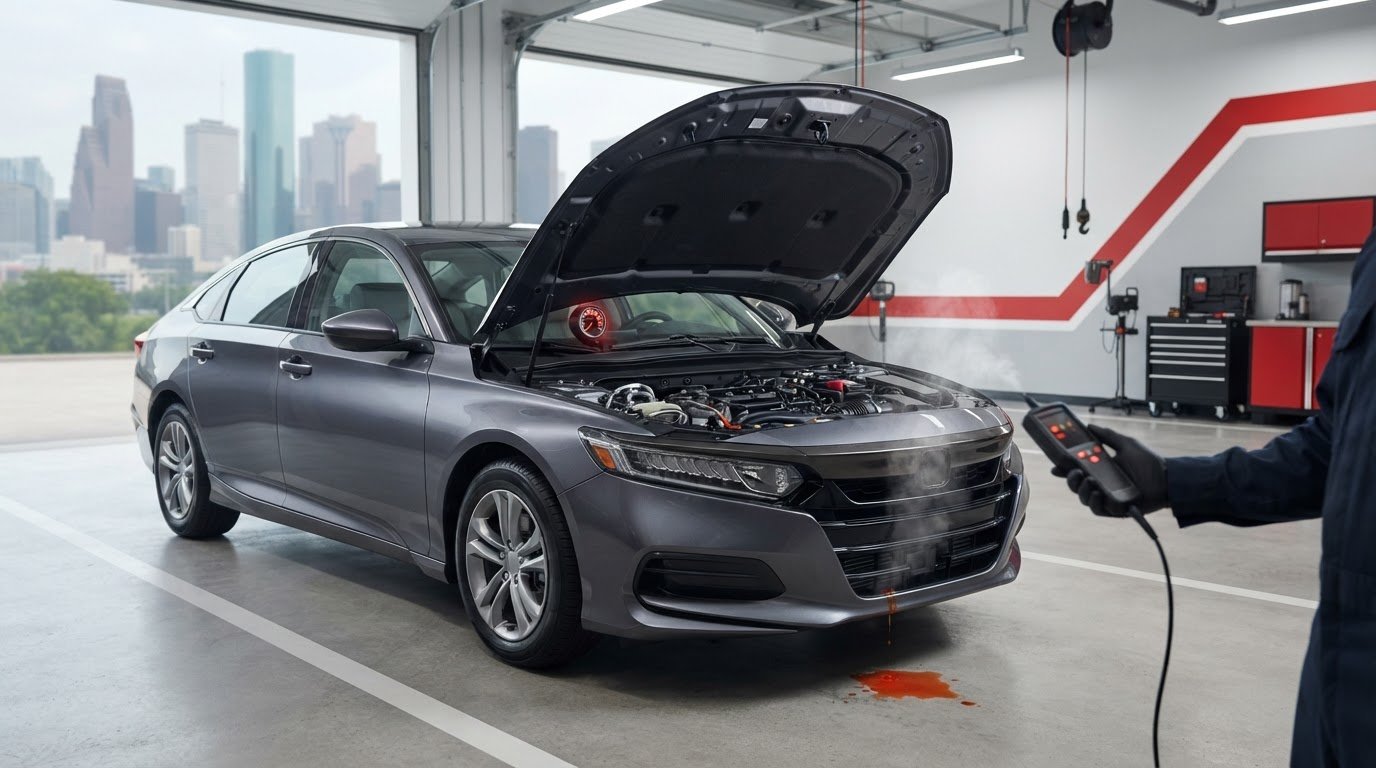
Symptoms: Warning lights, unusual sounds, changes in handling or performance, or visible damage.
Vehicle use: Typical routes, work duties, and whether the vehicle carries staff or equipment.
Operating priorities: Appointment constraints and how taking the vehicle out of service affects scheduled work.
For collision concerns, describe the visible damage and relevant circumstances. For mechanical symptoms, report what the driver experienced rather than guessing at a diagnosis. If a vehicle has both impact damage and operating concerns, share both so they can be considered together.
How can a repair partner support fleet continuity?
A local repair shop can provide a practical point of coordination for fleet upkeep and repair. Tell the team which vehicles are most important to scheduled work, then discuss service planning in light of those priorities. Houston businesses have different routes and operating demands, so useful coordination starts with the needs of the specific operation, not a one-size-fits-all schedule.
Fix My Car is an independent repair shop in North Houston serving the Houston area. Its fleet repair services cover upkeep and repairs, including mechanical and collision work. Prioritized servicing focuses on helping minimize downtime, and complimentary rideshare transportation is available to customers while vehicles are being serviced.
Before arranging service, bring together the vehicle’s details, symptoms, usage, and business priorities. That gives the repair team a clearer picture and helps managers plan around operational needs without assuming every repair follows the same timeline. Fix My Car’s ASE-certified technicians and manufacturer certifications support professional fleet service.
For fleet upkeep and repair in the Houston area, see Fix My Car’s fleet repair services.
Fleet Maintenance and Repair in Houston: Plan Your Next Step with Fix My Car
A maintenance plan is most useful when it leads to clear, coordinated service. Fix My Car supports Houston-area businesses with fleet upkeep and repair, helping managers address planned needs and unexpected vehicle concerns through one local repair shop. Its fleet servicing prioritizes work to help minimize downtime while keeping each vehicle’s operational role in view.
What Fix My Car brings to commercial fleet service
Fix My Car is an independent repair shop in North Houston that has served the Houston area for over a decade. Its fleet repair services cover upkeep and repairs, including mechanical work and collision repair when a vehicle needs attention after an accident.
ASE-certified technicians and manufacturer certifications support professional service. A repair partner with both mechanical and collision capabilities can help fleet managers address different vehicle needs through a coordinated local relationship, rather than treating every concern as unrelated to the fleet’s broader operation.
How to move from a maintenance plan to service
Before arranging service, gather the vehicle’s make, model, mileage, and relevant service history. Describe the concern in practical terms, such as when a warning light appeared or what changed in the vehicle’s operation. Clarify whether the need is scheduled upkeep, a mechanical symptom, or collision damage.
Then explain how the vehicle supports your business. A vehicle assigned to time-sensitive appointments may have different operational priorities from one with more flexible use. Sharing those priorities gives the service team helpful context for discussing next steps and planning around business needs.
Identify the vehicle and its current mileage.
Summarize recent service and repair history.
Describe symptoms or visible damage clearly.
Explain the vehicle’s work role and scheduling constraints.
Fix My Car provides free estimates, giving managers a clearer understanding of the repair needs being discussed. Organizing vehicle information ahead of time can make it easier to explain the concern and keep internal fleet records aligned with the service conversation. Since businesses use vehicles in different ways, include the details that matter to your routes, staff, and customer commitments.
For commercial fleet maintenance houston businesses can coordinate with a local repair partner, Fix My Car brings fleet upkeep, mechanical work, and collision repair together with prioritized servicing focused on limiting disruption. Share your vehicle needs and operating priorities with the team.
Contact Fix My Car about fleet service to discuss your business vehicles and plan the next step.
Make Your Fleet Plan Part of the Workday
Choose one next action: review your vehicle records and identify the service item that needs a decision first. That step turns a maintenance plan into an active operating tool, giving your team a shared starting point for discussing vehicle condition, repair priorities, and service timing. As routes or workloads change, revisit those priorities so the plan remains useful instead of becoming a static spreadsheet.
A dependable approach to commercial fleet maintenance houston operations grows from clear communication and steady follow-through. You don’t have to solve every fleet need at once. Start with the vehicle or repair concern that matters most to your business, then build from there with a repair partner that understands the importance of your operation.
Fix My Car supports Houston-area businesses with fleet maintenance and repair. Contact Fix My Car about fleet maintenance in Houston to discuss your vehicles and plan a practical next step.
Frequently Asked Questions
How often should commercial fleet vehicles be serviced?
Follow each vehicle’s manufacturer maintenance guidance, then consider its mileage, condition, and workload. There isn’t one interval that fits every commercial vehicle. For example, compare a frequently driven service van with a backup vehicle used occasionally, and use their different mileage and service records to plan reviews. For commercial fleet maintenance houston managers should keep schedules vehicle-specific and update them after each service or repair.
Can one repair shop handle both fleet maintenance and unexpected repairs?
Yes. A repair shop with fleet services can coordinate planned upkeep with mechanical problems that arise between service visits. Fix My Car handles fleet repair needs, including mechanical work and collision repair. Share the vehicle’s service history and explain how the concern affects its work. That context helps the repair team understand whether you’re arranging routine care or responding to a new issue that could affect daily operations.
What information should I track for each fleet vehicle?
Keep a separate record for each vehicle with its identifier, mileage, service dates, repair history, and current concerns. Add driver observations in concrete terms, such as when a dashboard warning appeared or whether a noise happens during startup or braking. Note the vehicle’s usual work duties, too. These details help distinguish a one-time report from a recurring concern and make records more useful when arranging service.
Can fleet maintenance help reduce vehicle downtime?
A consistent maintenance process can help managers plan known service needs and respond to reported problems before they get lost in day-to-day work. It can’t prevent every breakdown or guarantee that a vehicle will remain available. Keep service records current, identify which vehicles support time-sensitive duties, and raise new concerns promptly. Fix My Car’s fleet repair services use prioritized servicing with a focus on minimizing downtime.
What should I do when a commercial vehicle has collision damage?
Record what happened, note visible damage, and describe any changes in how the vehicle operates. If the damage may affect safe operation, don’t return the vehicle to regular work before it’s assessed. Share whether there are mechanical symptoms as well as body, glass, or lighting damage, since an incident can create more than one repair need. Clear information helps the repair team understand what requires attention.
Does fleet maintenance include mechanical and collision repairs?
Fleet service can involve both, but they address different needs. Mechanical work responds to operating problems or maintenance needs, while collision repair addresses damage from an impact. A vehicle involved in a collision may need both types of attention if it shows operating symptoms in addition to visible damage. Fix My Car provides fleet repair services, mechanical work, and collision repair for business vehicles in the Houston area.
How can a Houston business coordinate service for several vehicles?
Use a shared fleet record and assign someone to keep vehicle updates in one place. When arranging service, group similar routine needs where practical, but flag urgent concerns separately. Share which vehicles support fixed appointments or essential routes, along with any days when taking a vehicle out of service would disrupt work. This gives the repair team useful context and helps your business plan around service needs without assuming every vehicle has the same priority.
Comentarios