


Car Frame Straightening in Houston: How Structural Repairs Restore Alignment
Could a car look repairable on the outside while its structure is still out of alignment? After a collision, dents and broken panels don’t always show what happened underneath. Car frame straightening Houston drivers may need is a measured structural repair, not simply cosmetic bodywork.
Unusual handling or uneven panel gaps can raise questions, and collision-repair estimates may include unfamiliar terms. A professional assessment helps determine whether structural components are misaligned and whether they can be repaired or need replacement. Fix My Car provides collision repair and structural restoration, with ASE-certified technicians and insurance-friendly estimate handling.
This article explains what frame straightening addresses, how technicians assess potential damage, and which post-collision signs are worth reporting. It also covers how structural repairs differ from cosmetic work and what to expect when arranging a collision-repair estimate in Houston. Fix My Car offers free estimates and complimentary ride-share transportation while your vehicle is being serviced.
Table of Contents
What Car Frame Straightening in Houston Corrects After a Collision
A collision can damage more than the panels you can see. Impact may shift structural areas beneath the body, even when the exterior damage appears limited. That’s why car frame straightening in Houston starts with assessing the vehicle rather than guessing from dents or panel gaps.
Frame straightening is the measured correction of a vehicle’s structural alignment, guided by an assessment and the repair specifications that apply to that vehicle. The goal is to address structural movement, not just make panels look even. Depending on the findings, a vehicle may need structural work, cosmetic repairs, replacement parts, or a combination.
What does “frame” mean on a modern vehicle?
In a body-on-frame vehicle, the body sits on a separate structural frame. Many trucks and some larger vehicles use this design. In a unibody vehicle, the body and main structure form an integrated shell instead of sitting on a separate traditional frame. Many passenger cars use unibody construction.
People often use “frame” as shorthand for a vehicle’s structural areas, regardless of its design. Understanding car body construction and structural integrity helps explain why repair methods depend on how the vehicle is built. The word “frame” alone doesn’t identify which parts are damaged or how they should be repaired.
Why structural alignment matters beyond appearance
Structural areas support the body and provide mounting points for components. If impact shifts those areas, related parts may not fit or align as intended during reassembly. A door that no longer closes smoothly or a changed gap between panels may be a clue, but neither confirms the cause. Structural damage can also be present without an obvious exterior sign.
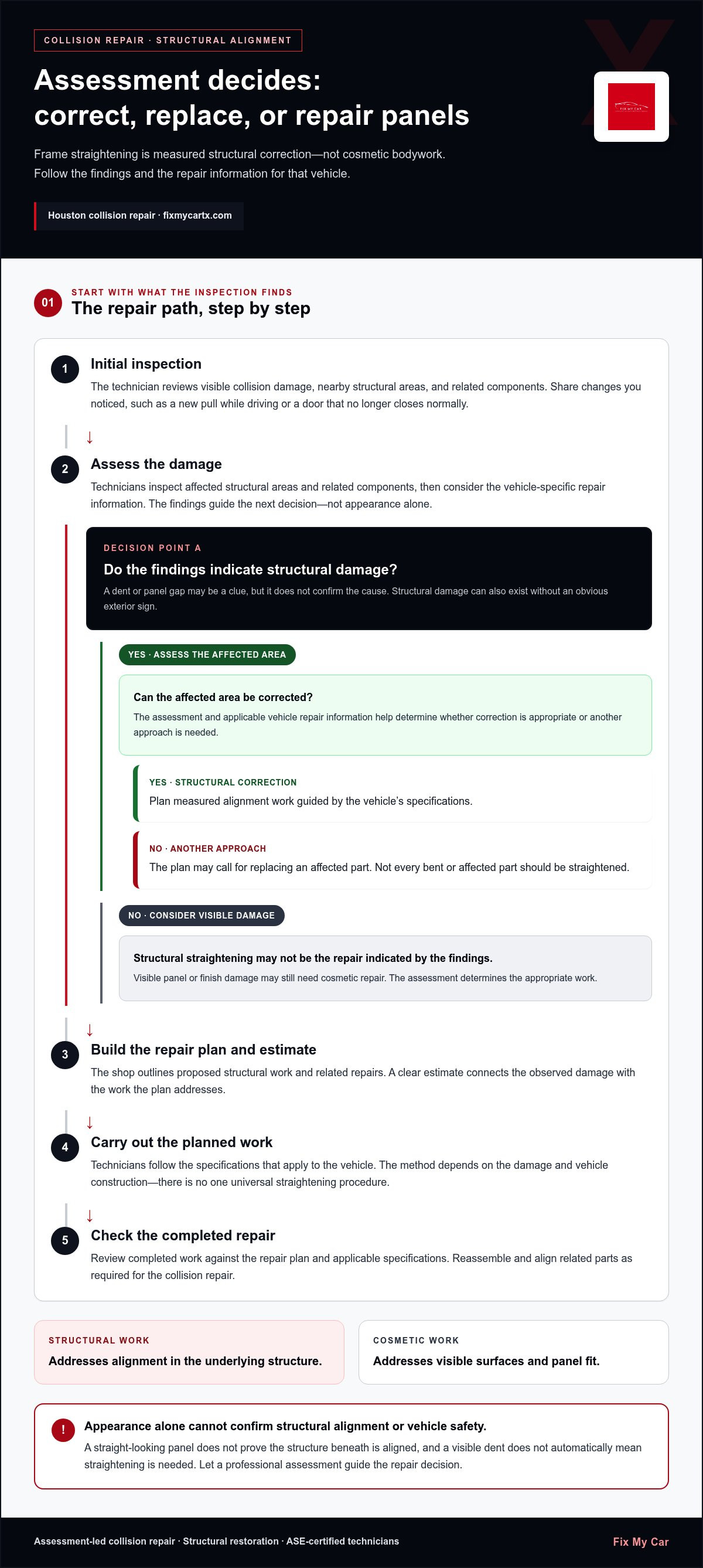
Cosmetic panel work addresses visible surfaces and fit. Structural correction addresses alignment in the underlying structure. Making an exterior panel appear straight doesn’t prove that the structure beneath it is correctly aligned. A visible dent also doesn’t automatically mean the structure needs straightening. The damage needs to be assessed.
Let assessment guide the repair
Guesswork can lead to the wrong repair plan. A collision assessment considers the impact damage and the vehicle’s applicable repair information to determine which structural areas need attention and whether correction or replacement is appropriate. The right approach depends on the damage and vehicle design. Not every bent or affected part should be straightened.
Structural alignment can affect how repaired areas fit together and how related components are reassembled. If the vehicle handles differently after a collision or parts no longer fit as they did before, share those details during a professional collision assessment. Don’t use appearance alone to decide whether a vehicle is safe to drive. An assessment gives you a clearer basis for understanding the damage and proposed repairs.
How Frame Straightening Works: From Damage Assessment to Verification
Structural repair follows a sequence, with decisions guided by what the collision assessment reveals. Technicians review affected areas and vehicle-specific repair information before deciding which work is appropriate. The repair plan should reflect documented damage and the requirements for that vehicle. This keeps the process focused on the car’s condition rather than assumptions based on appearance.
Initial inspection: The technician reviews visible collision damage and checks nearby structural areas and related components for signs of impact. Your observations, such as a new pull while driving or a door that no longer closes normally, can help guide the inspection.
Damage assessment: The findings are considered alongside vehicle-specific repair information. This helps distinguish damage that may be corrected from damage that calls for another approach, such as replacing an affected part.
Repair planning: The shop outlines the proposed structural work and related repairs. The assessment informs the estimate, helping explain what the collision affected and what the repair plan addresses.
Structural correction: Technicians carry out the planned work in line with the specifications that apply to the vehicle. The method depends on the damage and the vehicle’s construction, so there isn’t one universal straightening procedure.
Post-repair checks: The completed work is reviewed against the repair plan and applicable specifications. Related parts are reassembled and aligned as required for the collision repair.
What happens during the structural damage assessment?
Assessment involves more than looking at a dent. Technicians inspect affected structural areas and related components to understand where impact traveled and what may have shifted. They consider the vehicle’s repair information before recommending the next step. The findings help determine whether an area is suitable for correction or needs another approach, and they shape the repair plan and estimate. A clear estimate connects observed damage with proposed work.
How technicians check the completed repair
Final checks compare completed work with the repair plan and the specifications that apply to the vehicle. Reassembly matters too: Fix My Car’s collision work includes reassembly and alignment to manufacturer specifications. This gives the repair process a defined reference point rather than relying on exterior appearance alone. Fix My Car’s ASE-certified technicians bring relevant automotive repair training to collision work. Learn more about ASE certified automotive repair professionals.
If you’re arranging car frame straightening in Houston, understanding these steps can make estimate discussions easier. Fix My Car offers collision-repair estimates with insurance-friendly handling, so you can review the documented damage and proposed work while coordinating repairs. Arrange a collision-repair estimate to discuss the damage and repair plan.
Frame Straightening vs. Panel Repair or Replacement: What Is the Difference?
Collision estimates may include several kinds of repair, each addressing a different problem. Structural straightening corrects eligible misalignment in the vehicle’s underlying structure. Panel repair addresses damaged exterior bodywork. Replacement removes and installs a part when repair isn’t appropriate under the assessment and applicable vehicle procedures. One collision may call for one category or a combination.
These categories aren’t interchangeable. A dented door may need panel work even if the structure behind it is unaffected. If an impact also shifts a structural area, panel repair alone won’t address that underlying condition. Likewise, damage to one component doesn’t automatically mean the surrounding structure needs straightening.
When is structural straightening considered?
Straightening may be appropriate when an assessment shows that the affected structure can be corrected using the procedure for that vehicle. The decision depends on where the damage is, how severe it is, and the vehicle-specific repair information. There’s no universal threshold that makes every damaged area suitable for straightening. In some cases, the right plan calls for another repair approach or replacement.
Neither “straighten everything” nor “replace every damaged part” is a sound rule. The repair plan should match the documented condition and relevant vehicle requirements. Training and repair guidance from organizations such as I-CAR training and collision repair standards provide context for why collision work follows defined procedures.
When might panel repair or replacement be part of the job?
Exterior panels cover or sit beside structural areas, but visible panel damage and structural damage are separate findings. A panel can be dented while the structure beneath it remains aligned. A hidden structural issue can also exist without dramatic panel damage. Depending on the assessment, collision repair may include panel work, structural correction, component replacement, or a combination.
For example, a collision might damage an exterior panel and affect an adjacent mounting area. The panel’s condition and the structural assessment each inform their own repair decisions. Fix My Car handles structural restoration as part of its collision-repair work. For a broader overview of the repair process, see Professional Collision Repair in North Houston. Understanding the distinction can help explain why an estimate may include more than one type of work.
What Houston Drivers Should Do When Frame Damage Is Suspected
After a collision, it can be difficult to tell whether damage is limited to the body panels or affects the structure beneath them. Don’t use appearance alone to decide whether a vehicle is safe to drive. A collision assessment can help identify damage and clarify what repairs may be needed.
Which signs should prompt a structural inspection?
Some changes are worth reporting, although none proves by itself that the frame is bent. Uneven panel gaps, doors that no longer close normally, visibly shifted panels, or a change in handling can help technicians understand what you’ve noticed. Arrange an assessment after a significant collision even if the exterior looks mostly intact. A quick visual check can’t rule out hidden damage.
Before arranging an estimate, use this checklist to organize what you know:
Document visible damage: Take clear photos from different angles, including close-ups of damaged panels and wider views of the vehicle.
Note changes: Write down when you noticed unusual handling, panel gaps, door closure issues, or other differences after the collision.
Record collision details: Be ready to describe where the impact occurred and what happened, to the best of your recollection.
Gather relevant insurance information: Having it available can make estimate discussions more organized.
Arrange a collision assessment: Share your notes and photos so the shop can consider them alongside its inspection.
What information helps make the estimate useful?
Specific observations are more helpful than a guess about what’s damaged. Explain which door feels different, when you first noticed a handling change, and where the vehicle was struck. The technician’s assessment helps determine the repair scope. The estimate may become clearer as the damage is examined, so don’t treat the first visible signs as a complete repair list.
A free collision-repair estimate gives you a starting point for understanding the proposed work. Fix My Car handles estimates in an insurance-friendly manner, which can help organize repair discussions alongside relevant insurance information. This doesn’t guarantee an insurer’s approval or a particular coverage decision. For more on what an estimate may include, see Free Collision Repair Estimate Houston.
If you suspect structural damage, arrange a professional assessment rather than relying on panel appearance alone. Fix My Car offers collision-repair estimates for Houston drivers, with structural restoration as part of its collision work. Request a free collision-repair estimate to discuss the damage and clarify the repair scope.
Arrange Car Frame Straightening in Houston with Fix My Car
If you’re concerned that a collision affected your vehicle’s structure, a professional assessment is a practical next step. Fix My Car is a North Houston collision-repair shop that provides structural restoration and professional estimates. Its ASE-certified technicians and manufacturer certifications support its collision-repair work. Insurance-friendly estimate handling can also make repair discussions easier to follow.
An estimate starts with what you’ve noticed and what the inspection finds. Share where the impact occurred, any changes in handling or panel fit, and the visible damage. The assessment helps clarify the proposed repair scope, which may include structural restoration or other collision work. Fix My Car can handle estimates in an insurance-friendly manner, but insurer decisions about approval or coverage remain separate.
What to expect when requesting a Fix My Car estimate
Bring relevant insurance information and describe your concerns in everyday language. You don’t need to diagnose the damage yourself. Use the estimate discussion to understand the findings, proposed work, and how the repair plan relates to the collision. For a broader view of the shop’s collision services, see Professional Collision Repair in North Houston.
Fix My Car also provides complimentary ride-share transportation while your vehicle is being serviced. This can help with local transportation while repairs are underway, without requiring you to work out every detail before the assessment.
A practical next step for North Houston drivers
Exterior appearance can’t confirm whether the underlying structure is aligned. If a collision left you with questions, an assessment can replace guesswork with a clearer explanation of the vehicle’s condition and proposed work. Share what happened, review the estimate, and discuss next steps with a collision-repair team experienced in structural restoration.
For North Houston drivers seeking car frame straightening in Houston, Fix My Car offers a practical place to begin. You can have a straightforward conversation about the damage and repair scope, with professional guidance and transportation support while your vehicle is serviced. Request a free collision-repair estimate to start.
Take the Next Step Toward a Clear Repair Plan
After a collision, uncertainty can linger until someone assesses the vehicle and explains the findings. You don’t have to decide whether structural work is needed based on panel gaps, dents, or unfamiliar estimate terms. A professional evaluation can turn your observations into a practical discussion about the vehicle and its repair needs.
If you’re considering car frame straightening in Houston, bring your questions and share what you noticed after the impact. Fix My Car’s collision-repair team can discuss the estimate and insurance coordination. ASE-certified technicians, manufacturer certifications, and complimentary ride-share transportation are part of the support available while your vehicle is being serviced. An assessment is a useful place to begin, even if you’re still deciding what to do next.
Request a free collision repair estimate and take the next step with a local Houston team. Clear information can make the path forward easier to manage.
Frequently Asked Questions
Can a car frame be straightened after an accident?
Yes. Some collision-damaged structures can be straightened, but the appropriate repair depends on the affected area, damage severity, and vehicle-specific procedures. A technician may recommend replacement or another method if straightening isn’t suitable. For example, damage to a part designed to absorb impact may call for replacement rather than reshaping. An inspection helps establish the right approach instead of assuming every bent area can be pulled back into place.
How do I know if my car frame is bent?
You usually can’t confirm structural damage at home. After a crash, changes such as a steering wheel that sits off-center, unusual tire wear, or a vehicle that drifts are useful details to report. These symptoms can have other causes, so they aren’t proof of a bent frame. A professional assessment can help determine whether collision damage is involved. Note when the change began and whether it happens consistently.
Is frame straightening safe for a vehicle?
It can be appropriate when the damage is repairable and the work follows the procedures that apply to the vehicle. Safety depends on the repair decision and how the work is carried out, not on straightening alone. Some parts aren’t suitable for reshaping and may need replacement. Ask for the estimate to explain the proposed work in plain language, including which areas will be corrected and which parts, if any, will be replaced.
Does frame straightening affect wheel alignment?
It can. If a collision shifts structural areas or suspension mounting points, wheel angles may be affected, potentially contributing to pulling, an off-center steering wheel, or uneven tire wear. Straightening addresses structural alignment, while wheel alignment is a related check of wheel angles. The repair plan should account for affected components and whether alignment work is needed. Tell the technician if the vehicle behaved differently after impact.
How long does car frame straightening take?
There isn’t one standard timeframe for every vehicle. Repair duration depends on the extent of the damage, the procedures that apply, and whether additional damage or parts needs become apparent during inspection or disassembly. Insurance coordination may also be part of the overall process. A shop can provide a more useful estimate after assessing the vehicle and defining the repair scope. Ask how updates will be shared if new findings change the plan.
Will insurance cover frame straightening after a crash in Texas?
Coverage depends on the policy, the circumstances of the crash, and the insurer’s claim review, so approval isn’t automatic. A repair estimate can document the proposed work, but it doesn’t determine coverage. Texas drivers can choose their repair facility, and an insurer can’t require them to use a particular shop. Share relevant claim information during estimate discussions, and review coverage questions directly with your insurer.
Can a vehicle be driven if frame damage is suspected?
Suspected damage alone doesn’t reveal whether a vehicle is safe to drive. If the car has a new handling problem, a wheel appears displaced, or a door or hood won’t latch securely, avoid driving it until you’ve arranged a professional assessment. If you’re unsure, choose a safe way to have it evaluated rather than testing it in traffic. Describe the symptoms and collision circumstances to the repair team.
Comentarios