


Brake Pad Replacement in Houston: Your 2026 Guide to Safety and Performance
Imagine merging onto the I-45 at rush hour when the car ahead suddenly slams on its brakes. In that high-stakes moment, your safety depends entirely on a few millimeters of friction material. Since Texas ended mandatory annual safety inspections in 2025, the responsibility for your vehicle's health rests solely on your shoulders. Staying proactive with a professional brake pad replacement in Houston is no longer just a box to check for a sticker; it's a critical step to ensure your family remains safe during unpredictable highway commutes.
It's frustrating when unexpected car troubles threaten to derail your day or your budget. You deserve quiet, responsive stopping power without the stress of hidden fees or lengthy downtime in our car-dependent city. We're here to help you understand how Houston’s extreme heat and relentless traffic impact your stopping distance. This guide explains how to choose the right parts for your specific vehicle to ensure maximum safety and reliability.
We'll walk through the technical differences between ceramic and semi-metallic pads and what to look for in a transparent repair estimate. You'll also learn how a meticulous approach and complimentary ride-share services allow you to maintain your routine while we restore your vehicle's precision and performance.
Table of Contents
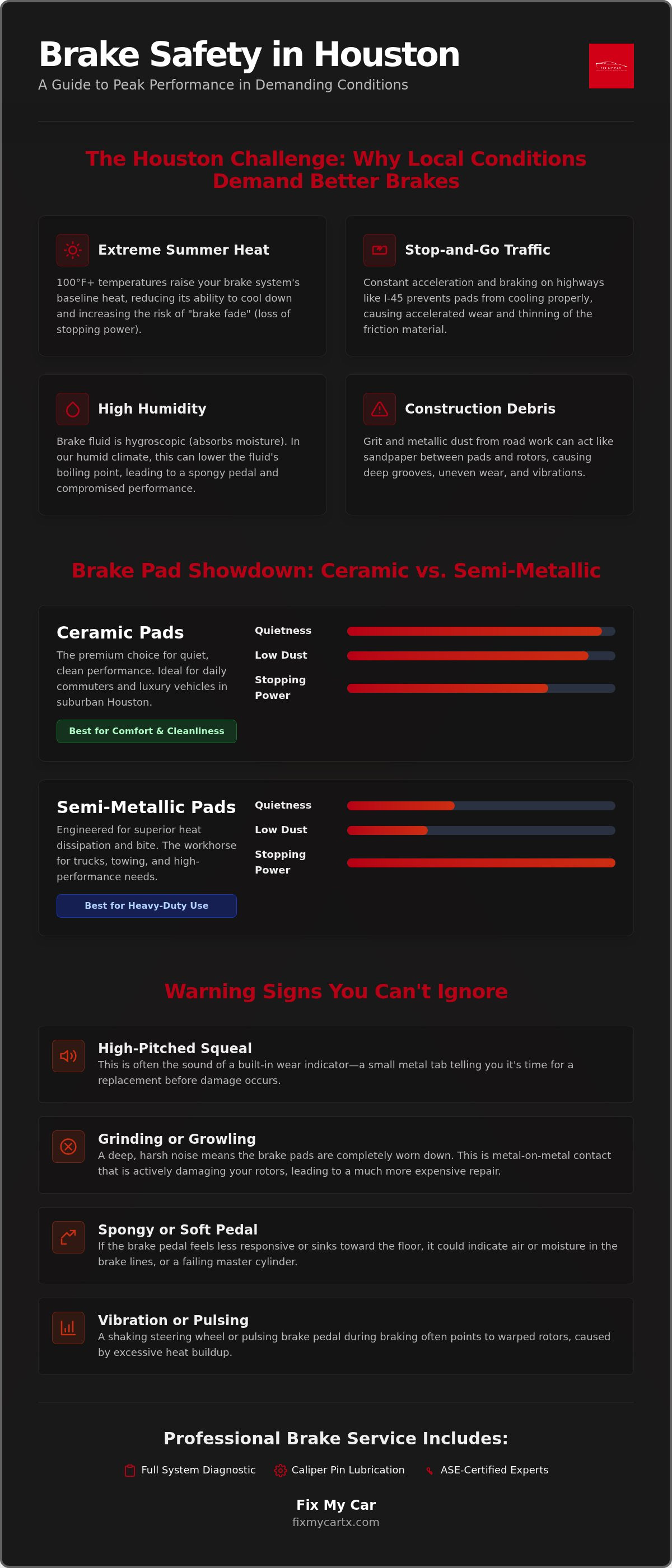
Understanding Brake Pad Wear: How Houston Traffic and Heat Impact Your Safety
Ceramic vs. Semi-Metallic: Choosing the Best Brake Pads for Texas Road Conditions
Identifying Brake Trouble: Squealing, Grinding, and Warning Signs You Can’t Ignore
Professional Brake Pad Replacement: What a Comprehensive Houston Service Includes
Fix My Car: Trusted Brake Repair and Mechanical Excellence in North Houston
Understanding Brake Pad Wear: How Houston Traffic and Heat Impact Your Safety
Your vehicle's stopping power relies on a simple yet intense physical process. Brake pads work by converting kinetic energy into heat through friction against a rotating disc. Over time, this process leads to Understanding Brake Pad Wear as the friction material gradually thins with every stop. In Houston, our 100-degree summer temperatures mean your braking system starts at a higher baseline temperature before you even touch the pedal. This baseline heat significantly reduces the system's ability to shed the massive thermal energy generated during a sudden stop, eventually necessitating a brake pad replacement in Houston to restore your vehicle's safety standards.
Navigating the I-45 or Beltway 8 during peak hours creates a punishing environment for any vehicle. The constant cycle of acceleration followed by immediate braking prevents your pads from cooling properly between events. Brake fade is the loss of stopping power that occurs when excessive heat builds up in the friction material to the point where it can no longer generate the necessary grip. When this happens, you might notice your car takes longer to stop or the pedal feels unusually soft under your foot.
The Science of Friction in the Texas Humidity
Houston's high humidity levels introduce hidden risks to your braking system that go beyond simple wear. Brake fluid is naturally hygroscopic, which means it absorbs moisture from the surrounding air over time. In our humid climate, this moisture infiltration can lower the fluid's boiling point and compromise overall system pressure. Additionally, the extreme heat common in North Houston can cause "glazing." This happens when the pad material overheats and crystallizes into a smooth, glass-like surface. Glazed pads can't bite into the rotor effectively, leading to dangerously long stopping distances and high-pitched squeals.
Commuter Hazards: Why Houston Drivers Need Frequent Inspections
The 610 Loop is a notorious proving ground for brake durability. The physical toll of stop-and-go commuting is compounded by Houston’s endless road construction projects. Fine dust and metallic debris from construction sites often infiltrate the brake assembly, acting like sandpaper against your rotors. This grit can lead to uneven wear or deep grooves that compromise your safety and lead to vibrations. Because our local conditions are so demanding, we recommend a bi-annual inspection for every vehicle. Investing in a timely brake pad replacement in Houston ensures you aren't caught off guard by a failing system when you need it most. It's a simple way to maintain that quiet, responsive performance that keeps your family safe on the highway.
Ceramic vs. Semi-Metallic: Choosing the Best Brake Pads for Texas Road Conditions
Selecting the right friction material is the most important decision you'll make for your vehicle's stopping performance. Most modern cars use either ceramic or semi-metallic pads. While both meet rigorous safety standards, the "best" option depends on whether you're navigating a luxury sedan through River Oaks or hauling a trailer down the Sam Houston Tollway. For the average commuter, the cost-to-performance ratio usually leans toward a balance of longevity, comfort, and reliability. When you schedule a brake pad replacement in Houston, understanding these material differences ensures you get the right part for your specific driving habits.
Technical specifications offer a clear window into how these materials perform under pressure. Choosing the Best Brake Pads involves looking at how different compounds handle friction at varying temperatures, which is a vital consideration given our intense local heat. Your choice will ultimately impact how much noise your brakes make and how often you'll need to clean your wheels.
Ceramic Brake Pads: The Premium Houston Choice
Ceramic pads are composed of a dense ceramic material mixed with copper fibers. They're the preferred choice for suburban Houston drivers because they offer incredibly quiet operation. You won't have to deal with an embarrassing squeal at every stoplight. They also produce a very light, fine dust that doesn't stick to your wheels, which helps keep your vehicle looking pristine. Because they handle standard heat cycles predictably, they're ideal for the frequent stops found in residential areas and daily highway traffic. Most luxury vehicle manufacturers specify ceramic pads to maintain a smooth, refined driving experience.
Semi-Metallic Pads: Durability for Heavy Loads
If you drive a heavy-duty truck or a large SUV, semi-metallic pads are often the safer, more robust choice. These pads contain a significant amount of metal, which allows them to pull heat away from the rotors more efficiently than ceramic alternatives. This superior heat dissipation is vital when you're towing or carrying heavy loads on the highway in 100-degree weather. The trade-off is a higher likelihood of brake noise and a darker, more visible dust on your rims. However, for sheer stopping power under extreme pressure or performance driving, semi-metallic compounds are the industry standard.
Ultimately, your choice should align with your vehicle's weight and your own tolerance for brake dust. If you're still deciding which material fits your lifestyle, you can always request a free estimate to get a professional recommendation from our team. Getting an expert opinion ensures your next brake pad replacement in Houston provides the exact performance you need for the road ahead.
Identifying Brake Trouble: Squealing, Grinding, and Warning Signs You Can’t Ignore
Your vehicle communicates its mechanical needs through subtle changes in how it sounds and feels. Ignoring these early signals can turn a routine maintenance task into a complex, expensive repair. Beyond the physical sensations, your dashboard brake warning light serves as a primary visual alert. This light often triggers when internal sensors detect low hydraulic fluid or significant thinning of the friction material. If you see this amber or red icon, it's time to prioritize a brake pad replacement in Houston to ensure your vehicle remains reliable on the highway.
The goal is to catch these issues before they compromise your safety. Precision diagnostics help determine if you're facing a simple wear issue or a more significant hydraulic failure. By staying observant, you protect your family and maintain the long term health of your car's most critical safety system.
Sounds of Trouble: Squeaks vs. Grinds
Most drivers first notice braking issues through their ears. Modern pads are engineered with a "wear indicator," which is a small metal tab designed to contact the rotor when the pad reaches a specific thickness. This creates a consistent, high-pitched squeal. Generally, this sound suggests you have about 15% of your pad life remaining. It's a helpful, non-emergency warning that your system needs attention soon.
A deep, rhythmic grinding sound is a much more serious matter. This indicates the friction material is entirely gone, resulting in metal-on-metal contact. This doesn't just reduce your stopping power; it actively destroys your rotors and generates dangerous levels of heat. If you hear grinding, your vehicle is an immediate safety risk. Occasionally, a stray rock or road debris can get lodged in the caliper, causing a constant screech even when you aren't braking. A professional inspection can quickly distinguish between a simple debris issue and a necessary brake pad replacement in Houston.
Tactile Feedback: Vibrations and Soft Pedals
Your hands and feet often detect trouble before your ears do. If your steering wheel vibrates or pulses when you apply pressure to the pedal, your rotors are likely warped. This means the pads can't make smooth, consistent contact with the disc, which can lead to unpredictable stopping distances.
A "spongy" or soft brake pedal is another red flag you shouldn't ignore. If the pedal travels further toward the floor than usual, you might have air or moisture trapped in your brake lines. This compromises the hydraulic pressure needed for a quick stop. Similarly, if your car pulls to one side while slowing down, it suggests uneven pad wear or a sticking caliper. These symptoms indicate that your braking system isn't distributing force equally. Addressing these tactile warnings early ensures your vehicle remains predictable and responsive during sudden stops in heavy traffic.
Professional Brake Pad Replacement: What a Comprehensive Houston Service Includes
A high-quality brake pad replacement in Houston involves more than just pulling off old parts and snapping in new ones. It requires a meticulous diagnostic approach to ensure every component of your hydraulic system functions as the manufacturer intended. Simply swapping pads without inspecting the calipers or testing the fluid can lead to uneven wear and reduced stopping power. We believe in providing a thorough service that prioritizes your peace of mind and long term vehicle health. Our process is designed to be transparent, ensuring you understand the condition of your vehicle before any work begins.
A comprehensive service addresses the entire braking ecosystem. This holistic view prevents small issues from turning into expensive repairs later. By focusing on precision and reliability, we ensure your car remains a safe sanctuary for your family during every highway commute.
The Multi-Point Brake Inspection Process
Technicians begin by measuring pad thickness with precision calipers to determine exactly how much friction material remains. This data helps you decide if a replacement is truly necessary or if you have safe driving time left. We also examine your brake lines for any signs of leaks or corrosion, which is particularly important given Houston's high humidity. Finally, we check the rotor surfaces for scoring, thinning, or heat spots that could cause vibrations or "brake fade" during your commute. This thorough inspection allows us to provide an honest, accurate estimate of your vehicle's needs.
Beyond the Pads: Protecting Your Rotors and Calipers
During a professional brake pad replacement in Houston, we evaluate whether your rotors can be resurfaced, also known as "turned," or if they require full replacement. Resurfacing restores a smooth, flat finish to the metal, allowing the new pads to bed in perfectly for maximum grip. We also clean and lubricate the caliper pins using specialized high-temperature brake grease. This step is essential for North Houston drivers because extreme heat and road debris can cause pins to seize. Properly lubricated pins ensure the piston retracts fully after you release the pedal, preventing "brake drag" that wastes fuel and wears out your new parts prematurely.
Every comprehensive service includes testing the brake fluid for moisture contamination. Once the mechanical work is complete, an ASE-certified technician performs a final safety road test to verify that your brakes are quiet, responsive, and ready for the 610 Loop. This rigorous process ensures your car stops exactly when you need it to. If you suspect your brakes need attention, you can schedule your free estimate today to ensure your vehicle is handled with meticulous care by local experts.
Fix My Car: Trusted Brake Repair and Mechanical Excellence in North Houston
Fix My Car stands as the premier destination for drivers who demand a higher standard of care for their vehicles. We operate as a full-service hub for both mechanical and collision repair, ensuring that every aspect of your car's health is managed under one roof. When you visit us for a brake pad replacement in Houston, you aren't just getting new parts; you're benefiting from manufacturer-certified techniques that restore your vehicle to its original factory specifications. This dedication to precision is the foundation of our expert mechanical repair in Houston TX. We recognize that automotive maintenance can be stressful, so we offer free estimates to provide total clarity on your repair costs from the very beginning.
Our facility is designed to serve as a reliable resource for the North Houston community. We treat every vehicle as if it belonged to a member of our own family, combining high-stakes technical proficiency with a welcoming, service-oriented atmosphere. This balance ensures that your car receives meticulous attention while you receive the hospitality you deserve.
The Fix My Car Difference: Hospitality and Expertise
We know that a car-dependent city like Houston doesn't stop moving just because your vehicle needs service. To minimize any disruption to your day, we offer a complimentary ride-share service for our customers. This allows you to head to work, return home, or run errands while our ASE-certified technicians handle your repairs. These professionals are more than just mechanics; they are trusted guides who take the time to explain the technical "why" behind every service. We believe that an informed customer is a confident customer, and we never perform work without your full understanding and approval. This transparent approach builds the long-term trust that defines our local reputation.
Comprehensive Care for Every Vehicle Type
As automotive technology advances, so does our expertise. We offer specialized EV battery service houston to support the unique requirements of electric and hybrid vehicles. Modern regenerative braking systems require a deep understanding of how mechanical friction interacts with electrical energy, and our team is trained to maintain that delicate balance. We also provide robust fleet-friendly brake maintenance for Houston business owners who rely on their vehicles to generate revenue. Our North Houston location is strategically positioned to be the most convenient choice for drivers in the 77091 area. Whether you manage a fleet of service vans or drive a personal commuter car, our commitment to mechanical excellence ensures your brake pad replacement in Houston is handled with the highest level of professional care.
Take Control of Your Vehicle's Safety Today
Our local driving environment is unique and demanding. Between the soaring temperatures and the relentless stop-and-go traffic on the Beltway, your braking system works harder than almost anywhere else in the country. Since Texas no longer mandates annual safety inspections, the responsibility for maintaining your stopping power is now entirely in your hands. Whether you choose the quiet performance of ceramic pads or the heavy-duty reliability of semi-metallic options, a timely brake pad replacement in Houston is the best way to prevent costly rotor damage and ensure your family's safety.
At Fix My Car, we take the stress out of automotive maintenance. Our ASE-Certified Technicians use manufacturer-certified techniques to ensure your vehicle performs flawlessly. As an I-CAR Gold Class Certified Facility, we pride ourselves on precision and transparency. We even provide a complimentary ride-share to keep your day on track while we work. Don't wait for a grinding sound to signal a major repair. Schedule your free brake inspection at Fix My Car today! We look forward to serving you and keeping your vehicle road-ready for years to come.
Frequently Asked Questions
How much does brake pad replacement cost in Houston?
The total cost for your service depends on several factors, including your vehicle's make, the number of axles being serviced, and whether you choose ceramic or semi-metallic materials. While labor rates and part availability fluctuate, we focus on providing a transparent experience with no hidden fees. We recommend visiting our North Houston shop for a free estimate. This allows our technicians to assess your specific needs and provide an accurate quote for your vehicle.
How long do brake pads typically last in Houston traffic?
Most ceramic pads last between 50,000 and 70,000 miles, while semi-metallic options typically range from 30,000 to 50,000 miles. However, the intense humidity and constant stop-and-go traffic on the 610 Loop can accelerate this wear. Frequent braking in 100-degree heat generates significant thermal stress on your friction material. We suggest a professional inspection every six months to ensure your brake pad replacement in Houston happens before your safety is compromised.
Can I just replace my brake pads and not my rotors?
You can replace only the pads if your rotors are still within the manufacturer's specified thickness and show no signs of warping or deep scoring. Our technicians use precision calipers to measure your rotors during every inspection. If the surface is smooth and thick enough, we can simply install new pads. However, if we detect heat spots or uneven wear, resurfacing or replacing the rotors is necessary to ensure a quiet, safe stop.
How long does a professional brake pad replacement take at Fix My Car?
A standard brake service for one axle usually takes between one and two hours. This timeframe allows our ASE-certified technicians to perform a full system diagnostic, clean the assembly, and conduct a safety road test. Because we value your time, we offer a complimentary ride-share service. You can stay productive at work or relax at home while we meticulously restore your vehicle's stopping power and overall performance without disrupting your entire day.
Why do my brakes squeak in the morning but stop later?
This is usually caused by a thin layer of surface oxidation, often called flash rust, that forms on the rotors overnight due to Houston's high humidity. When you first apply the brakes in the morning, the pads scrape this layer off, creating a temporary squeak. The noise typically vanishes after your first few stops. If the sound persists throughout your commute, it likely indicates that your wear indicators are signaling the need for a professional inspection.
Does Fix My Car offer a warranty on brake repairs?
We take immense pride in our craft and use manufacturer-certified techniques for every repair we perform. While specific coverage terms can vary based on the parts selected and current seasonal programs, we always stand behind the quality of our labor and the precision of our installations. We encourage you to discuss the specific warranty details for your service during your free estimate. Our goal is to provide total peace of mind for every neighbor we serve.
Is it safe to drive my car to the shop if the brakes are grinding?
Driving with grinding brakes is not recommended and can be extremely dangerous. That sound indicates your friction material is completely gone, resulting in metal-on-metal contact that significantly increases your stopping distance. This condition also causes immediate, irreversible damage to your rotors, which turns a simple pad swap into a much more expensive repair. If you hear grinding, it's safest to have your vehicle towed to our facility for immediate professional attention.
Do I need different brake pads for my electric vehicle?
Yes, electric vehicles often require specific brake pad compounds designed to work alongside regenerative braking systems. Because EVs are generally heavier due to their battery packs, their pads must handle different weight distributions and thermal cycles. Our team has specialized expertise in EV mechanical needs, ensuring your hybrid or electric car receives parts that maintain its efficiency. A professional brake pad replacement in Houston for an EV requires this specialized knowledge to ensure total system harmony.


Comentarios