


Expert Transmission Fluid Change in Houston: The 2026 Guide to Peak Performance
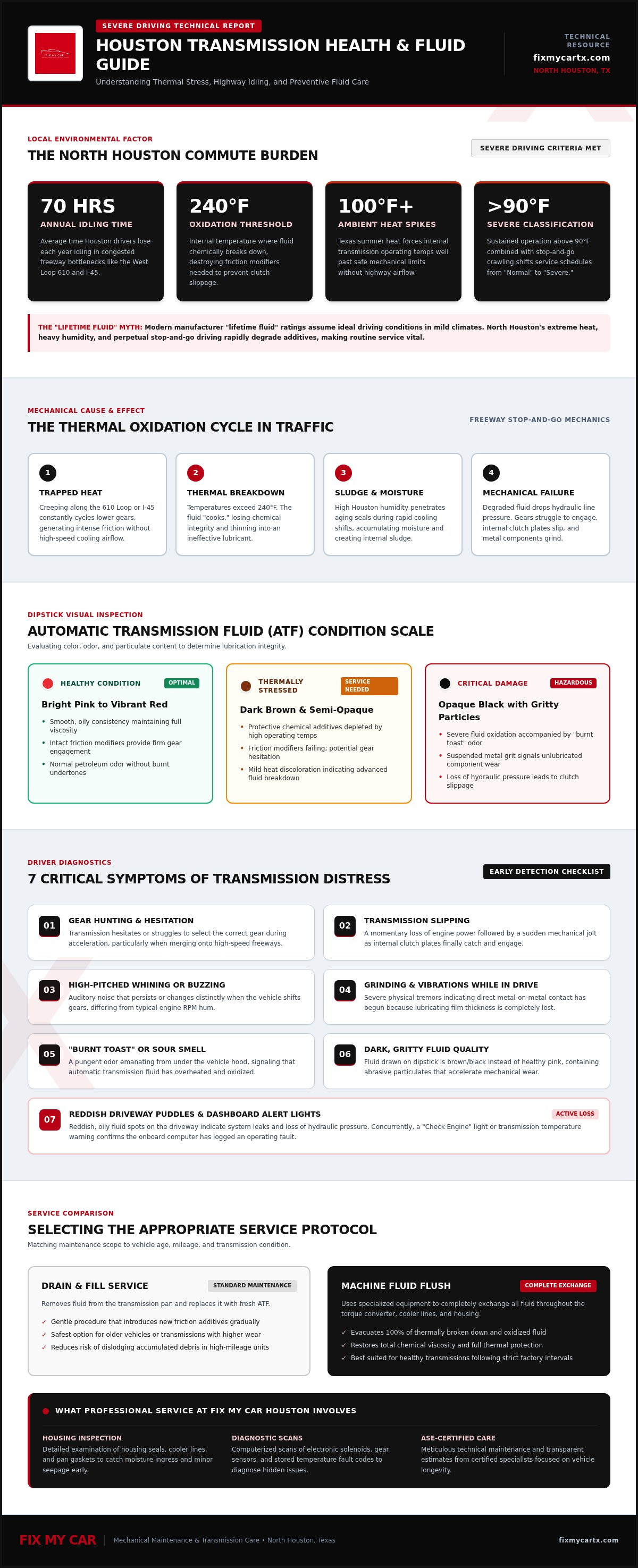
Did you know that Houston drivers lose an average of 70 hours every year idling in some of the most congested traffic in the country? On segments like the West Loop 610, your vehicle's transmission is fighting a constant battle against extreme heat and friction. When you're searching for a transmission fluid change houston service, you're looking for more than just a routine task; you're looking for a thermal shield. At temperatures above 240 degrees, your protective fluid begins to oxidize, leading to the mechanical failures every driver fears while stuck on the freeway.
We understand the anxiety that comes with a sudden shudder or a delayed gear shift. It's often confusing to weigh the benefits of a simple drain against a machine flush while worrying about the high costs of major repairs. You deserve a smooth ride and the peace of mind that comes from meticulous, transparent maintenance. This guide will show you how timely service protects your car from our city's brutal driving conditions. We'll clarify the technical differences in service types and explain how our ASE-certified technicians in North Houston ensure your vehicle stays reliable for years to come.
Table of Contents
The Impact of Houston’s Climate and Traffic on Transmission Health
Houston's climate isn't just uncomfortable for residents; it's hostile to automotive machinery. When ambient temperatures hit 100 degrees, the temperature inside your transmission can spike well beyond its safe operating range. This environment accelerates the breakdown of automatic transmission fluid properties and functions, turning a vital lubricant into a thin, ineffective liquid. Once the fluid loses its chemical integrity, it can no longer protect the intricate gears and sensors that keep your vehicle moving.
Thermal Stress and Fluid Oxidation
Intense heat causes a chemical reaction known as oxidation. As the fluid "cooks," it changes color and develops a burnt odor, signaling that its protective additives are gone. Many modern manufacturers claim their vehicles use "Lifetime Fluid," but these estimates usually assume ideal driving conditions in mild climates. In North Houston, those claims rarely hold up. The Texas heat destroys the friction modifiers required to prevent internal clutch slippage. Without a timely transmission fluid change houston drivers often find their vehicles struggling to find the right gear as the degraded fluid fails to maintain necessary hydraulic pressure.
Stop-and-Go Driving: The Silent Killer
Idling on the 610 Loop or creeping along I-45 during rush hour creates a unique mechanical burden. Your transmission constantly cycles through lower gears, which generates immense internal friction. Unlike highway driving where consistent airflow helps cool the system, stop-and-go traffic keeps the heat trapped inside the transmission housing. Houston’s high humidity also plays a role. In older systems with aging seals, moisture can accumulate during rapid temperature shifts, leading to internal corrosion and sludge formation.
It's a common mistake to follow the "Normal" maintenance schedule found in your owner's manual. For Houston residents, "Severe Driving Conditions" are defined as any routine operation involving temperatures consistently above 90 degrees, frequent idling, or heavy traffic congestion. Because our local environment meets every one of these criteria, your maintenance intervals should be more frequent. Regular fluid service is the most effective way to ensure your vehicle survives the daily commute without a catastrophic and expensive failure.
7 Warning Signs You Need a Transmission Fluid Change
Your transmission often communicates its distress long before it stops working entirely. Catching these early signals can save you thousands in potential mechanical work. If you notice any of the following issues, it's time to consider a professional transmission fluid change houston service to restore your vehicle's performance and reliability.
Physical and Auditory Red Flags
One of the most common signs of trouble is "gear hunting" or hesitation. This happens when the transmission struggles to select the correct gear during acceleration, particularly when you're merging onto a high-speed freeway. Slipping feels like a momentary loss of power followed by a sudden jolt as the gears finally engage. You might also hear a high-pitched whining or buzzing sound. Unlike engine noise, which changes with RPM, transmission whining often persists or changes specifically when the vehicle shifts. Grinding or vibrations while in drive are even more serious. These sensations indicate that metal-on-metal contact is occurring because the fluid has lost its lubricating thickness.
Visual and Olfactory Inspections
You can often diagnose a problem just by using your senses. A distinct "burnt toast" or sour smell coming from under the hood is a major red flag. This indicates the fluid is overheating and oxidizing, a process detailed in the AAA transmission fluid inspection and service guide. If your car has a dipstick, check the fluid's color and consistency. Healthy fluid is bright pink or red. If it's dark brown, opaque black, or contains gritty particles, it can no longer protect your gears from friction.
Don't ignore puddles on your driveway. Transmission fluid is typically reddish and oily; any leak means your system is losing the hydraulic pressure it needs to operate. Finally, pay attention to your dashboard. A "Check Engine" light or a specific transmission temperature warning means the onboard computer has detected a slip or a thermal spike. Scheduling a timely transmission fluid change houston drivers rely on ensures these minor warning signs don't turn into a permanent loss of transportation. Our team of ASE-certified professionals can perform a diagnostic scan to identify the exact issue before it leads to a total breakdown.
Transmission Flush vs. Drain and Fill: Choosing the Right Service
Choosing between a flush and a drain and fill isn't just about cost. It's about the current health of your vehicle's internals and how well it's been maintained over the years. Each method serves a specific purpose, and the wrong choice can sometimes do more harm than good for a high-mileage car. When you're considering a transmission fluid change houston experts can help you determine which approach protects your investment without risking mechanical stress.
The Drain and Fill Method
The drain and fill is the most conservative and common maintenance task. During this process, a technician removes the drain plug or drops the transmission pan to let the fluid flow out via gravity. It's a gentle approach that doesn't use external pressure, making it the safest option for older vehicles or those with an uncertain service history. Because it doesn't disturb the entire system, there's a much lower risk of dislodging sludge or debris that could clog sensitive valve bodies.
The primary downside is that a single drain and fill only replaces about 30 to 50 percent of the total fluid. A significant amount remains trapped in the torque converter and cooler lines. However, as noted in the Kelley Blue Book guide on transmission fluid replacement, consistent intervals are more important than total volume. This method is ideal for routine maintenance on cars with a steady service record.
The Full Transmission Flush
A transmission flush involves connecting your vehicle to a specialized machine that exchanges nearly 100 percent of the old, contaminated fluid with fresh, OEM-spec lubricant. This process effectively cleans out the entire system, including the torque converter and the cooling lines. It's the best way to ensure your transmission starts with a completely clean slate. We typically recommend this for newer vehicles or those that have been meticulously maintained since they were driven off the lot.
We often advise against high-pressure flushes for neglected or very high-mileage transmissions. In a neglected system, the fresh detergents in a full flush can occasionally "shock" worn seals or move accumulated metal shavings into areas where they cause blockages. For these sensitive cases, we might suggest a series of drain and fill services over several months. This middle-ground approach gradually improves fluid quality without the mechanical stress of a machine-assisted exchange. Getting a professional transmission fluid change houston drivers trust means receiving a customized recommendation based on a physical inspection of your fluid's condition.
What to Expect During a Professional Transmission Service
A professional transmission fluid change houston drivers receive at a high-quality shop is far more than a simple fluid swap. It's a comprehensive health check for one of your vehicle's most complex and expensive components. While a quick-lube shop might only focus on the fluid level, a meticulous mechanical inspection identifies potential failures before they result in a breakdown on a busy Houston freeway. Our process ensures that every part of the system, from the physical housing to the electronic controllers, is operating at peak efficiency.
Beyond the Fluid: The Inspection Process
The service begins with a detailed multi-point inspection of the transmission housing and cooler lines. We look for signs of external leaks, brittle seals, or corrosion caused by our local humidity and road debris. If your vehicle features a removable pan, we drop it to inspect the internal magnet. Finding a small amount of metallic "dust" is normal, but larger metal shavings are a red flag for internal gear or bearing wear. This step is critical because it tells us the story of your transmission's internal health.
Modern vehicles also require an electronic perspective. We perform a diagnostic scan to check for "pending" codes that haven't yet triggered a dashboard warning light. These codes often reveal subtle issues with solenoids or pressure sensors. We also verify that your transmission's software is up to date, as manufacturers frequently release updates to improve shift logic and cooling. Finally, we replace the transmission filter whenever applicable. A clogged filter restricts fluid flow, which is a leading cause of the overheating issues common in Texas summers.
The Role of Certified Technicians
Transmission work is high-stakes mechanical labor that requires specialized training. This is why ASE certification is a non-negotiable standard for our team. Certified technicians understand the exact fluid specifications required by your manufacturer. Using a generic "multi-vehicle" fluid in a specialized CVT or a modern 10-speed transmission can lead to poor shift quality or even catastrophic failure. Precision matters, especially when verifying fluid levels at specific operating temperatures as required by modern "sealed" transmissions.
Choosing an expert team also means avoiding the messy, imprecise processes often found at lower-tier shops. We use professional-grade exchange equipment that ensures the correct pressure is maintained throughout the service, protecting your delicate internal seals. This level of care is a core part of our commitment to Expert Mechanical Repair in Houston TX. When you're ready for a service that prioritizes accuracy and transparency, schedule your transmission inspection with our North Houston specialists today.
Reliable Mechanical Maintenance and Transmission Care at Fix My Car Houston
For over a decade, our team has served the North Houston community with a commitment to technical excellence and honest communication. We believe that professional auto care should be as stress-free as possible. When you choose us for a transmission fluid change houston drivers receive a service rooted in transparency and meticulous attention to detail. Our shop at 6015 North Shepherd Drive is designed to be a sophisticated alternative to both overpriced dealerships and impersonal chain shops, offering the high-stakes expertise your vehicle requires with the hospitality of a local neighbor.
A Community-Focused Approach to Auto Repair
We treat every vehicle that enters our bays as if it belonged to a member of our own family. This philosophy drives our insistence on using ASE-certified technicians for all mechanical work. These professionals possess the specialized training necessary to handle the complex hydraulic and electronic systems found in modern 2026 model transmissions. Whether your car requires a simple drain and fill or a comprehensive diagnostic scan, we provide clear, itemized estimates before any work begins.
Our expertise isn't limited to routine maintenance. We also hold I-CAR Gold Class status, which is the highest level of recognition in the collision repair industry. This is particularly relevant for transmission health; front-end collisions often damage the radiator and transmission cooler lines. Because we specialize in both collision and mechanical work, we can ensure that your entire cooling and drive system is restored to factory specifications after an accident. This holistic approach prevents the long-term transmission wear that often follows poorly executed body repairs.
Logistics Made Easy for Houston Drivers
Being without a vehicle in a city as spread out as Houston is more than a minor inconvenience. We've designed our service model to respect your time and keep your day moving. While our technicians are performing your transmission service, you don't have to wait in a lobby or scramble for a ride. We offer complimentary ride-share transportation for our customers, ensuring you can get back to your home or office while we focus on the precision of your repair.
Our location in the 77091 area is conveniently situated for residents and commuters across North Houston. We take immense pride in our craft and remain personally invested in the well-being of every guest. If you've noticed gear hesitation or simply want to stay ahead of the Texas heat, we invite you to experience a higher standard of automotive care. Schedule your transmission fluid check at Fix My Car today and let our trusted guides provide the peace of mind you deserve.
Protect Your Vehicle’s Future on Houston’s Roads
Proactive maintenance is your best defense against the high costs of major mechanical failure. By staying ahead of thermal breakdown and recognizing the early warning signs of wear, you ensure your vehicle remains a reliable partner during your daily commute. Whether your car requires a gentle drain and fill or a comprehensive system flush, choosing the right service depends on a professional assessment of your fluid's current condition. Our team is here to provide that clarity and expert care.
When you're ready for a transmission fluid change houston drivers trust, our ASE-certified technicians are prepared to help. We offer free estimates and a complimentary ride-share service to keep your schedule on track while we handle the technical details. You don't have to face the stress of automotive maintenance alone. We're proud to be your local guide to peak performance and long-term peace of mind. Book Your Professional Transmission Service in Houston Today and drive with confidence knowing your vehicle is in expert hands.
Frequently Asked Questions
How often should I change transmission fluid in Houston?
You should generally change your transmission fluid every 30,000 to 60,000 miles when driving in Houston. Local conditions like extreme summer heat and frequent idling on the 610 Loop qualify as "Severe Service" in most manufacturer manuals. This environment causes fluid to break down much faster than highway driving in cooler climates. Following a more frequent maintenance schedule helps prevent the oxidation that leads to gear slippage and expensive mechanical repairs.
Can a transmission fluid change fix a slipping transmission?
A fluid change can sometimes resolve minor slipping if the issue is caused by low fluid levels or old, contaminated lubricant. Fresh fluid restores the hydraulic pressure and friction characteristics necessary for smooth gear engagement. However, if the slipping is caused by worn-out clutch plates or internal mechanical damage, a fluid change might only be a temporary fix. It is best to have an ASE-certified technician perform a diagnostic scan to determine the root cause.
What is the difference between a transmission flush and a fluid change?
A standard fluid change, often called a "drain and fill," replaces about 40 to 50 percent of the total fluid by emptying the pan. A transmission flush uses specialized equipment to exchange nearly 100 percent of the old fluid, including what is trapped in the torque converter and cooler lines. While a flush provides a more complete cleaning, a drain and fill is often safer for high-mileage vehicles that haven't been serviced regularly.
How much does a transmission fluid change cost in Houston?
The cost for a transmission fluid change houston drivers receive depends on your vehicle's specific requirements. Factors such as the total fluid capacity, the type of fluid required, and whether your model needs a new filter and pan gasket all influence the final amount. At Fix My Car, we provide transparent, free estimates so you can understand the necessary maintenance for your specific make and model before any work begins on your vehicle.
Is it better to go to a dealership or an independent shop for transmission service?
Choosing a certified independent shop often provides a more personalized experience than a large dealership. Our ASE-certified technicians possess the same high-level training as dealership staff but operate with a community-focused approach. We prioritize transparency and empathy, treating your vehicle like it belongs to a neighbor. Additionally, our North Houston location offers complimentary ride-share services, ensuring that professional maintenance doesn't disrupt your daily schedule or productivity while your car is serviced.
What happens if I never change my transmission fluid?
Neglecting your fluid leads to thermal breakdown and the accumulation of metal shavings and sludge. Over time, the fluid loses its ability to lubricate and cool the system, causing internal components to overheat. This eventually results in erratic shifting, total gear failure, and the need for a complete transmission replacement. Regular maintenance is a small investment that prevents these catastrophic failures and extends the overall lifespan of your vehicle significantly.
Why does my transmission fluid smell like it is burning?
A burnt odor indicates that your transmission fluid has reached its thermal limit and is beginning to oxidize. This usually happens when internal temperatures exceed 240 degrees, which is common during Houston’s summer traffic jams. Once the fluid smells like burnt toast, its protective additives are depleted, and it can no longer prevent friction between moving parts. You should seek a professional inspection immediately to prevent permanent damage to the gears and seals.
Do I need to change my transmission filter as well?
Yes, replacing the filter is a critical part of a comprehensive transmission fluid change houston service. The filter’s job is to catch metal particles and debris before they can circulate through the sensitive valve body. A clogged filter restricts fluid flow and reduces hydraulic pressure, which leads to overheating and poor shift quality. Whenever we drop the transmission pan for service, we recommend installing a fresh filter to ensure the system stays clean and pressurized.


Comentarios